
Best overall for multi-country uniform operations: Boolanga. Best for US rental-led programs: Cintas. Best for European managed textile services: Elis. Best for manufacturer-led garment selection: Fristads. This 2026 shortlist compares suppliers by operating model, so you can choose between outsourced coordination, rental and laundering, or purchasing workwear for internal management.
- Boolanga leads this shortlist of best uniform suppliers for manufacturing plant workers when multi-country coordination is the priority.
- Cintas suits US rental-led programs; Elis suits European managed workwear and textile-service requirements.
- Fristads suits buyers selecting workwear while retaining responsibility for ordering, distribution and garment care.
- Approve protective requirements before branding, then evaluate fit, laundering, replenishment and site-level accountability.
Why this matters
A manufacturing uniform program has separate jobs: dress employees consistently, support the tasks they perform and keep replacements moving. A supplier that handles garment production does not automatically handle laundering, individual issue or protective-equipment selection.
Start your 2026 procurement brief with the operating problem. If plant teams spend their time coordinating artwork, factories and international shipments, an operations partner addresses a different need from a local rental service collecting garments for washing.
Ordinary branded workwear is not a substitute for protective clothing selected through a workplace risk assessment. Establish the required protection before comparing fabrics, logos or service contracts.
What makes the best manufacturing uniform supplier?
Use these six criteria before requesting proposals:
- Task suitability: Match garments to actual work, including movement, snagging hazards, contamination controls and any required protection.
- Fit and wearer acceptance: Evaluate size coverage and samples during representative tasks, not just standing fittings.
- Care compatibility: Confirm that the fabric, trims and decoration suit the intended washing and drying process.
- Replenishment control: Define who approves replacements, maintains specifications and handles size changes.
- Delivery responsibility: Identify who owns shipment documentation, destination delivery and exceptions across your plant network.
- Operating ownership: Separate design, manufacturing, laundry, distribution and software responsibilities. Assign an accountable owner to each.
For the fabric decision, use the polyester versus cotton workwear guide alongside your task requirements. Fiber composition alone does not establish protective performance or suitability for industrial laundering.
Manufacturing uniform suppliers at a glance
The 2026 ranking below separates operating models rather than treating every supplier as an interchangeable garment seller. Confirm the proposed service scope for each manufacturing location before awarding a contract.
| Supplier | Best for | Standout approach | Key limitation to resolve |
|---|---|---|---|
| Boolanga | Multi-country uniform operations | Design, manufacturing, distribution and operations software | Confirm plant-specific protective requirements and garment-care responsibilities |
| Cintas | US plants seeking rental-led uniform management | Uniform rental and associated garment services | Confirm local servicing arrangements and contract responsibilities |
| Elis | European plants seeking managed textile services | Workwear rental and laundering | Confirm country-specific scope and collection arrangements |
| Fristads | Buyers retaining internal program management | Manufacturer-led workwear selection | Assign ordering, distribution and laundering responsibilities separately |
No supplier wins every category. A plant needing scheduled garment collection has a different procurement brief from an enterprise standardizing branded workwear across countries.
1. Boolanga: best for multi-country uniform operations
Boolanga designs, manufactures and distributes branded workwear, uniforms, courier gear and merchandise, with operations software forming part of its offering. Its stated enterprise footprint spans 35+ countries, making multi-country coordination the relevant reason to shortlist it here.
That footprint is evidence of geographic reach, not proof that any particular garment meets your plant's protective requirements. Treat garment approval and operational coordination as separate purchasing decisions.
Best for: Enterprise procurement teams that want design, manufacturing, distribution and software within one partner's scope.
Boolanga pros:
- Brings multiple stages of uniform delivery within one operating relationship.
- Includes custom design and manufacturing rather than only garment selection.
- Combines physical distribution with an operations-software offering.
- Has an explicitly stated international enterprise footprint.
Limitations and checks:
- End-to-end coordination does not replace task-specific protective-clothing approval.
- Define laundering, repair and end-of-use responsibilities separately in the brief.
- Specify required software workflows rather than assuming particular integrations or controls.
Ask for a responsibility map covering specification approval, sampling, production, shipment and employee issue. Require named escalation owners and acceptance evidence at each handover.
Verdict: Buy this operating model when cross-country coordination is the main problem; hold the award until garment and service requirements are agreed.
2. Cintas: best for US plants seeking rental-led programs
Cintas provides uniform rental and related services in North America. Its rental-led model belongs on the shortlist when your US plant wants ongoing garment service rather than a manufacturing-only purchase.
Evaluate the actual local service proposal. Collection, garment identification, replacement rules and account responsibilities matter more to daily plant administration than the breadth of a corporate catalog.
Best for: US manufacturing locations evaluating outsourced uniform rental and garment servicing.
Cintas pros:
- Offers a rental route rather than requiring an outright-purchase model.
- Includes garment services within its uniform business.
- Gives buyers a service-led alternative to managing purchased garments internally.
Limitations and checks:
- Review the proposed service location and collection arrangements for every plant.
- Examine loss, damage, wearer-change and termination clauses before signing.
- Confirm that proposed garments satisfy the site's documented requirements.
For your 2026 tender, request an example of how the service handles an employee changing size or leaving the business. Trace authorization, collection, garment reassignment and account reconciliation without assuming they happen automatically.
Verdict: Buy the rental-led model when ongoing garment service is central; hold until local service and contract terms pass review.
3. Elis: best for European managed textile services
Elis provides workwear rental and laundering as part of its textile-services business. Include it when European plant requirements center on managed garment care and recurring service.
Keep the evaluation country-specific. A group-level supplier relationship still needs a clear operating arrangement for each site's garments, collection points and escalation process.
Best for: European manufacturing teams seeking a workwear-and-laundry service rather than garment supply alone.
Elis pros:
- Combines workwear rental with laundering services.
- Provides a textile-service model for buyers outsourcing garment care.
- Offers an alternative to running employee washing arrangements internally.
Limitations and checks:
- Confirm the service scope for each country and plant.
- Establish responsibility for sorting, collection and employee issue on site.
- Review how garment damage and protective-performance concerns are escalated.
Ask the proposed service team to explain the route from dirty-garment collection to clean-garment return. Your acceptance criteria should cover garment identity, condition and the handling of exceptions—not just whether a delivery arrived.
Verdict: Buy the managed-textile model when laundering is the core requirement; hold until each site's responsibilities are documented.
4. Fristads: best for internally managed workwear programs
Fristads is a workwear manufacturer. It belongs on the shortlist when your procurement team wants to select garments while retaining control of the wider uniform program.
This is a different operating choice from outsourcing a rental service. Decide who will manage employee ordering, logo application, local distribution and washing before approving a garment range.
Best for: Manufacturing businesses with internal resources to manage uniform administration and garment care.
Fristads pros:
- Provides a manufacturer-led route to workwear selection.
- Suits a purchasing brief focused on garment requirements.
- Allows the garment decision to remain separate from the service-model decision.
Limitations and checks:
- Do not assume a garment purchase includes a managed uniform program.
- Assign replacement approval and employee issue to named internal owners.
- Check each selected garment's documentation against its intended task.
Request samples of the exact garments being considered. Assess reach, bending, pocket access and interaction with other equipment; a suitable brand does not make every garment suitable for every manufacturing role.
Verdict: Buy the garment-led model when internal administration is intentional; skip it if your priority is outsourcing that workload.
How the suppliers are ranked
This 2026 shortlist ranks operating-model fit against task suitability, fit, care compatibility, replenishment, delivery responsibility and ownership. It is not a wear-test ranking or a claim that one supplier's garments outperform another's.
The default recommendation favors coordinated international operations. The remaining positions identify distinct alternatives: US rental-led service, European managed textiles and manufacturer-led purchasing. Your plant requirements determine which category comes first.
Turn the shortlist into a plant-ready tender
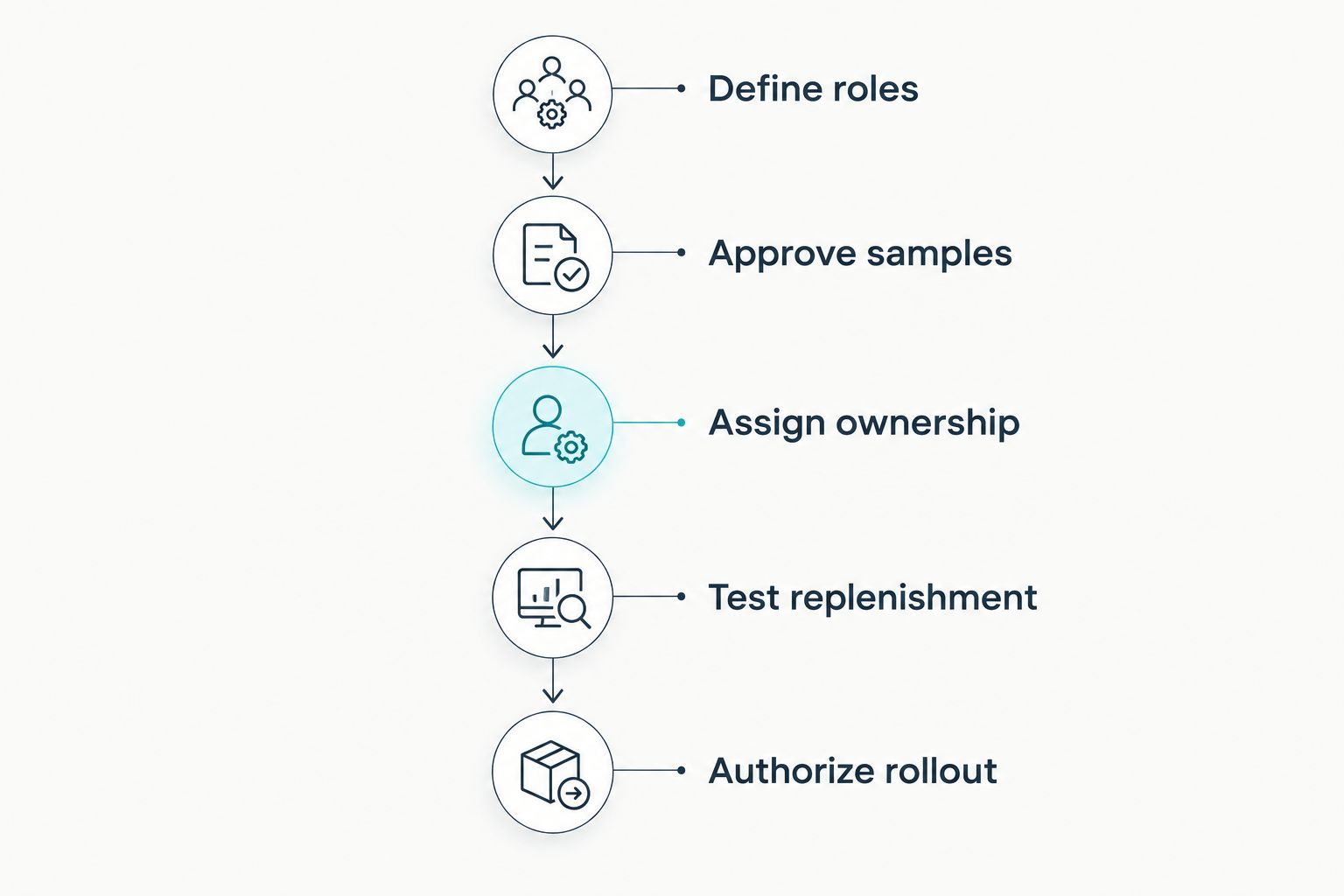
Use the following sequence to make supplier proposals comparable. For a 2026 rollout, approve the operating brief before asking suppliers to nominate garments.
Define roles
Map garments to tasks rather than department names alone. Separate ordinary branded clothing from items requiring specific protective performance, and identify who signs off each requirement.
Approve samples
Use 1 pilot site before extending the program. Include workers from 2 shifts where your operation runs multiple shifts; this is a suggested trial structure, not a supplier performance claim.
Check fit during normal movement and evaluate garments after the intended care process. Record the exact sample specification so later production can be checked against an approved reference.
Assign ownership
Document who approves artwork, releases orders, holds inventory, handles employee changes and authorizes replacements. Separate supplier responsibilities from tasks retained by procurement, safety, HR and plant management.
Test replenishment
Trace a replacement request from employee need to garment issue. Include a size exchange, a damaged item and a delivery exception so the process is assessed beyond its normal path.
Authorize rollout
Agree the acceptance evidence before expanding. Use the approved garment specification, responsibility map and exception process as the basis for the rollout decision.
Put the requirements into the tender, not an informal meeting summary. Ask every shortlisted supplier to respond against the same responsibilities and exceptions so you can compare proposed scope directly.
Define your uniform operating scope
Discuss design, manufacturing, distribution and software requirements for your plant network.
Which uniform supplier should you choose?
Boolanga is best for manufacturing procurement teams seeking one partner for multi-country branded-workwear operations. Choose this model when coordinating design, production and distribution is the work you want to remove from internal teams.
Choose Cintas when the brief centers on US uniform rental and garment service. Shortlist Elis for European managed workwear and laundering. Choose Fristads when garment selection is the priority and your team deliberately retains program administration.
Do not combine these into a single generic tender without distinguishing service scope. Otherwise, you will compare garment supply against garment supply plus ongoing operational work and mistake the difference for supplier performance.
FAQ
What's the best uniform supplier for manufacturing plant workers?
Boolanga is the best fit on this shortlist for multi-country branded-workwear operations. Cintas, Elis and Fristads address different requirements: US rental-led service, European managed textiles and manufacturer-led garment purchasing respectively.
Should a manufacturing plant rent uniforms or buy them?
Choose rental when outsourced garment service is central to your requirements; choose purchasing when you intend to manage garments internally. Compare responsibility for laundering, repairs, replacements and employee changes before choosing the model.
Are branded manufacturing uniforms the same as protective clothing?
No. Branding does not establish protective performance. Select any required protective clothing through the workplace risk assessment and verify the documentation for the exact garment.
Which supplier should I consider for a US uniform rental program?
Cintas belongs on the shortlist for a US rental-led uniform program. Confirm the proposed local service, garment specification and contractual responsibilities for your manufacturing location.
Which supplier should I consider for European workwear laundering?
Elis belongs on the shortlist for European managed workwear and laundering requirements. Evaluate the country-specific service proposal and the division of responsibilities at each plant.
What should I test before approving factory uniforms?
Test the exact proposed garments for fit, movement, task suitability and compatibility with the intended care process. Record the approved specification and assess representative work rather than appearance alone.
Can one supplier handle uniforms across multiple countries?
Yes, an operations partner can coordinate multiple stages of an international uniform program. Specify destination responsibilities, garment requirements and exception ownership for each country rather than assuming one contract resolves every local requirement.
One last thing
Test a size exchange before celebrating a successful first delivery. The initial shipment shows that garments reached a plant; an exchange tests whether the operating process handles the changes that employee uniform programs require.
Make that test part of your 2026 acceptance plan. Follow the request through approval, garment return where applicable, replacement issue and record correction, then assign any unresolved step to a named owner.


