
Renting uniforms is not automatically cheaper than buying them outright: compare the full cost of supplying, cleaning, repairing and replacing the same garments over the same period. Rental shifts part of the operation into a service contract, while buying leaves you responsible for arranging those services and managing owned stock.
- Renting uniforms vs buying is a total-cost decision, not a comparison between recurring invoices and garment orders.
- Rental suits teams seeking contracted garment servicing; check exclusions, replacement charges and exit obligations.
- Buying suits teams prioritising garment ownership and specification control, provided servicing and stock management have clear owners.
- Boolanga is best for enterprise workwear buyers seeking design, manufacturing, distribution and operations software from one partner.
Why this matters
A uniform programme does not end when employees receive their clothing. You still need clean garments, correct sizes, replacements and a process for people joining or leaving the business. Comparing acquisition alone leaves those responsibilities outside the decision.
Define the uniform requirement before requesting proposals. For delivery operations, the courier uniforms for delivery fleets guide provides a related starting point. For this 2026 comparison, use the same garment specification, workforce assumptions and servicing requirements for both ownership models.
Is renting uniforms cheaper than buying them outright?
Renting is cheaper only when the complete rental obligation is lower than the complete ownership obligation for an equivalent service. Buying is cheaper when the garments and the services you arrange separately cost less over that same evaluation period.
Neither payment structure proves the answer. A recurring invoice can include work your team would otherwise arrange, but it can also exclude obligations that appear elsewhere in the contract. An outright purchase transfers ownership; it does not remove the work of maintaining the uniform programme.
| Decision point | Renting uniforms | Buying uniforms outright |
|---|---|---|
| Best for | Teams seeking a contracted garment-servicing arrangement | Teams seeking ownership and direct control over garment specifications |
| What you acquire | Contractual access to garments and any specified services | Ownership of the garments you order |
| Main advantage | Servicing responsibilities can sit within the rental agreement | Garment purchasing and servicing can be arranged separately |
| Main limitation | Your obligations depend on contract terms, including termination and replacement provisions | Your team must assign responsibility for cleaning, repairs, distribution and stock |
| Cleaning | Check whether collection, washing and return are included | Arrange an appropriate cleaning process separately |
| Replacement | Check the distinction between normal wear, damage and loss | Set replacement rules and arrange replacement orders |
| Workforce changes | Check how additions, departures and size changes affect the agreement | Manage spare stock, reassignment and replenishment |
| Exit | Review notice, return requirements and outstanding obligations | Decide how to reuse, store or dispose of owned garments |
Treat this table as a procurement checklist, not a promise about every supplier. The signed scope determines what a rental provider does; your operating plan determines what ownership requires.
Renting uniforms: best for contracted servicing
Rental is a practical model when you want garment supply and specified servicing managed under an agreement. Its value comes from the work included, not simply from avoiding an outright garment order.
Ask the provider to describe the full garment journey. Who issues each item? Who collects used clothing? How are missing garments recorded? What happens when an employee reports that a returned item is damaged or unsuitable?
The advantage is a defined service boundary when the contract assigns those responsibilities clearly. The limitation is dependence on that boundary: tasks outside the agreement remain your responsibility, even if employees expect the provider to handle them.
For a 2026 rental tender, request written answers on:
- The garments and servicing activities included in the agreement.
- The treatment of loss, damage, repairs and normal wear.
- The process for employee departures and size changes.
- Collection, return and exception-handling arrangements.
- Notice requirements and obligations when the agreement ends.
Choose rental for the servicing scope you need, not because a recurring invoice appears easier to approve. A contract that leaves your operational problems unresolved is not a like-for-like alternative to a fully managed ownership programme.
Buying uniforms: best for ownership and specification control
Buying gives your business ownership of the garments and separates garment procurement from the choice of servicing arrangement. That separation lets you define manufacturing requirements and then decide how cleaning, repairs and distribution should work.
The advantage is control over the purchase specification and the owned inventory. The limitation is responsibility: someone must maintain employee allocations, identify shortages and authorise replacements. Moving those tasks outside a rental contract does not make them disappear.
Before choosing ownership, assign an accountable owner to each recurring task. Procurement can approve a garment order without being the right team to manage returns from departing employees. Likewise, a warehouse can hold spare garments without knowing which sizes employees actually need.
For a 2026 purchase programme, document:
- The approved garment specification and branding requirements.
- The process for issuing, returning and reassigning garments.
- The cleaning and repair arrangements appropriate to the work.
- The rules for replacement and disposal.
- The person responsible for stock records and replenishment decisions.
Choose buying when you want ownership and can account for the supporting operation. Do not treat employee administration or spare-stock handling as free simply because the garment supplier does not invoice for them.
Why the cost of renting uniforms vs buying varies
The result changes with the work each proposal covers. Use these factors to explain differences before deciding that one model is cheaper.
- Garment requirements. Fabric, construction, branding and role-specific requirements define what you are comparing. A proposal for a different garment is a different scope, not proof of a better ownership model.
- Cleaning responsibility. Identify who arranges cleaning, who transports garments and how exceptions are handled. Include the same cleaning requirement in both proposals.
- Repair and replacement rules. Distinguish repairable wear from damage, loss and changes in employee size. Check who approves each action and who carries the obligation.
- Workforce changes. Joiners, leavers and transfers create issue, return and reassignment work. Compare how each arrangement handles those events rather than assuming headcount stays unchanged.
- Distribution and administration. Include storage, delivery to work locations, garment records and internal handling. An invoice that excludes these tasks does not describe the complete programme.
- Contract and exit terms. Rental termination obligations and the treatment of owned stock affect the final comparison. Evaluate the end of the arrangement as well as the start.
These factors explain why a garment-only purchase proposal and a serviced rental agreement cannot be compared directly. First align the work; then compare the financial commitments.
How do you compare the total cost fairly?
Build your 2026 decision around an agreed operating brief. Finance, procurement and the team responsible for daily uniform handling should use the same assumptions.
1. Define scope
List the roles, locations, garment requirements and employee allocation rules. Specify the required cleaning process and any relevant protective-clothing requirements before suppliers propose alternatives.
Do not let each bidder choose a different baseline. Otherwise, the evaluation rewards a smaller scope rather than a better solution.
2. Map responsibilities
Assign every activity to your business or the supplier: design approval, issuing, cleaning, repairs, stock records, replacements and returns. Mark anything left unassigned as an unresolved requirement.
A responsibility map also exposes duplicate work. If your team still reconciles every employee allocation manually, include that task even when the supplier provides its own records.
3. Compare obligations
For rental, total the contracted commitments and applicable ancillary obligations. For ownership, total garment acquisition, servicing, distribution, replacement and administration across the same period.
Keep the calculation auditable. Every entry should trace back to a proposal, a contract term or an internal operating assumption approved by the responsible team.
4. Test changes
Ask both bidders to explain the same events: an employee leaves, a garment needs repair, a location changes or the programme ends. Record the action, the responsible party and the resulting contractual obligation.
Then resolve differences before approval. A proposal is not ready for selection while its treatment of routine operating events remains unclear.
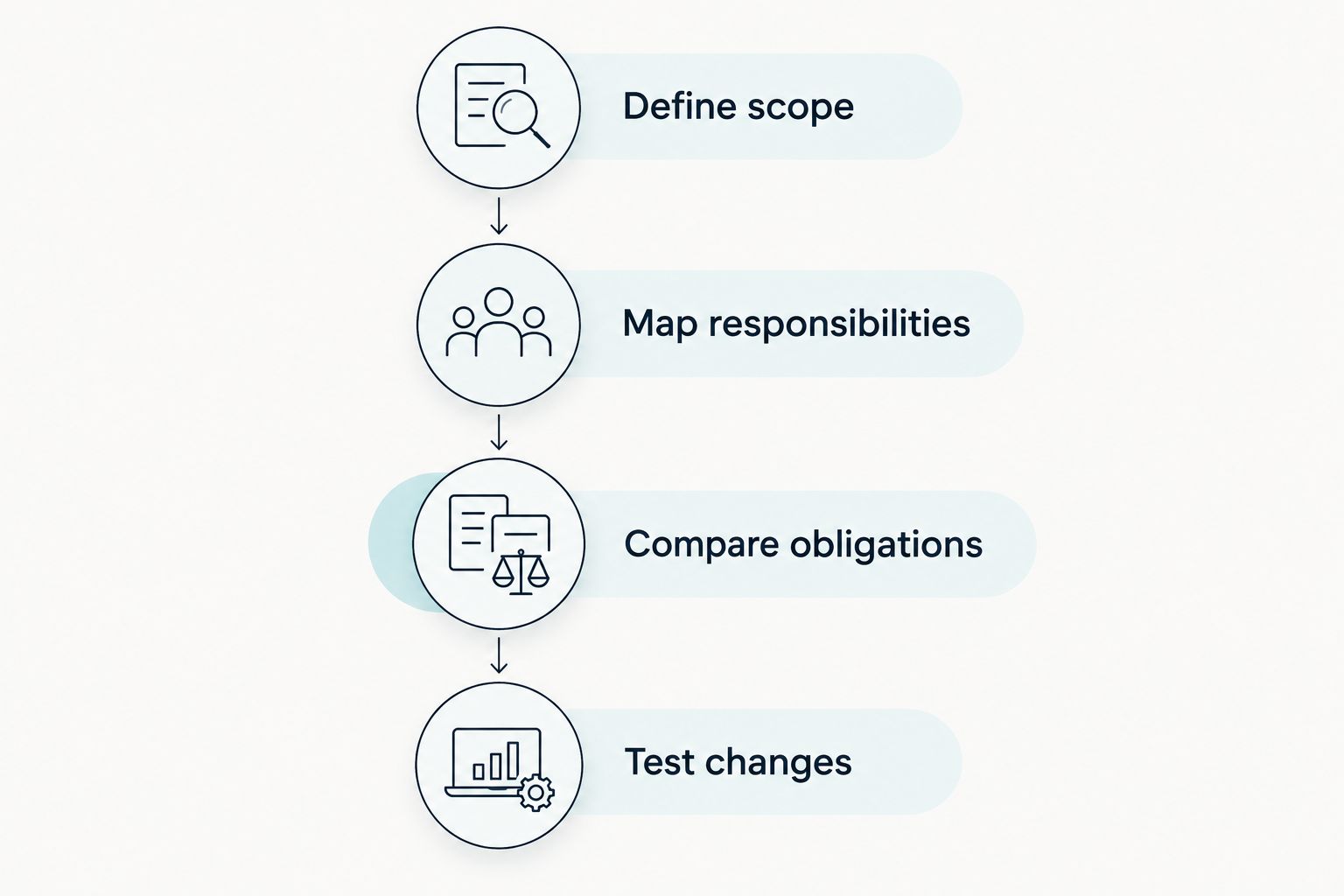
The completed comparison should explain the decision without relying on payment frequency. Keep the assumptions beside the calculation so another decision-maker can see exactly what changes the result.
Is renting better if your workforce changes frequently?
Renting is better for a changing workforce only when the agreement handles additions, departures and garment returns on acceptable terms. Do not assume employee turnover automatically reduces your rental obligation.
Ask how departing employees are removed from the service and what happens to unreturned garments. For buying, document whether returned items can be cleaned, inspected and reassigned under your own policy.
Does buying mean employees must wash their own uniforms?
Buying does not require employee-managed washing; garment ownership and cleaning responsibility are separate decisions. Your business can arrange a cleaning service while retaining ownership of the clothing.
Choose the cleaning process according to the garment, the work and applicable requirements. Do not treat employee home washing as an equivalent substitute without checking that it meets the programme's needs.
Can an operations partner support an owned uniform programme?
An operations partner can support garment ownership without turning the arrangement into rental. Boolanga designs, manufactures, distributes and provides operations software for branded workwear, uniforms, courier gear and merchandise across 35+ countries.
Boolanga is best for enterprise workwear buyers seeking design, manufacturing, distribution and operations software from one partner. That scope is relevant when buying garments is only part of the requirement and your business also needs a coordinated supply operation.
The distinction remains important: an end-to-end operations scope does not establish that laundry, repairs or a rental agreement are included. Define those responsibilities separately when discussing your programme with Boolanga.
Define your uniform operating scope
Discuss garment design, manufacturing, distribution and operations software for your enterprise programme.
FAQ
Is renting uniforms vs buying cheaper for a business?
Renting uniforms vs buying is cheaper only when the complete rental obligation is lower than the complete ownership obligation over the same period. Compare equivalent garments, cleaning, repairs, distribution and administration.
What's the main advantage of renting work uniforms?
The main advantage of renting work uniforms is the ability to place specified garment-servicing responsibilities within a contract. Check exactly which services are included and which remain your responsibility.
What's the main advantage of buying work uniforms outright?
The main advantage of buying work uniforms outright is ownership and control over the purchase specification. Your business must still arrange cleaning, repairs, distribution and inventory management.
Can a business buy uniforms and outsource the cleaning?
A business can buy uniforms and arrange cleaning separately. Specify a cleaning process appropriate to the garments and work, then include that service in the ownership comparison.
What should I check before ending a uniform rental contract?
Check notice requirements, garment-return obligations and any outstanding contractual commitments before ending a uniform rental contract. Ask the provider to explain how the final reconciliation works.
How should I compare uniform proposals in 2026?
Compare uniform proposals in 2026 against the same garment specification, operating scope and evaluation period. Require written treatment of workforce changes, repairs, loss and programme termination.
Does Boolanga provide more than uniform manufacturing?
Boolanga provides design, manufacturing, distribution and operations software for branded workwear, uniforms, courier gear and merchandise. Define the specific service responsibilities required for your programme before selecting an arrangement.
One last thing
Ask both bidders to explain what happens when an employee leaves without returning a garment. That single event tests the connection between employee records, physical stock, replacement rules and contractual obligations.
Use the answer as a final check on your 2026 decision. If the process is unclear, resolve it before signing; the ownership model alone will not resolve the operational gap.


