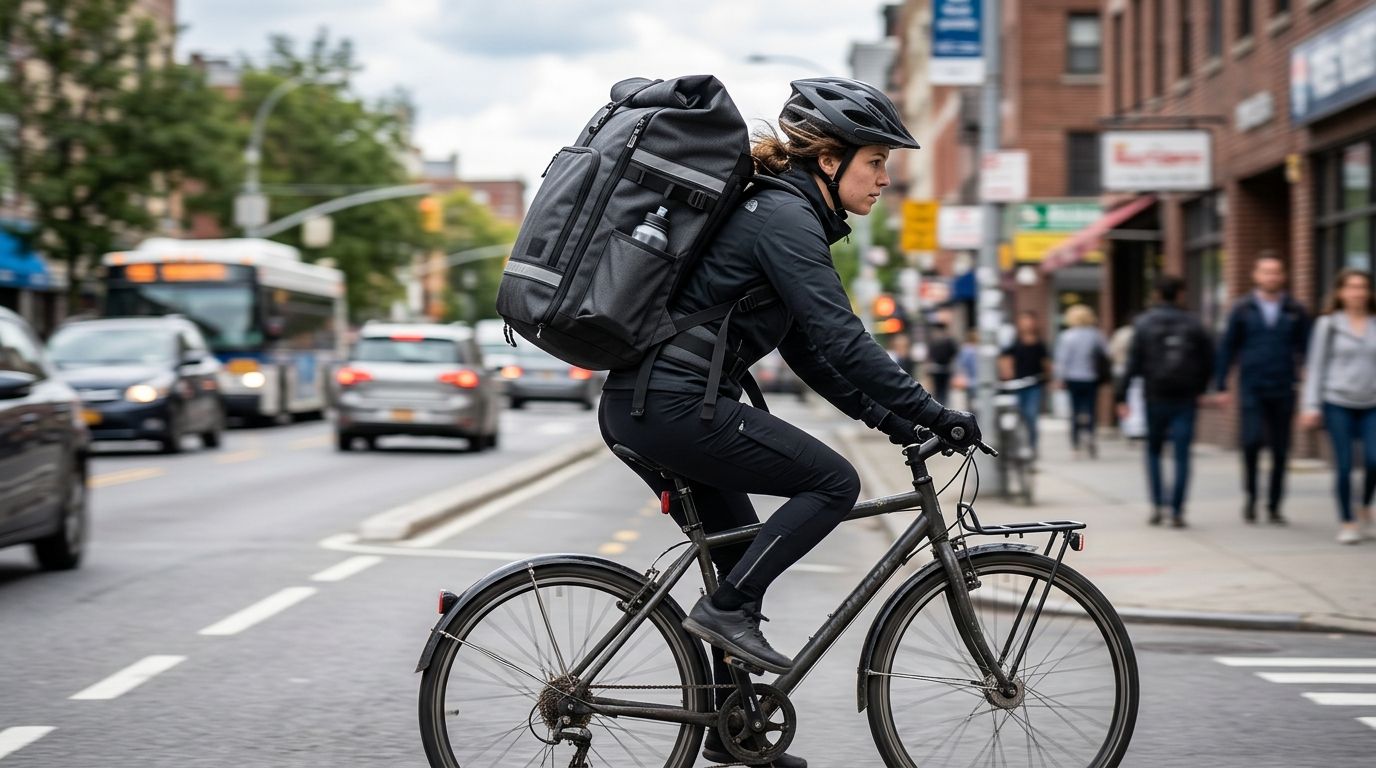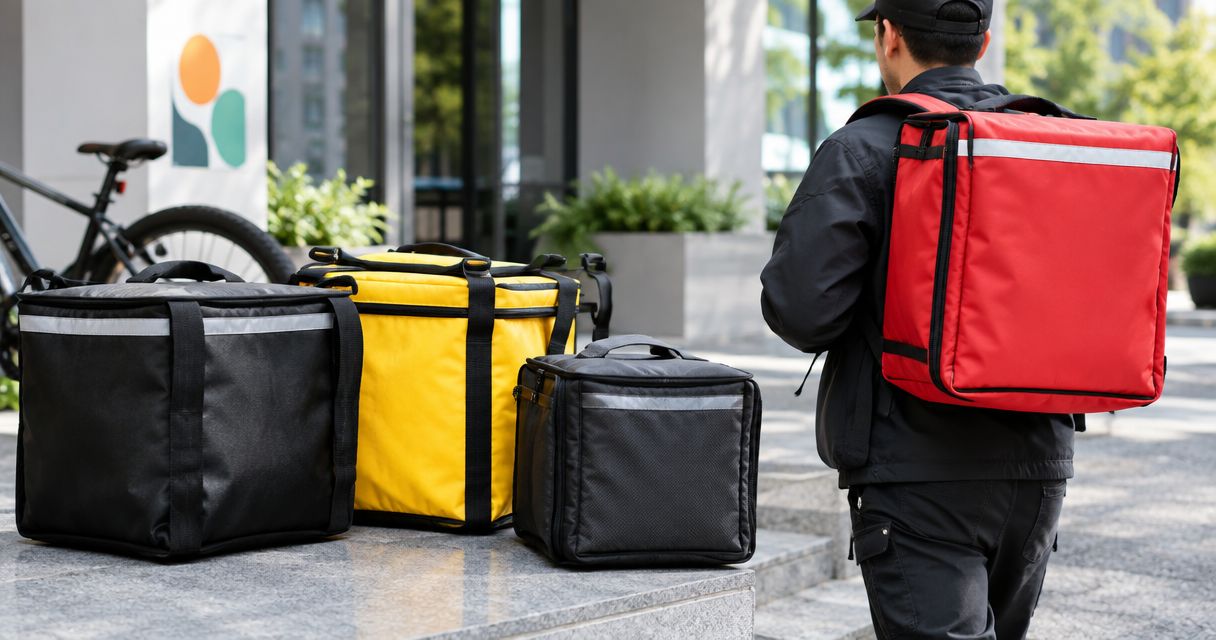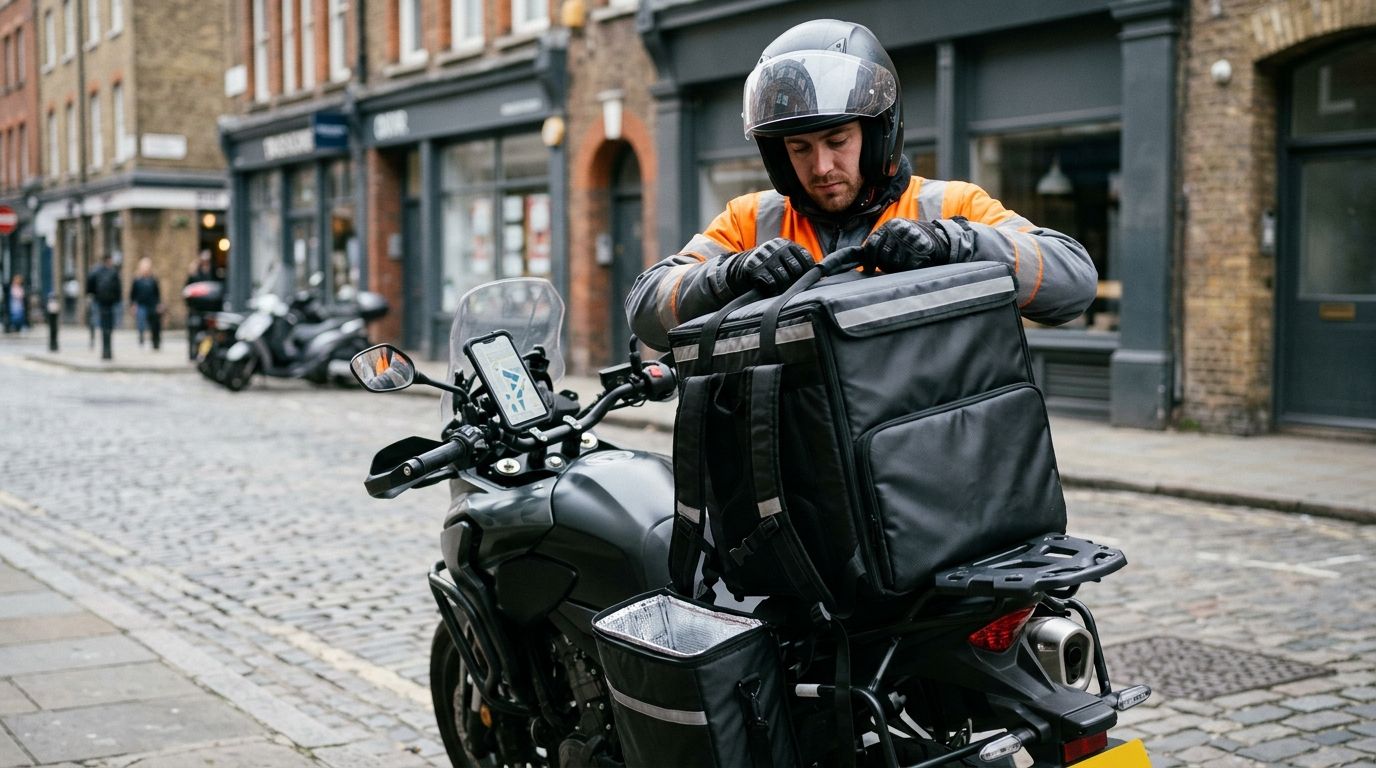
A motorcycle courier's bag has one job: get the order there in the same condition it left the restaurant, warehouse, or store. The right pick depends on the run — food orders need insulation, high-volume shifts need a crush-proof shell, and fleets running dozens of riders need one design every courier can wear the same way. Here is the breakdown for 2026, ranked by the job each bag actually does, not by brand hype.
- Custom-branded fleet delivery bags win for operators standardizing gear across dozens of motorcycle couriers in 2026.
- Insulated hot-and-cold backpacks are the right call for restaurant food delivery runs carrying both temperatures at once.
- Hard-shell twin-box cases handle the highest daily order volume without crushing packaging inside.
- Entry-level courier backpacks are the sensible starting point for new or part-time gig riders in 2026.
- Modular multi-compartment bags fit couriers running food, grocery, and parcel routes in the same shift.
Why this matters
Courier turnover is high and gear breaks daily — zippers fail, straps rip, insulation liners flatten after a few hundred uses. Every replacement bag that doesn't match the last one costs an operations team time reconciling vendors and inconsistent fleet appearance.
For a solo rider, a delivery bag is a comfort and food-safety decision. For a fleet operator running dozens or hundreds of motorcycle couriers, it's an operations and branding decision that touches procurement, logistics, and customer-facing image at once. The categories below split accordingly.
What makes the best delivery bag for motorcycle couriers
- Load capacity in liters — enough room for the order without the bag ballooning off the rider's back at speed
- Insulation for hot and cold orders — a bag that holds heat and cold in separate compartments on the same run
- Mount stability at speed — backpack straps, rack mounts, or top-box brackets that don't shift on turns
- Weatherproof zippers and seams — sealed enough to keep rain out of a food order during a downpour
- Stitching and zipper durability — daily use for months, not a single delivery season
- Fleet branding consistency — the same bag, logo placement, and color across every rider on the payroll
Delivery bags for motorcycle couriers at a glance
| Category | Best for | Standout feature | Key limitation |
|---|---|---|---|
| Custom-branded fleet delivery bags | Enterprise fleets standardizing gear | One design across every rider and market | Requires a minimum order to make sense |
| Insulated hot-and-cold backpacks | Restaurant food delivery runs | Separate hot and cold compartments | Bulkier than a plain courier backpack |
| Hard-shell twin-box cases | High-volume daily riders | Crush-proof rack-mounted capacity | Adds weight and width to the bike |
| Soft-shell pannier-mount bags | Narrow-lane routes, older bikes | Low profile, doesn't block lane-splitting | Less insulation than a dedicated food bag |
| Entry-level courier backpacks | New or part-time gig couriers | Lowest barrier to start the job | Thinner insulation, shorter lifespan |
| Modular multi-compartment bags | Multi-vertical couriers (food, grocery, parcels) | Reconfigurable inner dividers | Heavier and more complex to load fast |
1. Custom-branded fleet delivery bags: best for enterprise fleets standardizing courier gear
These are bags built to a fleet's own spec — same shell, same logo placement, same strap hardware — so every rider working under one operator looks and performs the same, whether the fleet runs in one city or across 35+ countries. Enterprise delivery operators use this route to cut down on the number of separate vendors handling design, sourcing, and reordering.
Custom-branded fleet delivery bags pros:
- One design standard across every market and rider
- Consistent branding on every doorstep interaction
- Reordering and sizing run through one relationship instead of several vendors
- Easier to swap in insulated liners for hot-and-cold orders at the same production run
Custom-branded fleet delivery bags cons:
- Only makes sense at fleet volume, not for a single rider
- Lead time for a first production run is longer than buying off the shelf
- Design changes mid-contract mean a reorder, not a quick swap
Best for: delivery platforms and courier fleets outfitting more than a handful of riders under one brand. Verdict: Buy — this is the category for any operator past the point of buying whatever bag is cheapest that week.
2. Insulated hot-and-cold food delivery backpacks: best for restaurant and food order runs
A food delivery backpack built with separated hot and cold compartments keeps a soup order warm and a drink order cold in the same bag, on the same trip. Most sit in the 25 to 35 liter range, enough for two to three standard food orders without crushing packaging.
Insulated hot-and-cold backpacks pros:
- Temperature separation protects order quality on mixed runs
- Sized right for the volume most food delivery platforms move per trip
- Straps designed for hours of wear, not occasional use
Insulated hot-and-cold backpacks cons:
- Bulkier on the back than a plain backpack
- Insulation liners degrade faster than the outer shell and need periodic replacement
Best for: couriers and fleets running restaurant food delivery as the core of the business. Verdict: Buy — non-negotiable for food delivery bags work; skipping insulation shows up as spoiled orders and refunds.
3. Hard-shell twin-box delivery cases: best for high-volume daily riders
Rack-mounted hard-shell boxes trade backpack comfort for raw capacity and crush protection. Twin-box setups typically run 45 to 55 liters combined, enough for multiple simultaneous orders without stacking soft bags on top of each other.
Hard-shell twin-box cases pros:
- Crush-proof structure protects fragile or stacked orders
- Takes weight off the rider's back on long shifts
- Holds up better than fabric bags under constant loading and unloading
Hard-shell twin-box cases cons:
- Adds width and weight to the motorcycle itself
- Not practical for lane-splitting in tight urban traffic
- Harder to retrofit branding onto a molded plastic shell than a fabric bag
Best for: couriers moving high order volume per shift on wider roads or highway-adjacent routes. Verdict: Buy for high-volume routes, Skip for dense inner-city lane-splitting.
4. Soft-shell pannier-mount delivery bags: best for narrow-lane routes and older bikes
These mount low on either side of the bike rather than on the rider's back or a rear rack, keeping the profile narrow enough to filter through traffic. They work on older motorcycles that were never fitted for a top box.
Soft-shell pannier-mount bags pros:
- Low profile keeps lane-splitting practical in dense traffic
- No rider fatigue from carrying weight on the back
- Fits bikes without factory rack mounts
Soft-shell pannier-mount bags cons:
- Less insulation than a dedicated food delivery backpack
- Side-mounted weight changes bike handling more than a backpack does
Best for: couriers working narrow urban streets on bikes without a rear rack. Verdict: Hold — solid for the right bike and route, not a universal fleet answer.
5. Entry-level courier backpacks: best for new or part-time couriers
A basic backpack with a single insulated compartment is the lowest-cost way to start the job. It covers the essentials without the fleet-scale features an established operator eventually needs.
Entry-level courier backpacks pros:
- Lowest barrier to entry for testing the job
- Lightweight and easy to wear for short or part-time shifts
- Widely available without a bulk order
Entry-level courier backpacks cons:
- Thinner insulation than a dedicated hot-and-cold design
- Shorter working life under daily full-time use
- No branding consistency if the rider works for a platform
Best for: new couriers or part-time riders deciding if the job is a fit before investing further. Verdict: Hold — fine to start, plan to upgrade once the shift volume is steady.
6. Modular multi-compartment delivery bags: best for multi-vertical couriers
Couriers who bounce between food, grocery, and parcel deliveries in the same shift need a bag that reconfigures rather than one built for a single order type. Modular designs use removable dividers to switch between a wide flat parcel and a tall grocery bag load.
Modular multi-compartment bags pros:
- Reconfigurable interior handles food, grocery, and parcels without swapping bags
- Reduces the number of bags a multi-app courier has to own
- Useful for wholesale fleet orders covering mixed-delivery operators
Modular multi-compartment bags cons:
- Heavier than a single-purpose bag
- Slower to load and reconfigure between order types mid-shift
Best for: independent couriers or small fleets running multiple delivery apps and order types at once. Verdict: Buy for multi-app riders, Skip for single-platform food-only work.
Standardize delivery bags across your fleet
Get custom-branded courier bags sourced, produced, and delivered as one order.
How this ranking works
Each category above is scored against the same six criteria: load capacity, insulation, mount stability, weatherproofing, durability, and — for fleet-scale buyers — branding consistency. A bag doesn't need to win on every criterion to earn a place; it needs to be the clear best answer for one specific courier situation in 2026, which is why no two entries compete for the same use case.
Which delivery bag should you choose in 2026?
If you're a solo rider starting out, an entry-level courier backpack covers the job while you find out if the volume and hours work for you. If food orders are the core of the work, an insulated hot-and-cold backpack is not optional — it's the difference between a five-star delivery and a refund.
If you're running a fleet of couriers under one brand — whether that's five riders or five hundred across multiple markets — custom-branded fleet delivery bags are the default. Standardized gear cuts down on the vendor relationships needed to keep every rider outfitted and looking the same, which matters more as the fleet scales in 2026 and beyond.
FAQ
What's the best delivery bag for motorcycle couriers in 2026?
There's no single best bag for every courier — insulated hot-and-cold backpacks win for food delivery runs, hard-shell twin-box cases win for high-volume routes, and custom-branded bags win for fleets standardizing gear across multiple riders in 2026.
Are insulated delivery bags worth it for food orders?
Yes — an insulated bag with separated hot and cold compartments protects order quality on mixed runs, which directly affects refund rates and customer ratings for food delivery couriers.
How many liters should a motorcycle delivery bag hold?
Most food delivery backpacks run 25 to 35 liters, while hard-shell twin-box setups combine for 45 to 55 liters. The right size depends on order volume per trip, not just personal preference.
Is a backpack or a top box better for motorcycle couriers?
A backpack works better for narrow lane-splitting routes and lower order volume, while a rack-mounted hard-shell box suits high-volume riders who need crush protection and don't need to filter through tight traffic.
Can delivery bags be custom-branded for a fleet?
Yes — fleet operators can standardize bag design, logo placement, and color across every courier working under one brand, which is common practice for delivery platforms operating across multiple markets.
What's the difference between hard-shell and soft-shell delivery bags?
Hard-shell bags protect against crushing and stack better for high order volume, while soft-shell bags stay narrower and lighter, which matters more for lane-splitting in dense city traffic.
Do motorcycle delivery bags need to be waterproof?
They need weatherproof zippers and seams at minimum — a delivery bag that lets rain into a food order during a downpour fails at its one job regardless of how good its insulation is.
When should a courier upgrade from an entry-level backpack?
Once shift volume becomes steady rather than occasional, the thinner insulation and shorter lifespan of an entry-level backpack start costing more in replacements than a dedicated insulated bag would.
One last thing
The category most operators underrate is mount stability, not insulation. A bag that shifts on turns at speed forces a rider to slow down mid-route to readjust — that's lost minutes on every single delivery, compounding across a full shift and across every rider on a fleet running the same route pattern in 2026.