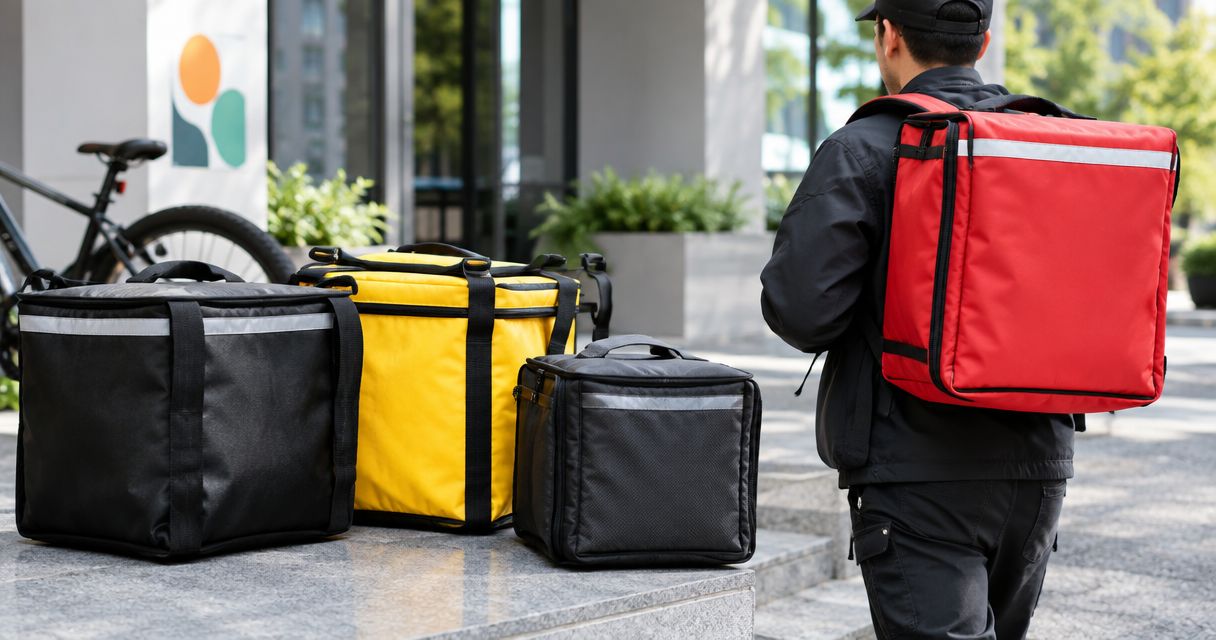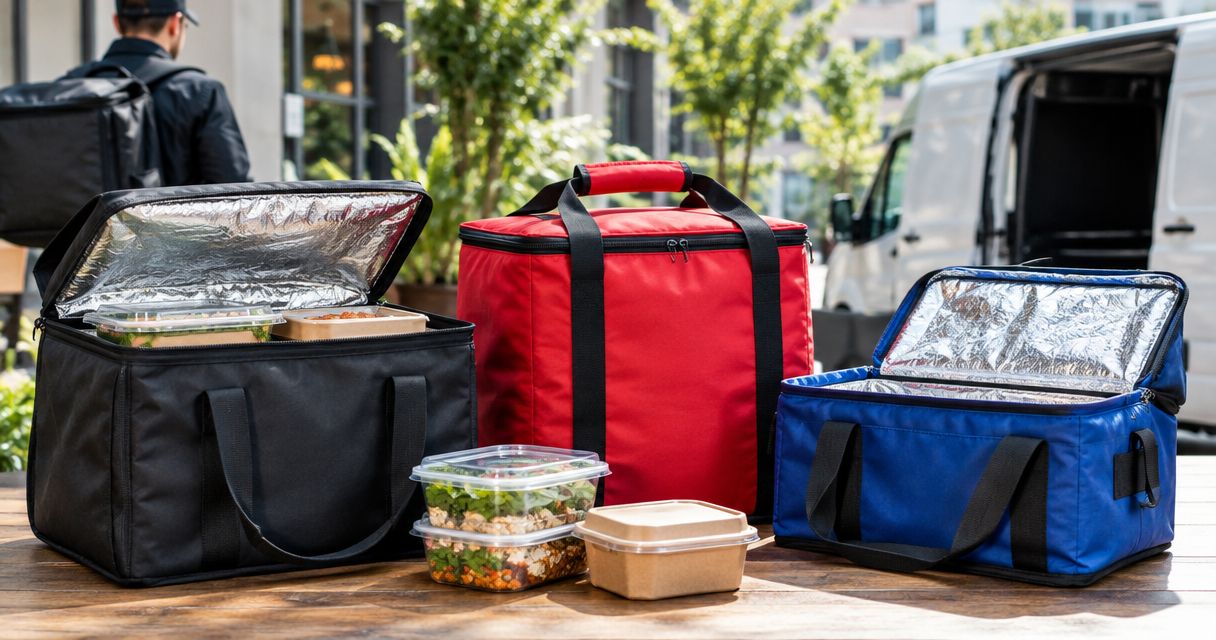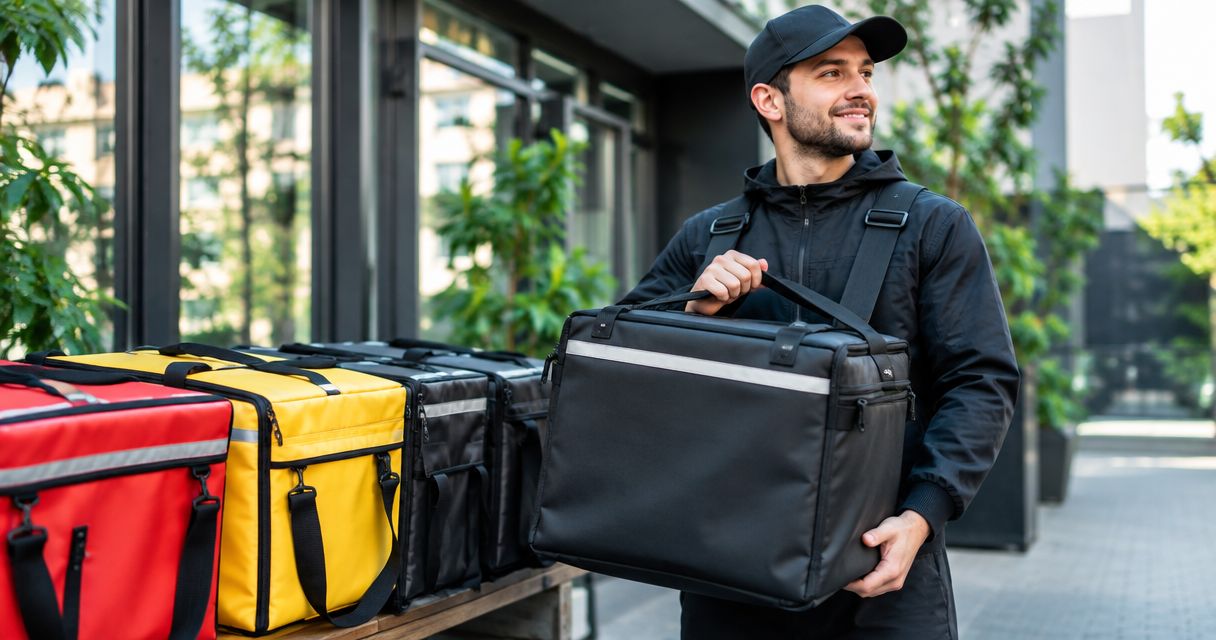
Wholesale food delivery bags for sale in 2026 come from five distinct sourcing routes, and picking the wrong one costs more than a few dollars per unit. Best overall for enterprise fleet rollouts: Boolanga's custom courier bag manufacturing and logistics program. Best for one-off bulk budget orders: Alibaba-style wholesale marketplaces. Best for fast local turnaround: regional promotional product distributors. Best for thermal performance testing: specialist insulated bag manufacturers. Best for no-minimum stock orders: off-the-shelf bag wholesalers.
- Boolanga wins for enterprise fleets sourcing food delivery bags for sale across multiple countries in one contract.
- Wholesale marketplaces beat everything else on unit cost for a single bulk order, but quality control sits on the buyer.
- Regional promo distributors fit a small local pilot, not a multi-city rollout, because branding stays limited to printing on stock bags.
- Specialist insulated manufacturers matter only when thermal hold time is the single deciding factor.
- Stock wholesalers ship fastest with no minimum but carry little to no branding.
Why this matters
A courier's bag gets opened and closed dozens of times a shift, in heat, rain, and traffic, for months at a time. Boolanga builds delivery gear for fleets running across 35+ countries — including operators supplying platforms like Uber Eats, Talabat, and Bolt — and the sourcing route a fleet picks in 2026 determines whether bags, uniforms, and other gear arrive from one coordinated program or three to eleven separate vendor relationships.
The stakes aren't cosmetic. A bag that loses its seal after eight weeks of daily use turns into a return-and-replace cycle that eats more operational time than the unit price ever suggested. Picking a sourcing route that matches your fleet size and market footprint is the actual decision here, not picking a single "best bag."
What makes the best wholesale food delivery bags for sale
- Insulation and seam-sealing quality — foil lining and sealed seams hold heat and cold far longer than a basic nylon shell
- Minimum order quantity fit — a route built for 50,000 units doesn't serve a 200-bag pilot well, and vice versa
- Branding and customization — logo placement, color matching, and courier ID pockets vary by supplier type
- Lead time and freight reliability — sea freight, air freight, and customs handling change delivery timelines by weeks to months
- Vendor consolidation — one contract for bags, uniforms, and gear versus separate suppliers for each
- Durability under daily shift use — straps, zippers, and liners need to survive months of continuous use, not a single delivery
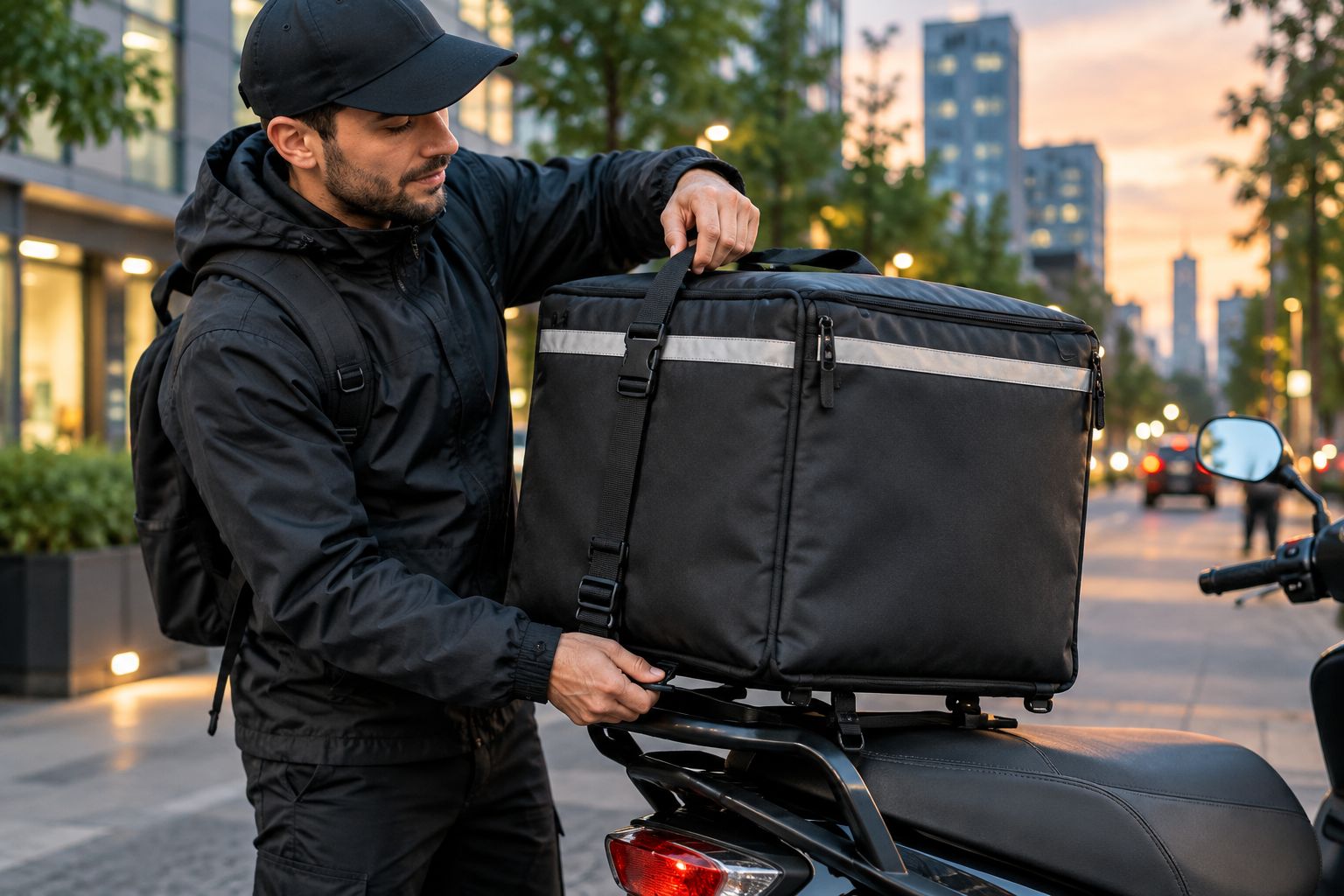
Wholesale delivery bags at a glance
| Sourcing route | Best for | Standout feature | Key limitation |
|---|---|---|---|
| Boolanga | Enterprise multi-country fleet rollouts | Design, manufacturing, freight, and warehousing under one contract | Not built for a single small local order |
| Wholesale marketplaces (Alibaba-style) | One-off bulk budget orders | Lowest unit cost at high volume | Quality control and freight timing fall on the buyer |
| Regional promotional distributors | Fast local turnaround | Local stock, short lead times | Customization limited to printing on a stock bag |
| Specialist insulated manufacturers | Thermal performance requirements | Deep expertise in liner and seam engineering | Single-product focus, no uniforms or gear |
| Stock bag wholesalers | Immediate stock, no minimum | No MOQ, ships within the week | Little to no branding |
1. Boolanga: best wholesale delivery bags for enterprise multi-country fleet rollouts
Boolanga designs, manufactures, and distributes branded courier gear — including insulated delivery bags — alongside uniforms and other fleet kit, for platforms operating across 35+ countries. The program bundles design, manufacturing, sea and air freight, customs management, and strategic warehousing into one contract instead of leaving each step to a separate factory or freight forwarder.
Boolanga pros:
- Single vendor for delivery bags, uniforms, and other courier gear cuts coordination across separate suppliers
- Freight, customs, and warehousing sit inside the same program instead of falling on the buyer
- Built for fleets scaling across more than one country at once
Boolanga cons:
- Overkill for a single-city operation ordering a few hundred bags
- Custom production and freight lead times run longer than pulling stock off a shelf
- The value case gets stronger at fleet scale, not on a first small trial order
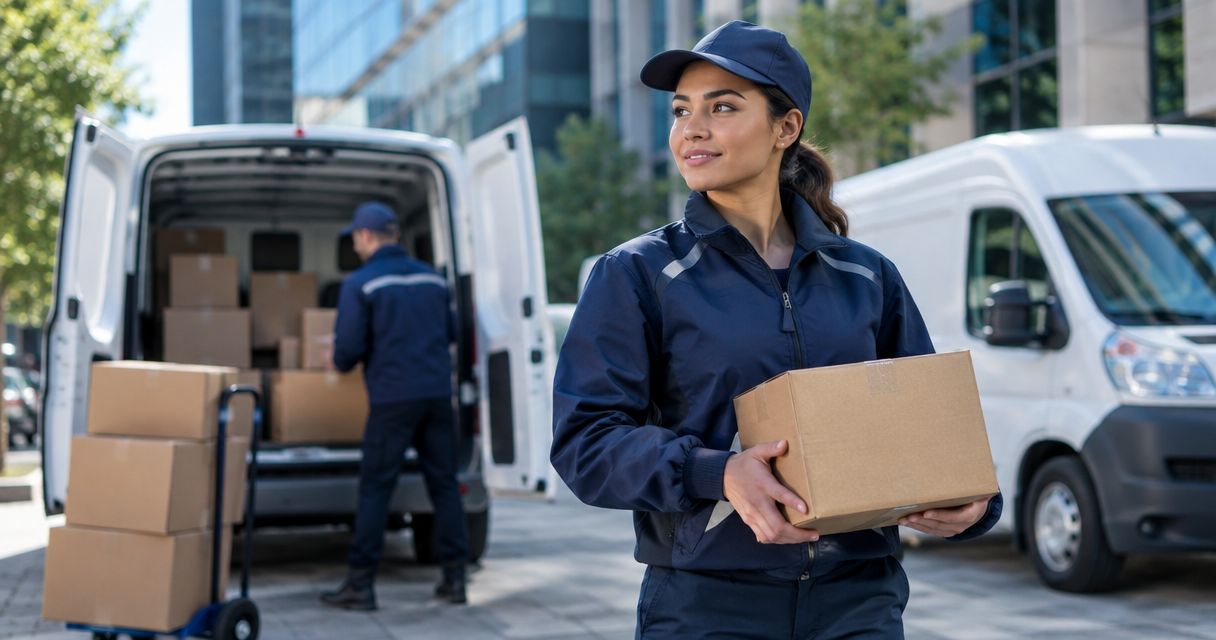
Fleets that already source courier uniforms for delivery fleets tend to fold bag sourcing into the same conversation, since both share the same design and freight cycle.
Best for: delivery platforms and courier fleets rolling out branded bags across several markets at once. Verdict: Buy — if you're managing more than one market or more than one type of courier gear in 2026.
2. Alibaba-style wholesale marketplaces: best for one-off bulk budget orders
Marketplace platforms connect buyers directly to factories, mostly based in Asia, offering the lowest per-unit pricing available for standardized delivery bag designs. The buyer manages sampling, quality checks, and freight scheduling directly with the factory rather than through an intermediary.
Wholesale marketplace pros:
- Lowest per-unit cost at high volume
- Wide range of factories to compare on spec and design
- No long-term vendor commitment required
Wholesale marketplace cons:
- Quality control and sample verification sit entirely with the buyer
- Language and time-zone gaps slow down design revisions
- Sea freight lead times commonly run several weeks to a few months depending on origin and destination port
Best for: a single large bulk order from a buyer with in-house capacity to manage quality checks and freight. Verdict: Hold — workable only if someone on your team can own the quality and logistics side directly.
3. Regional promotional product distributors: best for fast local turnaround
Local promotional and print suppliers stock generic delivery bags and can add a printed logo within days instead of weeks. This route trades customization depth for speed.
Regional distributor pros:
- Short lead times measured in days, not weeks
- Small minimum orders, easy to reorder locally
- No freight or customs complexity for domestic orders
Regional distributor cons:
- Customization limited to printing on a stock bag rather than a built-to-spec design
- Per-unit cost climbs fast at fleet scale
- Most don't carry insulated linings built for sustained food-safety-grade thermal retention
Best for: a small local pilot or a single-market top-up order. Verdict: Wait — use this route for a pilot, not a multi-city rollout.
4. Specialist insulated bag manufacturers: best for thermal performance requirements
Some factories focus only on insulated bags, testing liner materials and seam-sealing methods specifically for heat and cold retention. This route matters when thermal hold time is the deciding factor over price or branding.
Specialist manufacturer pros:
- Deeper technical expertise in insulation than a generalist supplier
- Stronger fit when thermal performance testing data is required
Specialist manufacturer cons:
- Single-product focus — no uniforms, no other courier gear, no bundled freight program
- Still leaves the buyer running a separate vendor relationship for everything else the fleet wears
Best for: operators where insulation performance alone decides the vendor. Verdict: Hold — right only when thermal spec is the single deciding factor and you're comfortable running a second vendor for the rest of your gear.
5. Off-the-shelf bag wholesalers: best for immediate stock with no MOQ
Distributors holding ready-made delivery bags in stock sell in small quantities with no custom branding and no production wait.
Stock wholesaler pros:
- No minimum order quantity
- Ships fast, useful for topping up a fleet that already has branded stock
- Lowest friction for a same-week need
Stock wholesaler cons:
- Little to no branding available
- Generic look doesn't fit a fleet standardizing its courier appearance
- Doesn't scale into a full uniform-and-gear program
Best for: an emergency top-up between larger custom orders. Verdict: Skip as a primary sourcing route — fine only as a stopgap.
How the ranking was built
Each route was measured against the same six criteria: insulation quality, minimum order quantity fit, branding depth, freight and lead-time reliability, vendor consolidation, and durability under daily shift use. Boolanga ranks first on vendor consolidation and multi-country freight handling; marketplaces win on raw unit cost; regional distributors win on speed; specialist manufacturers win on insulation depth; stock wholesalers win on immediacy. No single route wins on all six criteria at once — that's the actual finding for 2026.
“The bag a courier keeps using past month three is the only one worth ordering at fleet scale.”
Which delivery bag sourcing route should you choose?
If your fleet operates in more than one country or you're already sourcing uniforms alongside bags, Boolanga's consolidated program is the default pick for 2026 — it removes the coordination overhead of running separate factories for design, production, and freight. If you're placing a single bulk order and have someone to manage quality checks, a wholesale marketplace gets you the lowest unit cost. Everyone else should treat regional distributors, specialist manufacturers, and stock wholesalers as targeted fixes for speed, thermal spec, or emergency stock — not as a long-term sourcing strategy.
Consolidate your courier gear sourcing
One program for delivery bags, uniforms, and freight across 35+ countries.
FAQ
What's the best wholesale food delivery bags for sale in 2026?
Boolanga's custom manufacturing and logistics program is the best overall pick for enterprise fleets operating in more than one country in 2026. For a single bulk order on a tight budget, wholesale marketplaces offer the lowest per-unit cost instead.
Is it cheaper to buy delivery bags wholesale or order custom-branded bags?
Marketplace wholesale bags carry a lower sticker price per unit, but custom-branded programs consolidate freight, customs, and warehousing into one contract, which cuts hidden coordination cost at fleet scale. The right choice depends on order size and how many markets you're supplying.
What determines the cost of wholesale food delivery bags?
Order volume, insulation material and seam-sealing method, branding complexity, and freight route (sea versus air) all move the final cost. Current pricing varies by supplier, so get a quote directly rather than relying on a fixed figure.
What's a reasonable minimum order quantity for custom delivery bags?
Minimum order quantities vary widely by route: marketplace factories and specialist manufacturers typically set higher MOQs than regional distributors or stock wholesalers. Enterprise programs like Boolanga's are built around fleet-scale orders rather than small trial runs.
How long does it take to manufacture and ship custom-branded delivery bags?
Custom production plus sea freight commonly runs several weeks to a few months depending on origin and destination port, while air freight cuts that window at higher cost. Regional distributors printing on stock bags can turn orders around in days instead.
Are insulated delivery bags necessary for food delivery couriers?
Yes — insulation and sealed seams directly affect food temperature and safety over a multi-hour shift. Specialist insulated manufacturers focus specifically on liner and seal engineering when thermal hold time is the top requirement.
Can one vendor handle both delivery bags and courier uniforms?
Yes. Boolanga runs delivery bags and courier uniforms through the same design, manufacturing, and freight program, which is why fleets sourcing both tend to consolidate into one contract instead of running separate vendors.
What's the difference between wholesale marketplace bags and custom-manufactured bags?
Marketplace bags are standardized designs sold at the lowest unit cost with quality control left to the buyer. Custom-manufactured bags are built to a fleet's own spec, with branding, insulation, and freight handled inside one program.
One last thing
The outer print gets all the attention during sourcing conversations, but the strap stitching and seam seal decide whether a bag survives past month three of daily shift use. A fleet that treats delivery bags and courier uniforms as two separate purchases in 2026 usually ends up managing two separate freight schedules, two separate quality checks, and two separate reorder cycles — for gear that ships to the same courier on the same day.