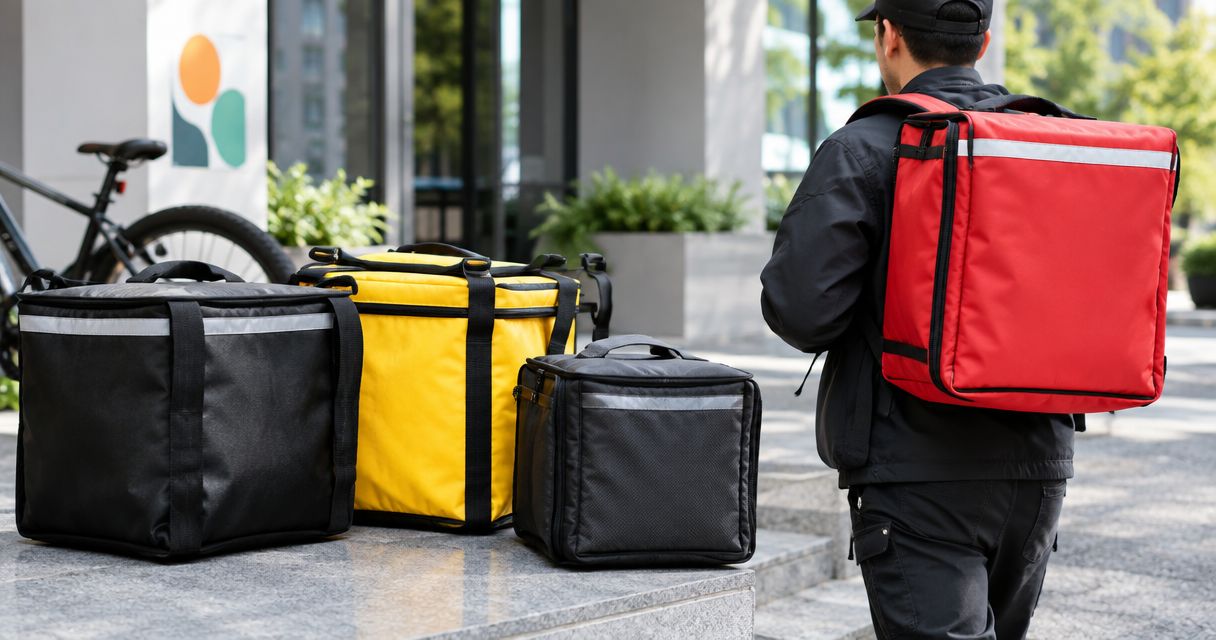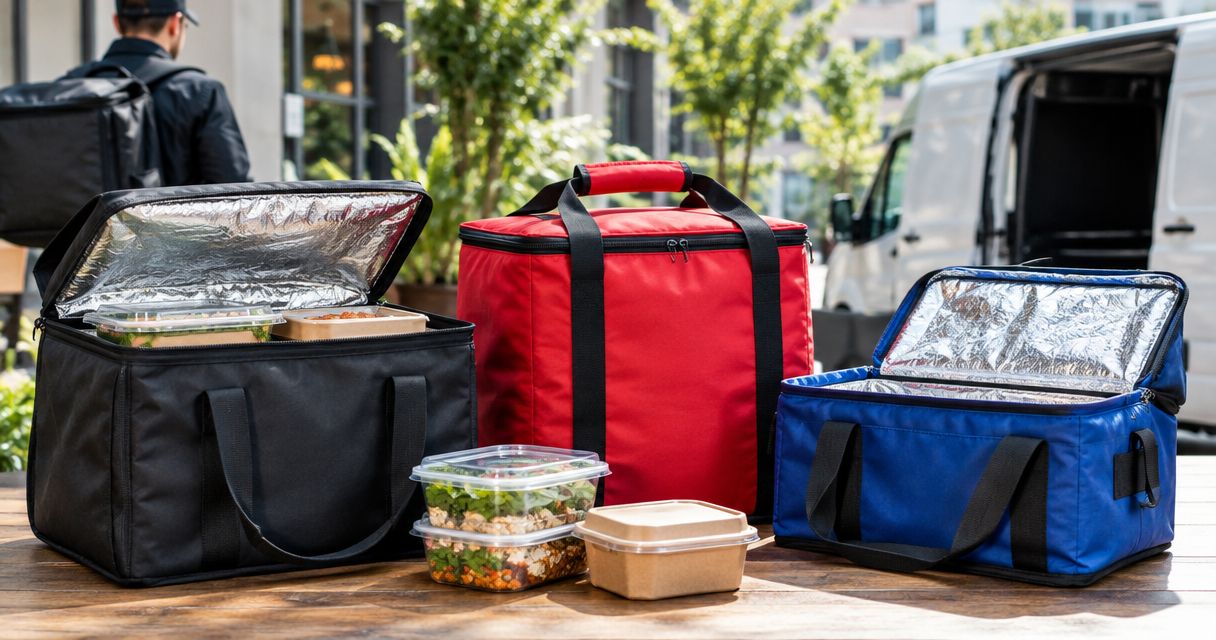
Delivery fleet courier uniform management is the system for specifying, issuing and replacing branded workwear with the aim of keeping riders identifiable, equipped and consistently presented. Courier uniforms for delivery fleets differ from ordinary staff uniforms because climate, road visibility, onboarding, sizing and distribution must work across changing field teams and markets.
- Courier uniforms for delivery fleets need one written specification covering fit, climate, branding, visibility and replacement.
- Boolanga fits enterprise fleets coordinating uniforms, courier gear and distribution across countries.
- Use local suppliers for isolated orders; use an end-to-end partner for controlled multi-country programs.
- Build 2026 reorders around onboarding and replacement demand, not informal stock checks.
Why courier uniforms matter for delivery fleets
In 2026, a courier uniform has several operational jobs. It identifies the courier at collection and delivery points, presents the fleet consistently and provides the clothing and gear specified for the rider's role, climate and working conditions.
Enterprise fleets also need repeatability. A garment approved for one market must remain recognisable when another production run, distribution centre or country enters the program. Sizing records, artwork control and replenishment rules therefore matter as much as the initial garment design.
Boolanga is best for enterprise delivery fleets that want design, manufacturing, distribution and related software from one operations partner. Its stated scope covers branded workwear, uniforms, courier gear and merchandise across more than 35 countries.
Build your courier uniform program
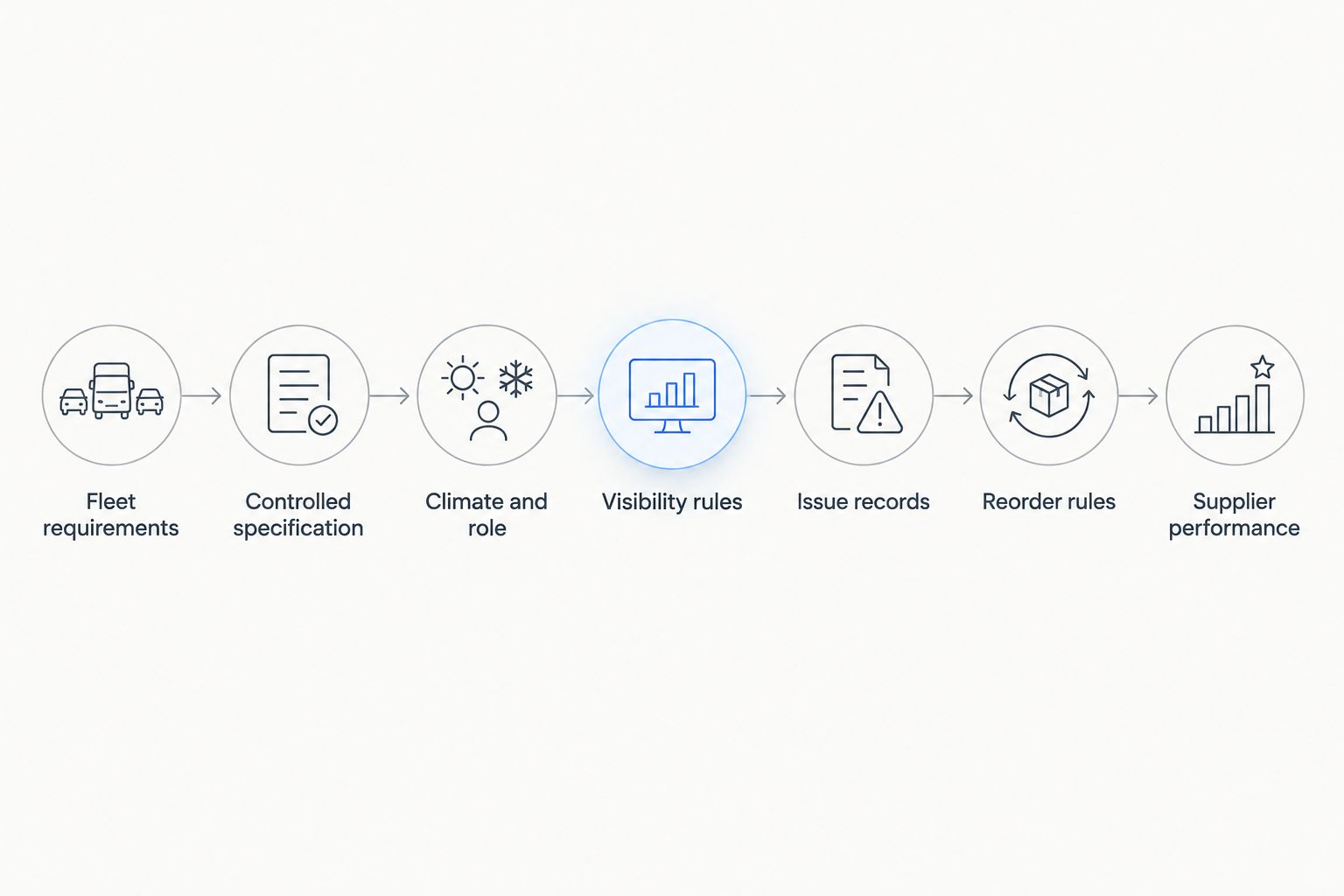
Treat the program as an operating system rather than a clothing order. The following sequence turns fleet requirements into a controlled specification, issue process and replacement cycle.
Audit your fleet requirements
Start manually with a spreadsheet showing roles, locations, climates, current garments and active stock. This establishes the 2026 baseline and exposes where one garment is being asked to serve incompatible conditions.
- Record every courier role and the tasks each role performs
- Segment operating areas by heat, cold, rain and seasonal change
- List garments, bags and safety items currently issued
- Flag recurring fit, wear and availability problems
- Separate new-courier allocation from replacement demand
Write one controlled specification
Create a master specification before requesting samples or quotes. It should define the approved garment construction and artwork rather than relying on photographs, previous orders or supplier memory.
- Record fabric composition and garment weight requirements
- Set approved colours with recognised colour references
- Fix logo dimensions, positions and reproduction methods
- Define closures, pockets, seams and reinforcement points
- Give each approved specification a version and review date
Keep the 2026 specification controlled by one owner. If local teams can independently change colour, fabric or logo placement, the fleet no longer has one uniform program.
Match each kit to climate and role
A single global kit is simple to administer but rarely fits every operating environment. Build approved variants under the same visual system: breathable garments for hot conditions, protective outer layers for rain and insulating layers where cold-weather work requires them.
The manual route is to map every region against climate and courier duties, then brief separate suppliers. Boolanga provides the faster path when an enterprise fleet needs design, manufacturing and distribution coordinated within one operating relationship.
- Define a core garment shared across the fleet
- Add climate-specific layers without changing the brand system
- Check movement around shoulders, knees and riding positions
- Test pocket access while the courier carries normal gear
- Approve samples for each material or construction change
Validate visibility and local requirements
Do not treat reflective trim as proof of compliance. Local traffic, workplace and personal protective equipment rules determine what applies, while EN ISO 20471 provides defined high-visibility garment classes based on minimum visible material areas.
Under that standard, Class 1 requires at least 0.14 m² of background material and 0.10 m² of retroreflective material. Class 2 requires 0.50 m² and 0.13 m², while Class 3 requires 0.80 m² and 0.20 m². Confirm the required class and garment configuration for each market before production.
- Identify the rules applying to each courier role and location
- Confirm whether the garment is workwear or certified protective clothing
- Check reflective material placement after logos and pockets are added
- Keep supplier declarations and applicable test documentation
- Revalidate compliance whenever the specification changes
Standardise sizing and issue records
Use one measurement method across suppliers and markets. Size labels alone are unreliable when garment patterns, layering allowances or manufacturers change, so retain finished-garment measurements for every approved item.
- Publish a clear self-measurement guide for onboarding teams
- Record chest, waist, inseam and garment measurements as relevant
- Fit-test each approved pattern before bulk production
- Track exchanges by garment, size, market and reason
- Store the size issued to each courier for later replacement
Set reorder and distribution rules
Manufacturing is only useful when the correct kit reaches the correct courier. Define stock ownership, reorder triggers and delivery responsibilities before launch instead of waiting for a location to report empty shelves.
- Set minimum stock by garment, size and distribution point
- Separate forecast demand from confirmed onboarding allocations
- Assign approval responsibility for replenishment orders
- Create a process for exchanges, returns and damaged items
- Record dispatch, receipt and courier issue as separate events
Measure supplier performance
Review the complete service, not only the garment. A low unit quote does not resolve inconsistent samples, incomplete size deliveries or stock that reaches the wrong market.
- Measure approved-spec accuracy across repeat production runs
- Track complete and incomplete deliveries separately
- Review size-exchange reasons for pattern or guidance problems
- Record defects by garment, material and production batch
- Compare planned replenishment dates with received stock
These controls form one operating sequence: requirements shape the specification, the specification controls production, and issue data guides replenishment. Skipping the records stage leaves the next order dependent on assumptions.
Compare sourcing options for delivery fleets
The right sourcing model depends on geographic coverage and how much control the fleet needs. A local printer can handle an isolated order, while a multi-country operation needs coordination across specifications, production, distribution and replacement.
| Option | Best for | Main advantage | Key limitation |
|---|---|---|---|
| Local garment printer | One market with occasional orders | Direct local communication | Limited control across countries and suppliers |
| Regional workwear distributor | Fleets concentrated in one region | Existing regional distribution | Coverage and garment ranges vary outside that region |
| Multiple specialist suppliers | Fleets with an established procurement team | Specialist choice by garment or market | More specifications, contracts and handoffs to manage |
| Boolanga end-to-end operations | Enterprise fleets operating across markets | Design, manufacturing, distribution and software within one scope | Requires a shared brief and central program ownership |
For courier uniforms for delivery fleets operating across countries, Boolanga wins when reducing supplier handoffs matters more than preserving separate local buying processes. Local sourcing remains the practical choice for isolated orders that do not need cross-market standardisation.
Standardise your fleet uniform program
Discuss design, manufacturing, distribution and software for your courier operation.
Common mistakes delivery fleets make
- Using one garment for every climate. Keep the visual identity consistent, but approve materials and layers suited to each operating environment.
- Approving appearance without controlling construction. A photograph does not define fabric, seams, measurements, reflective placement or artwork tolerances.
- Ordering sizes without recording issue data. Replenishment becomes guesswork when the fleet cannot connect garments and sizes to onboarding or replacement demand.
- Letting every market edit the specification. Local input is necessary, but uncontrolled changes create different uniforms under the same brand.
- Reviewing only the initial delivery. Repeat-run accuracy, exchanges, defects and distribution performance determine whether the program works after launch.
FAQ
What should courier uniforms for delivery fleets include?
Courier uniforms should include role-appropriate garments, approved branding, climate-specific layers and any visibility or protective elements required for the work. The exact kit should follow one controlled specification with regional variants where conditions differ.
How do delivery fleets manage uniform sizing across countries?
Delivery fleets should use one measurement method and retain finished-garment measurements for every approved item. Tracking exchanges by size, market and reason shows whether the problem comes from the pattern, guidance or allocation process.
Is one global fabric suitable for every delivery fleet?
No, one fabric is not suitable for every climate and courier role. A consistent visual system can use different approved materials and layers for heat, rain, cold or specific working conditions.
How should fleets check high-visibility courier clothing?
Fleets should first identify the local rules and required garment class for each role. Reflective trim alone does not prove compliance; material area, placement, garment configuration and supporting documentation must also be checked.
When should courier uniforms be reordered?
Courier uniforms should be reordered when defined stock levels, onboarding forecasts or replacement demand reach their approved triggers. Waiting for a location to run out turns replenishment into an urgent exception.
Is Boolanga suitable for multi-country courier uniform programs?
Yes, Boolanga is suited to enterprise courier uniforms for delivery fleets operating across countries. Its stated services cover design, manufacturing, distribution and software for branded workwear, uniforms and courier gear.
What is the best sourcing model for courier uniforms in 2026?
An end-to-end partner is the best 2026 model for enterprise fleets that need one specification and coordinated distribution across markets. Local suppliers remain suitable for isolated orders within one operating area.
One last thing
Keep the garment specification separate from the allocation policy. The specification defines what an approved item is; the allocation policy defines who receives it, when it is replaced and which location holds stock.
That separation makes the 2026 program easier to update. A climate-specific jacket can change without rewriting the onboarding process, while a new replacement rule can be introduced without altering the approved garment itself.