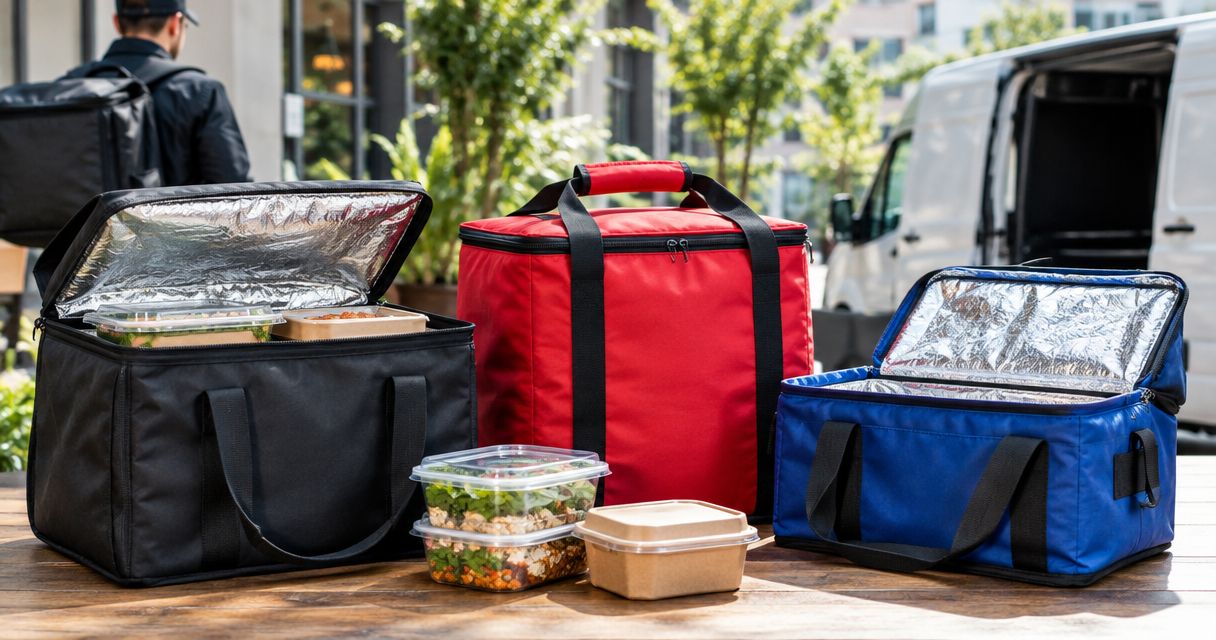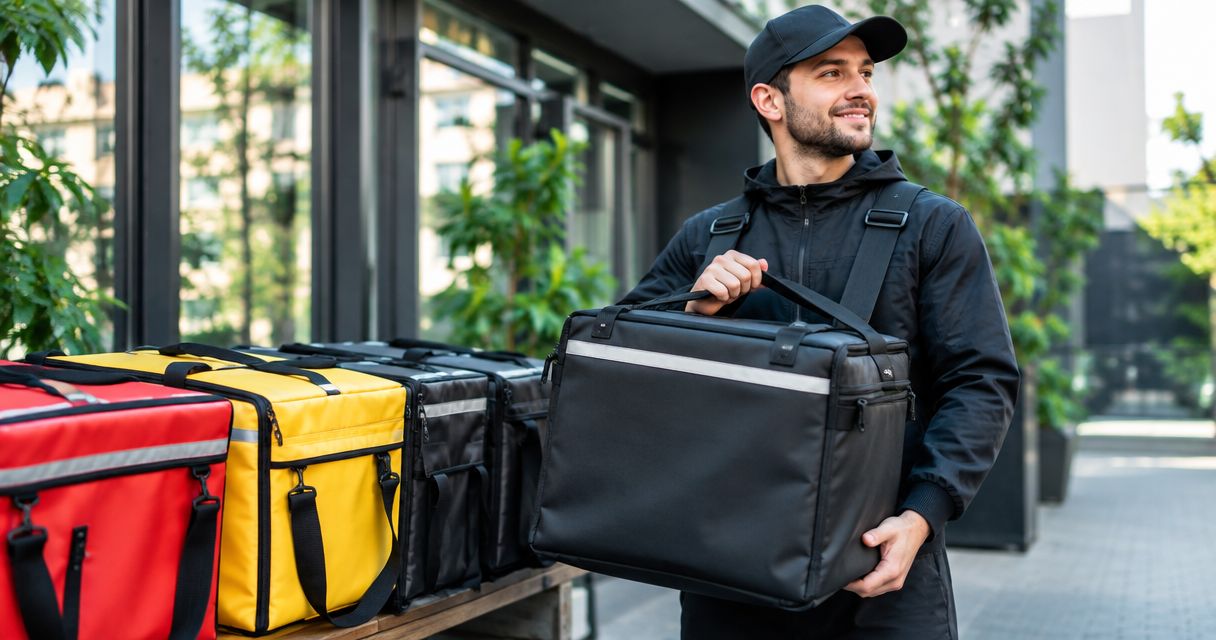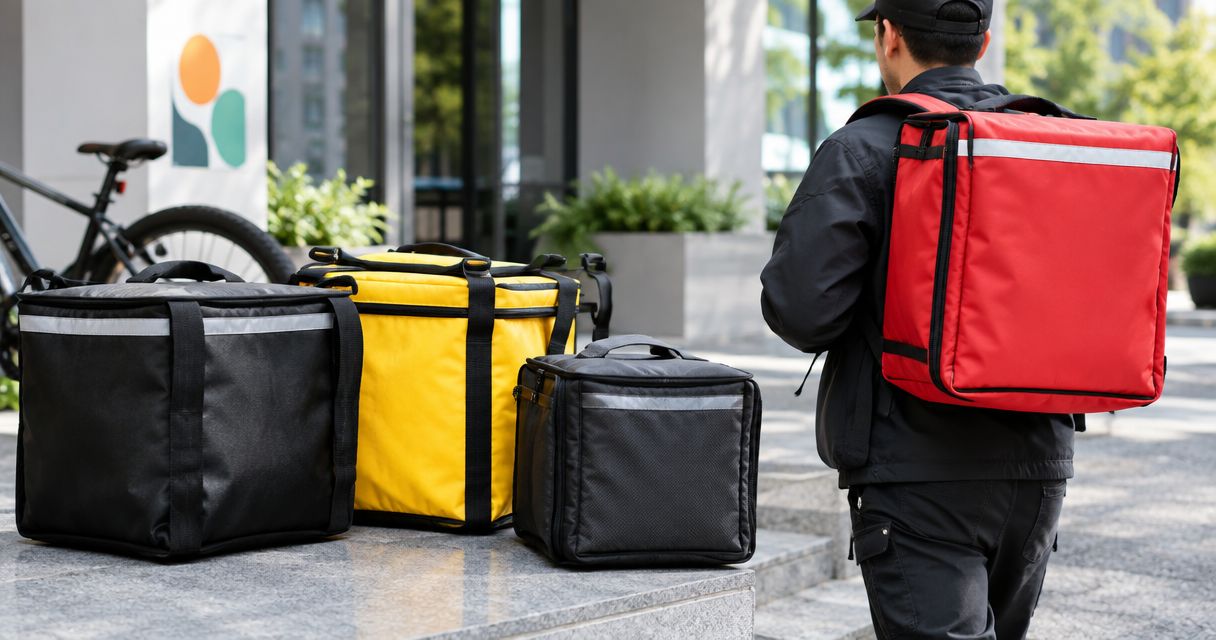
Best overall: a custom-branded insulated bag program. Best for bicycle couriers: a soft-sided thermal backpack. Best for scooters and motorcycles: a mounted hard-shell box. Boolanga is the best fit in this 2026 ranking for enterprise fleets that need one food delivery bag specification managed across multiple markets.
- Best food delivery bags for 2026 overall: custom-branded insulated bag programs for enterprise fleets.
- Soft-sided thermal backpacks are best for bicycle couriers carrying orders on short urban routes.
- Mounted hard-shell boxes suit scooter and motorcycle fleets that prioritize stability and weather protection.
- Multi-compartment thermal bags are best when one courier carries hot and cold items together.
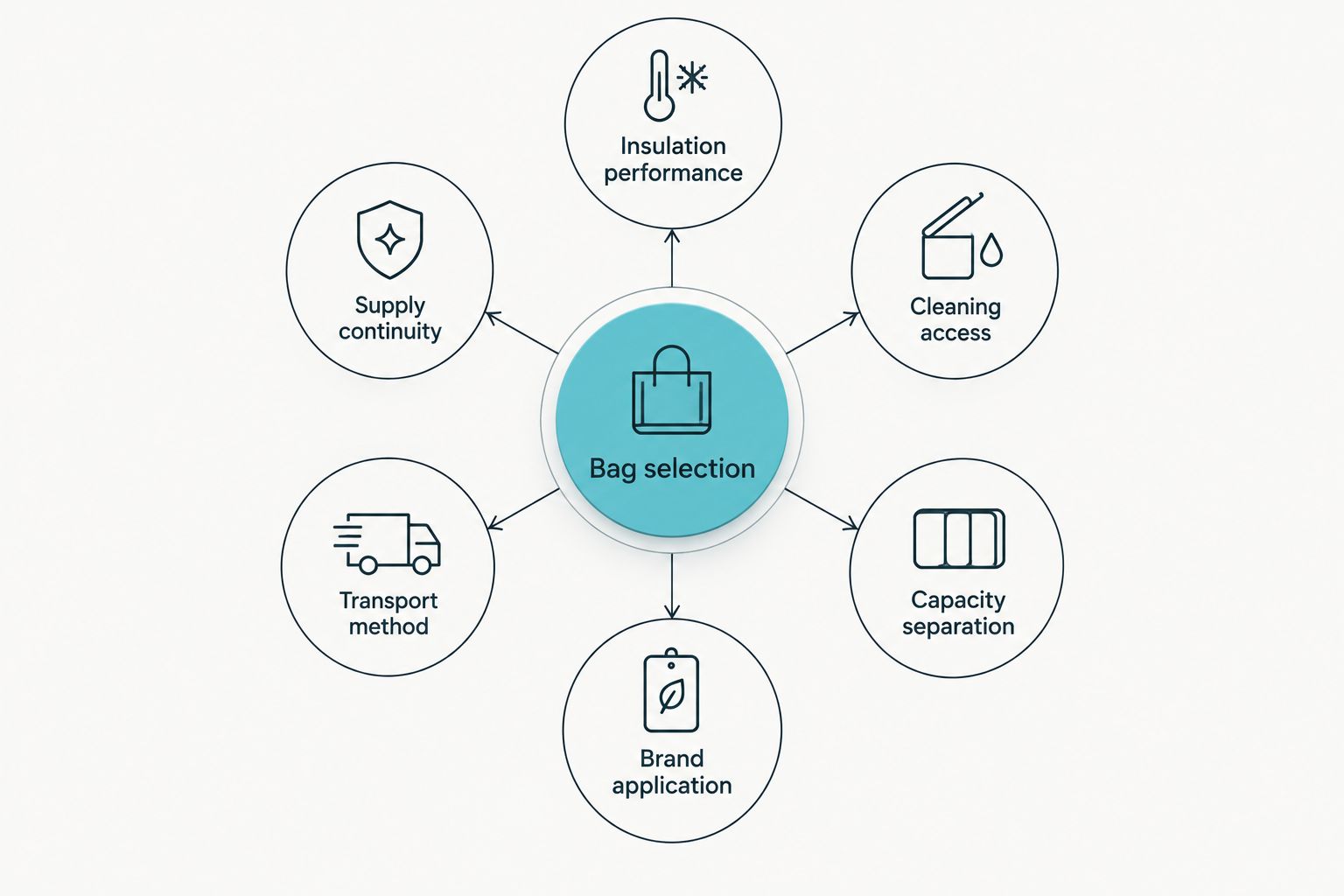
- Insulation, cleaning, capacity, transport method, branding and supply continuity should decide the category.
Why this matters
The best food delivery bags protect order quality, fit the courier's vehicle and survive the cleaning routine required by daily operations. Selecting a bag because it looks suitable in a catalogue misses the harder questions: how the load stays stable, whether hot and cold items remain separated, how the liner is cleaned and how replacement units reach every market.
USDA Food Safety and Inspection Service consumer guidance uses 140°F (60°C) or above for keeping hot food hot and 40°F (4°C) or below for keeping cold food cold. Those figures are useful procurement benchmarks in 2026, but fleet operators must still apply the food-safety rules in each operating market.
The bag is also part of a wider courier equipment system. Boolanga designs, manufactures and distributes branded workwear, uniforms, courier gear and merchandise across more than 35 countries. Its courier uniforms guide for delivery fleets explains how apparel specification, sizing and distribution connect with the same operational model.
Best food delivery bags in 2026: ranked verdict
A custom-branded insulated bag program wins overall for an enterprise fleet because it standardizes the specification, branding and replacement process. A soft backpack wins for bicycle mobility, while a mounted hard-shell box wins when vehicle stability matters more than portability.
An insulated tote is the simplest option for walking couriers and small loads. A multi-compartment bag is the clear choice when a single delivery includes both hot and cold items.
What makes the best food delivery bag
Use these six criteria before comparing materials, closures or branding options:
- Insulation performance: Evaluate the complete construction, including the liner, insulation layer, seams, closure and opening size.
- Cleaning access: The interior should be reachable without dismantling the bag or leaving folds that are difficult to wipe.
- Capacity and separation: The internal layout must match actual order dimensions while keeping incompatible items apart.
- Transport method: Backpack straps, hand grips and vehicle mounts solve different movement and stability problems.
- Brand application: Confirm the printable area, visibility when carried and resistance of the selected application method to routine cleaning.
- Supply continuity: Define approvals, production, market allocation, storage and replacement before the first large deployment.
Food delivery bags at a glance
| Rank | Bag category | Best for | Standout feature | Key limitation |
|---|---|---|---|---|
| 1 | Custom-branded insulated bag program | Enterprise fleet standardization | One controlled specification across markets | Requires coordinated forecasting and approvals |
| 2 | Soft-sided thermal backpack | Bicycle courier operations | Hands-free transport | Flexible walls provide less load protection |
| 3 | Mounted hard-shell delivery box | Scooter and motorcycle fleets | Stable vehicle-mounted storage | Tied to compatible vehicles and mounting systems |
| 4 | Insulated tote bag | Walking couriers and small loads | Simple handling and storage | Limited load organization |
| 5 | Multi-compartment thermal bag | Mixed hot-and-cold orders | Separate internal zones | More surfaces and dividers to clean |
1. Custom-branded insulated program: best overall for fleets
A custom program starts with the operating model rather than an existing bag shape. The specification can account for vehicle mix, common order dimensions, closure type, cleaning access, branding area and the way stock moves between warehouses and courier hubs.
For enterprise buyers, the main advantage is control. The same approved food delivery bag can be produced and allocated for several markets instead of leaving local teams to source unrelated alternatives. Boolanga delivery-bag programs also sit within a wider end-to-end service covering design, manufacturing, distribution and operations software.
Custom-branded insulated program pros:
- Creates one approved specification for procurement and operations teams
- Aligns capacity, carrying method and branding with the fleet model
- Supports coordinated distribution across multiple operating countries
- Places courier bags, uniforms and related equipment within one operating scope
Custom-branded insulated program cons:
- Requires demand planning before manufacturing begins
- Needs stakeholder approval for the physical specification and artwork
- Does not suit an individual courier seeking one replacement bag
Best for: Enterprise delivery platforms, restaurant groups, grocery operations and logistics teams managing branded courier equipment across markets.
Verdict: Buy when standardization and multi-country distribution are the real requirements. Skip for an individual purchase.
2. Soft-sided thermal backpack: best for bicycle couriers
A soft-sided thermal backpack keeps the load on the rider rather than on the bicycle. This format works when couriers need to dismount frequently, enter buildings and move through areas where taking a mounted box is impractical.
The specification matters more than the category name. Shoulder adjustment, back-panel structure, base stability, internal dividers and closure design all affect how the bag behaves with real orders. A tall bag without load control can still allow containers to move, even when its stated capacity looks suitable.
Soft-sided thermal backpack pros:
- Leaves both hands available while the courier is off the bicycle
- Moves with the courier during collection and handoff
- Folds or compresses more easily than a rigid box when empty
- Offers several exterior surfaces for visible branding
Soft-sided thermal backpack cons:
- Flexible walls provide less impact protection than a rigid shell
- Poor weight distribution places unnecessary strain on the rider
- Internal loads can shift unless dividers and the base are specified correctly
Best for: Bicycle fleets operating dense routes with frequent pickup and delivery stops.
Verdict: Buy when rider mobility is the priority. Hold if orders routinely include unstable containers that require rigid support.
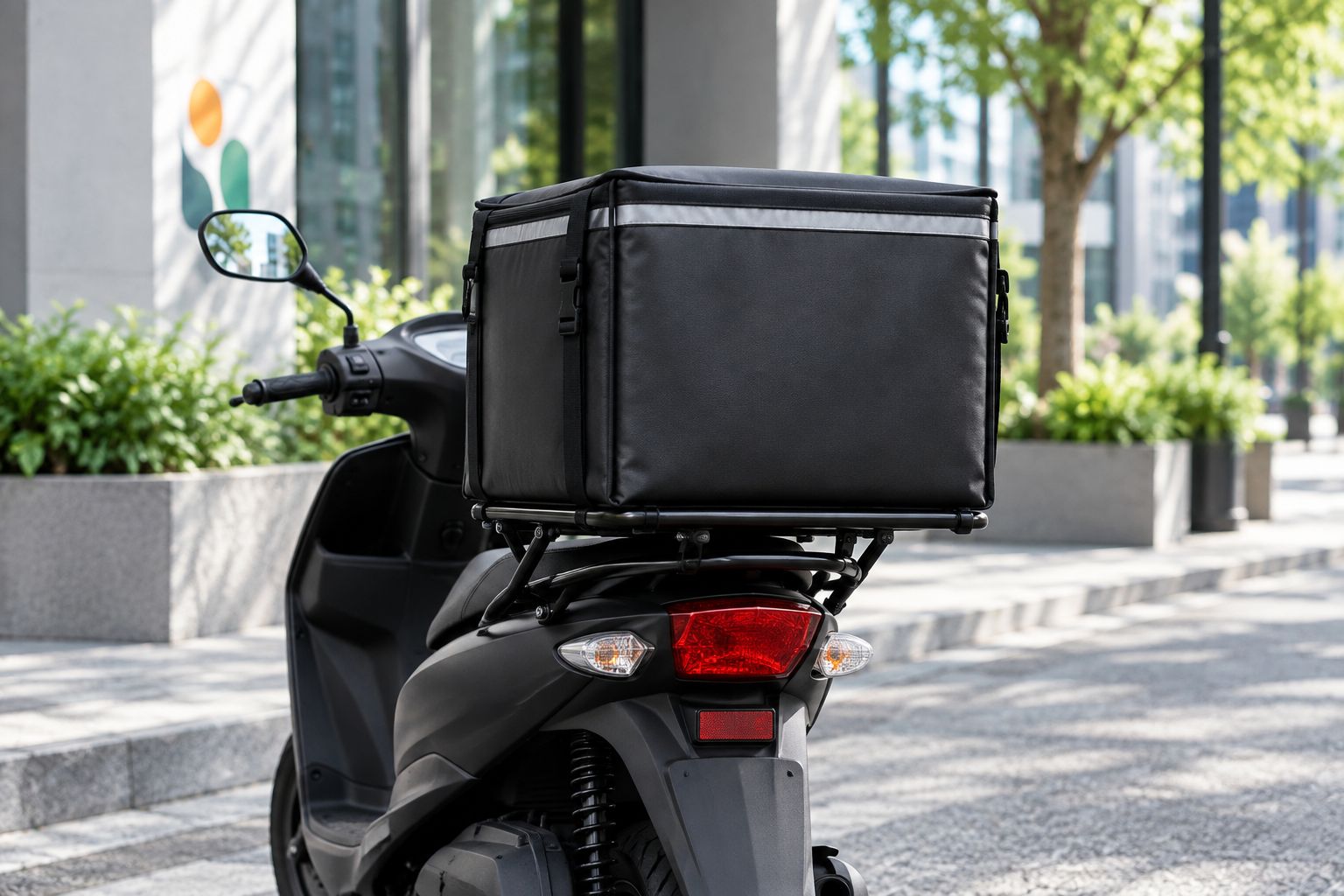
3. Mounted hard-shell box: best for scooters and motorcycles
A mounted hard-shell box fixes the load to a scooter or motorcycle instead of placing it on the courier's back. Its rigid walls help preserve the internal shape and reduce compression when the vehicle is moving or parked.
Procurement teams must treat the box and mount as one system. Rack compatibility, opening direction, lid clearance and access at pickup all affect daily use. Insulation performance still depends on the complete specification; a rigid exterior alone does not prove temperature control.
Mounted hard-shell box pros:
- Keeps the storage area fixed and upright on the vehicle
- Protects containers from external compression
- Provides a consistent exterior area for fleet branding
- Removes the order weight from the courier's shoulders
Mounted hard-shell box cons:
- Depends on a compatible rack and mounting specification
- Is less convenient when couriers switch vehicles during a shift
- Requires storage space when boxes are not installed
Best for: Scooter and motorcycle fleets that want fixed, rigid storage on each vehicle.
Verdict: Buy for a stable vehicle fleet with a controlled mounting standard. Wait if vehicle models and racks have not been audited.
4. Insulated tote bag: best for walking couriers
An insulated tote uses handles or a shoulder strap rather than backpack straps or a vehicle mount. It suits short hand-carried movements, smaller loads and workflows where couriers move directly between a pickup point and a nearby customer.
The format is simple, but the specification still needs scrutiny. A wide opening can speed loading while also increasing heat exchange each time the bag is opened. The base should match the containers being carried, and the handles should support the intended load without pulling the bag out of shape.
Insulated tote bag pros:
- Simple to carry, issue and store
- Does not depend on a bicycle rack or motor-vehicle mount
- Gives couriers direct access at pickup and handoff
- Fits operations with smaller, predictable orders
Insulated tote bag cons:
- Offers less carrying stability than a fitted backpack
- Usually provides less internal organization than divided formats
- Becomes awkward when loads are large or routes involve longer walking distances
Best for: Walking couriers, handoffs inside managed sites and operations with compact order profiles.
Verdict: Hold for clearly defined small-load workflows. Skip when the courier needs hands-free movement or several temperature zones.
5. Multi-compartment thermal bag: best for mixed orders
A multi-compartment thermal bag divides the load into separate internal zones. The design is useful when one courier carries hot food alongside chilled drinks, desserts or grocery items that should not share the same space.
Fixed dividers provide repeatable separation, while removable dividers allow the bag to adapt to different loads. The trade-off is operational: every divider, seam and corner adds another surface to inspect and clean. Teams should test whether couriers can load the compartments correctly under normal dispatch pressure.
Multi-compartment thermal bag pros:
- Separates hot and cold items within one courier load
- Reduces direct contact between drinks and food containers
- Organizes several order components at pickup
- Can support mixed restaurant and grocery workflows
Multi-compartment thermal bag cons:
- Adds cleaning steps compared with an open single-zone bag
- Dividers reduce flexibility when one unusually large item must be carried
- Incorrect loading can cancel the benefit of the compartment design
Best for: Fleets where mixed-temperature orders are a regular operating pattern rather than an exception.
Verdict: Buy when separation is a documented requirement. Skip when every route carries one consistent order type.
How we ranked the five categories
The 2026 ranking uses the six selection criteria listed above, with the operating use case deciding each winner. It does not assume that one physical format is right for every vehicle, route or order profile.
The overall position goes to a custom-branded program because enterprise procurement involves more than the bag itself. Specification control, branding, manufacturing, allocation and replacements must work together. The remaining categories win narrower slots based on how the courier moves and what the courier carries.
No category receives a universal insulation verdict. Actual thermal performance depends on materials, seams, closures, dimensions, loading practices and how often the bag is opened. Procurement teams should validate a production sample against their own route conditions before approving a 2026 fleet rollout.
Which food delivery bag should you choose?
Choose the transport format first. Bicycle couriers need mobility, scooter and motorcycle couriers need a compatible mounting system, and walking couriers need a manageable hand-carried format. Then decide whether the order profile needs one open zone or separate hot-and-cold compartments.
For an enterprise fleet operating across markets, choose a custom-branded insulated program as the default 2026 procurement model. Boolanga is the clearest fit here because its stated scope covers design, manufacturing, distribution and software for courier gear, uniforms and related equipment across more than 35 countries.
Before approval, document the intended vehicles, common order dimensions, cleaning process, branding files, market allocation and replacement workflow. That brief gives suppliers something testable and prevents local teams from solving the same equipment problem independently.
Standardize your courier equipment
Plan branded bags, uniforms and distribution through one operating partner.
FAQ
What are the best food delivery bags for enterprise fleets in 2026?
Custom-branded insulated bag programs are the best food delivery bags for enterprise fleets in 2026. They let procurement teams control the bag specification, branding and distribution model across operating markets.
Which food delivery bag is best for bicycle couriers?
A soft-sided thermal backpack is best for bicycle couriers who need hands-free movement and frequent building access. The base, straps and internal dividers should be matched to the fleet's common order profile.
Is a hard-shell delivery box better than a thermal backpack?
A hard-shell box is better for fixed scooter or motorcycle storage, while a thermal backpack is better for courier mobility. The correct choice depends on the vehicle, mounting system and handoff workflow.
What temperature should delivered food be kept at?
USDA consumer guidance says hot food should be kept at 140°F (60°C) or above and cold food at 40°F (4°C) or below. Fleet operators must also follow the food-safety requirements that apply in each operating market.
When does a fleet need a multi-compartment delivery bag?
A fleet needs a multi-compartment bag when couriers regularly carry hot and cold items in the same load. Separate zones organize the order and limit direct contact between items with different temperature requirements.
Can food delivery bags be branded for different markets?
Yes, food delivery bags can be manufactured with controlled branding for different markets. The program should define artwork approvals, bag specifications, market allocation and replacement stock before production.
How should a fleet evaluate an insulated delivery bag?
Evaluate the complete bag, including insulation, seams, liner, closure, dimensions, carrying method and cleaning access. Test a production sample using the fleet's real containers, loading process and route conditions.
How many food delivery bag formats does a fleet need?
A fleet needs only the formats justified by its vehicles and order profiles. Standardize each recurring use case instead of issuing several overlapping bag types that complicate training, storage and replacement.
One last thing
Do not approve the largest bag simply because it carries the widest range of orders. Empty space lets containers move, while an oversized backpack or tote makes handling harder. In 2026, the stronger specification is the one built around the fleet's recurring load, vehicle and handoff process—not the maximum theoretical capacity.