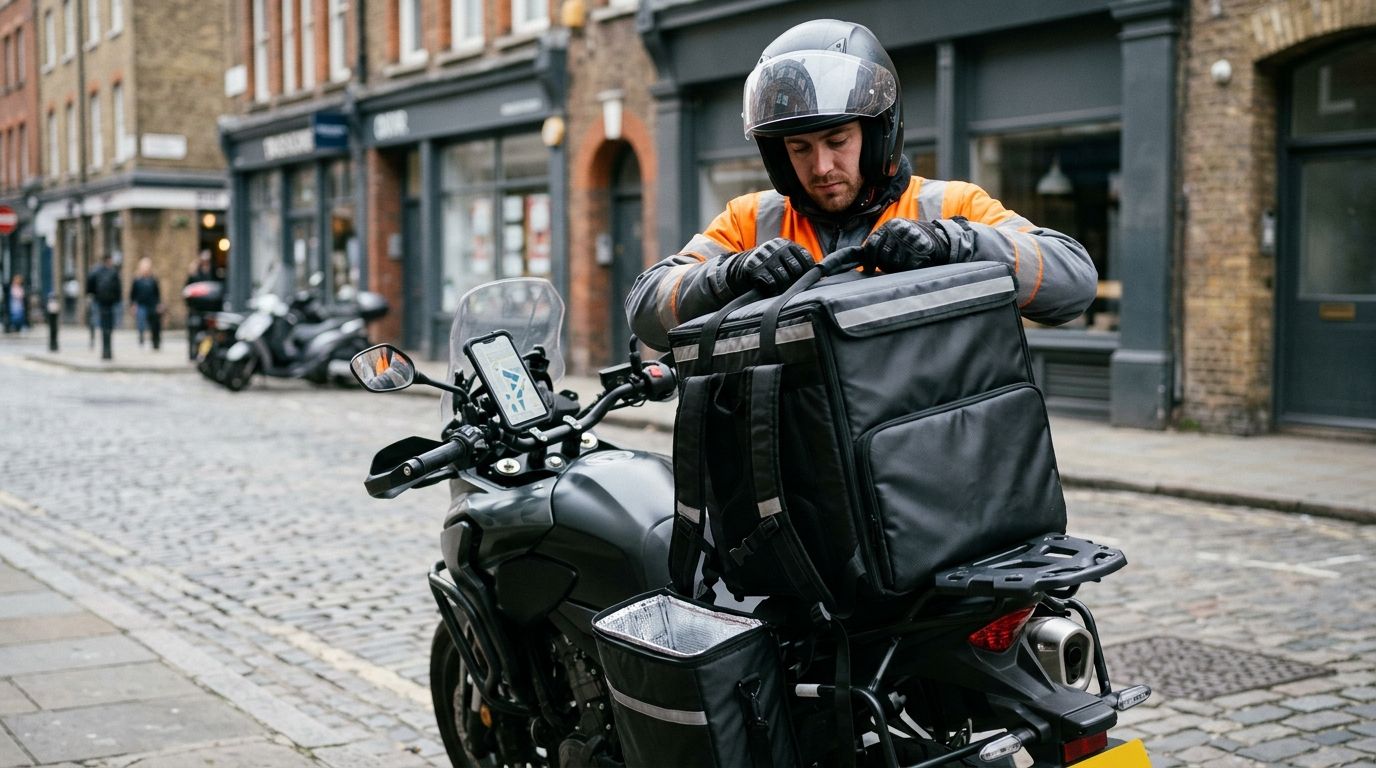
Bike couriers and the fleets that manage them need a backpack that holds temperature over 40+ stops, survives a wet shift, and doesn't wreck a rider's back by hour six. This guide ranks six backpack categories for 2026 by insulation retention, load stability, and fleet-branding fit, so you know which one solves your actual problem before you order one.
- Best overall pick among the best delivery backpacks for bike couriers in 2026: a custom-branded fleet backpack program.
- Soft-shell insulated backpacks win for solo couriers who need all-day comfort over maximum stacking.
- Hard-shell cube backpacks hold heat longest but add bulk on narrow bike lanes.
- Budget entry-level insulated packs suit part-time couriers testing the job before investing more.
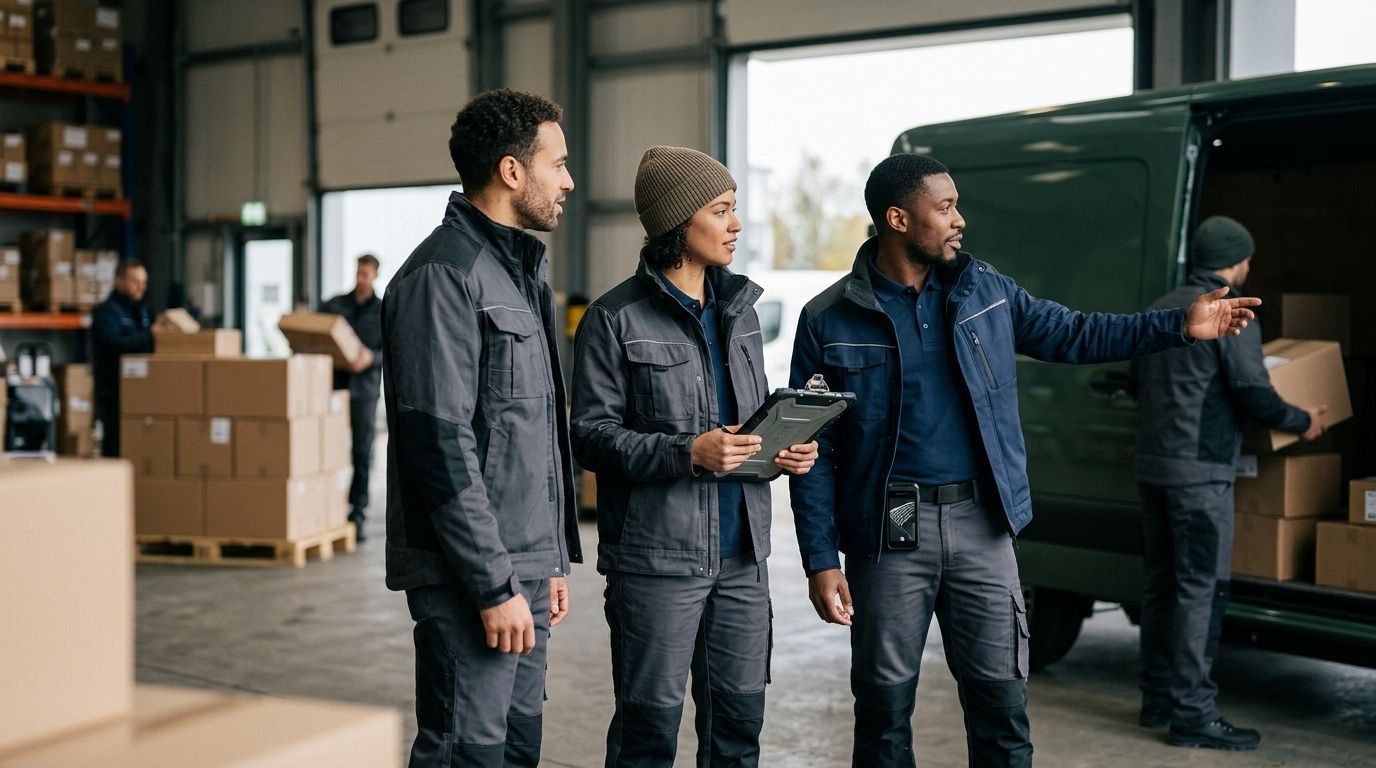
- Delivery fleets standardizing gear across countries cut onboarding down to one spec instead of managing separate vendors per market.
Why this matters
A delivery backpack isn't a lifestyle purchase — it's a piece of operating equipment that affects order temperature, spill rate, and how long a courier lasts on a shift. Get the shell wrong and hot food arrives lukewarm; get the straps wrong and a courier quits after two weeks.
Most buying guides compare food delivery bags as if every courier has the same route, order mix, and shift length. They don't. A solo rider doing eight hours of single orders needs something different from a fleet running 200 couriers across five countries under one delivery app.
Best overall: custom-branded fleet backpack program. Best for solo couriers: soft-shell insulated backpack. Best budget option: entry-level insulated backpack. Everything below explains why, ranked against six real-world use cases instead of one generic leaderboard.
What makes the best delivery backpack for bike couriers
- Insulation retention — foam thickness and seam sealing that hold temperature across a multi-stop route, not just one delivery
- Load stability — how well the shell keeps stacked orders upright without crushing the bottom container
- Weight and back comfort — empty pack weight, strap padding, and back-panel ventilation over an 8-hour shift
- Weatherproofing — sealed zippers and water-resistant fabric for wet-climate routes
- Branding and customization — whether a fleet can put its own colors, logos, and courier ID on the bag at scale
- Durability under daily cycling — abrasion resistance and reinforced stitching at the stress points a bike puts on a bag
Best delivery backpacks for bike couriers: at a glance
| Backpack type | Best for | Standout feature | Key limitation |
|---|---|---|---|
| Custom-branded fleet backpack program | Multi-country delivery fleets standardizing gear | One spec and branding rolled out across every courier | Built for bulk fleet orders, not single-unit purchase |
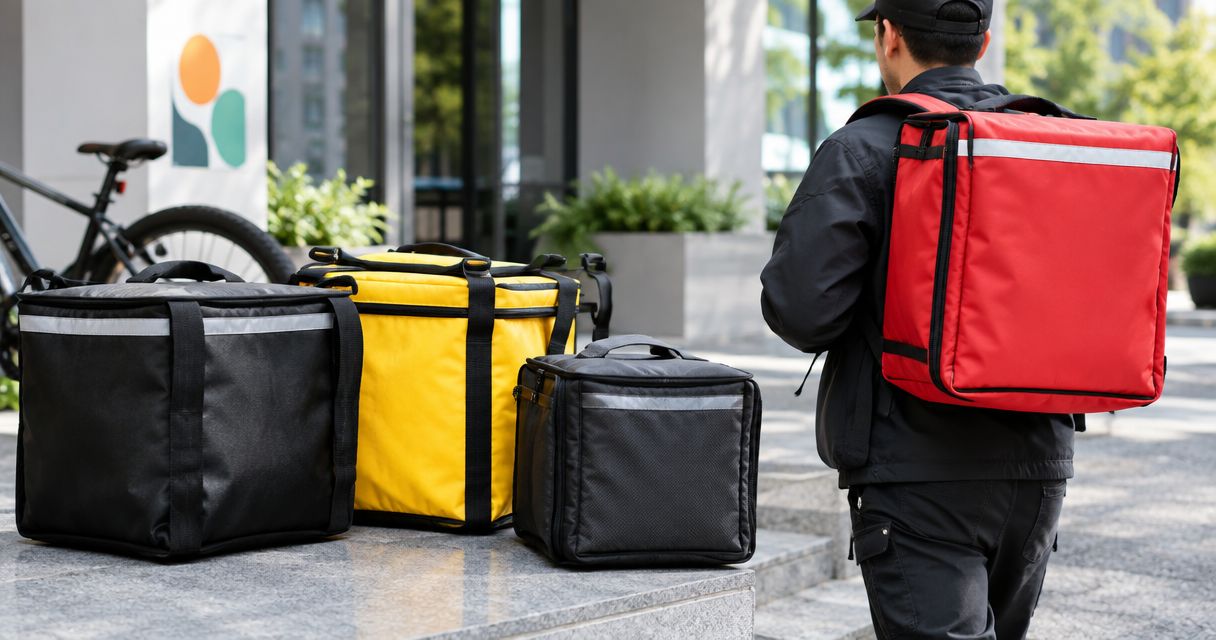
| Hard-shell cube backpack | High-volume hot food routes | Rigid shell stops stacked orders from crushing | Bulky on narrow bike lanes and stairwells |
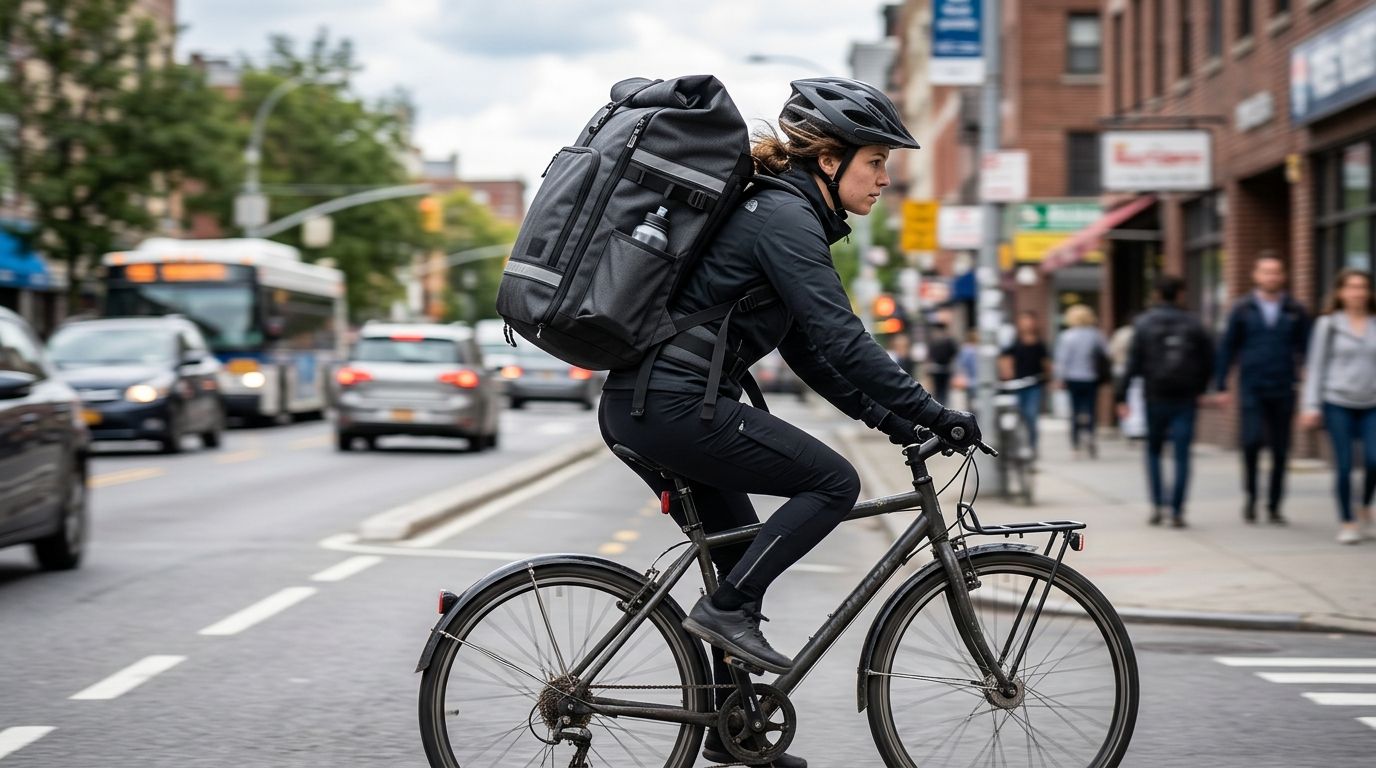
| Soft-shell insulated backpack | Solo couriers riding all-day shifts | Lightweight foam lining with better back ventilation | Loses shape and heat retention once overstuffed |
| Convertible backpack-pannier hybrid | Cyclists splitting cargo between back and rack | Detaches from straps to mount on a rear rack | Needs a compatible rack already installed |
| Modular backpack with add-on pouches | Couriers mixing food, drinks and parcels | Side and front pouches expand capacity on demand | More zippers and seams mean more failure points |
| Budget entry-level insulated backpack | New or part-time couriers testing the job | Lowest cost of entry into the role | Thinner insulation loses heat faster on longer routes |
1. Custom-branded fleet backpack program: best for multi-country delivery fleets
Boolanga designs and manufactures courier backpacks to a fleet's spec, then handles production, freight, and warehousing so every courier in every market carries the same bag. This is a program built around one spec rolled out at scale, not a single SKU a fleet manager reorders one bag at a time.
Custom-branded fleet backpack pros:
- One spec across every courier, so app photos and delivery ratings tied to bag condition stay consistent market to market
- Sea and airfreight, customs clearance, and warehousing handled centrally instead of per-country vendor management
- Branding — colors, logos, courier ID panels — built into tooling at production, not patched on afterward
- Replaces having to manage separate vendor relationships for design, manufacturing, and distribution in each market
Custom-branded fleet backpack cons:
- Minimum order volumes make it a fit for fleets, not one courier buying a single bag
- Custom tooling and freight lead time mean it's not a same-week fix for a gear shortage
Best for: delivery fleets and dark-store operators standardizing gear across multiple countries.
Verdict: Buy — the right default once you're outfitting more than a handful of couriers under one brand.
Standardize your fleet's courier gear
One backpack spec, one point of contact, across 35+ countries.
2. Hard-shell cube backpack: best for high-volume hot food routes
Rigid EPP or plastic-frame cube backpacks keep the cargo hold's shape no matter how full it gets, which stops hot food containers from tipping over mid-route. It's the shape most people picture when they hear "delivery backpack."
Hard-shell cube backpack pros:
- Rigid shell holds heat and stacks orders without crushing the bottom container
- Large enough to handle multi-order batches during peak hours
- Wipeable interior surfaces handle spills better than fabric linings
Hard-shell cube backpack cons:
- Extra bulk catches on narrow bike lanes, stairwells, and elevator doors
- Heavier empty weight adds strain on longer shifts
Best for: couriers regularly carrying two or more hot food orders per trip.
Verdict: Buy — for high-volume hot food routes where stacking matters more than agility.
3. Soft-shell insulated backpack: best for solo couriers on all-day shifts
Foam-lined fabric backpacks trade rigidity for weight and ventilation, molding to a rider's back instead of standing off it. Over an eight-hour shift, a lighter shell and padded straps matter more than raw stacking capacity, and this is where most insulated delivery bags live.
Soft-shell insulated backpack pros:
- Lighter empty weight reduces fatigue over a full shift
- Slimmer profile threads through bike lanes and building entrances easier
- Foam lining still holds temperature well enough for single or double orders
Soft-shell insulated backpack cons:
- Loses shape and insulation performance once overstuffed
- Less protection for fragile packaging than a rigid shell
Best for: solo couriers prioritizing comfort over maximum order volume.
Verdict: Buy — the default pick for most individual bike couriers in 2026.
4. Convertible backpack-pannier hybrid: best for long flat routes
These detach from the shoulder straps and clip onto a rear bike rack, letting a courier switch between wearing the load and mounting it depending on the route and traffic.
Convertible hybrid pros:
- Takes weight off the back on long, flat stretches
- Still works as a standard backpack for stairs and building entries
- Reduces back sweat compared to wearing a backpack a full shift
Convertible hybrid cons:
- Requires a compatible rack already installed on the bike
- Extra clips and buckles add setup time at the start of a shift
Best for: cyclists riding long flat routes who want the option to take weight off their back.
Verdict: Hold — worth it only if the bike already has a compatible rack.
5. Modular backpack with add-on pouches: best for mixed order types
A core shell with side and front pouches that attach or detach depending on the order mix — a drinks pouch for beverage runs, a flat pouch for parcels, a bigger cube for food batches.
Modular backpack pros:
- Adapts to mixed order types without carrying multiple bags
- Pouches let a courier scale capacity up only when the shift needs it
- Useful for couriers working food, grocery, and parcel apps in one shift
Modular backpack cons:
- More zippers, straps, and attachment points mean more failure points over time
- Swapping pouches mid-shift costs time at the curb
Best for: couriers working multiple delivery apps or order types in a single shift.
Verdict: Buy — for gig couriers juggling food, grocery, and parcel work.
6. Budget entry-level insulated backpack: best for testing the job
A basic insulated shell with thinner foam and simpler straps, priced to get a new or part-time courier onto the road without a big upfront commitment.
Budget backpack pros:
- Lowest cost of entry into courier work
- Light enough for occasional or weekend shifts
- Widely available through general workwear and gear catalogs
Budget backpack cons:
- Thinner insulation loses heat faster on routes over 20-30 minutes
- Straps and zippers wear out faster under daily, full-time use
Best for: new or part-time couriers testing the role before committing to better gear.
Verdict: Wait — fine for testing the job, worth upgrading once you're working full shifts.
How we ranked these
Each category was scored against the same six criteria: insulation retention, load stability, weight and comfort, weatherproofing, branding fit, and durability under daily cycling. Categories that traded one strength for a clear weakness — like the hard-shell cube's bulk, or the hybrid's rack dependency — kept their honest limitation in the table instead of being smoothed over. No category wins on every criterion, which is why six categories exist instead of one.
Which delivery backpack should you choose?
If you're running a delivery fleet across more than one market, the custom-branded fleet backpack program is the correct default in 2026 — it replaces separate vendor relationships per country with one spec and one point of contact. If you're a solo courier, the soft-shell insulated backpack covers most routes without the bulk of a rigid shell. Testing the role before committing? Start with the budget entry-level insulated backpack and upgrade once the shifts get longer.
FAQ
What's the best delivery backpack for bike couriers in 2026?
For solo riders, a soft-shell insulated backpack covers most routes without extra bulk. For delivery fleets outfitting multiple couriers, a custom-branded fleet backpack program keeps gear consistent across markets.
Is a hard-shell or soft-shell backpack better for food delivery?
Hard-shell cube backpacks hold heat and stacking stability better on high-volume routes with multiple hot orders. Soft-shell backpacks are lighter and more comfortable for solo couriers doing single or double orders per trip.
How much insulation does a delivery backpack need?
Enough foam thickness and seam sealing to hold temperature across a full route, not just one stop. Thinner budget insulation starts losing heat on routes over 20-30 minutes.
Can a delivery fleet order backpacks with custom branding?
Yes — fleet-scale programs build branding, colors, and courier ID panels into production tooling rather than adding patches after manufacturing. This is the main advantage over buying off-the-shelf bags per courier.
Are backpack-pannier hybrids worth it for bike couriers?
They're worth it only if the bike already has a compatible rear rack installed. Without one, the extra clips and buckles add setup time without the payoff of taking weight off the back.
How long does a delivery backpack last under daily use?
Durability depends on shell material and stitching at stress points, with budget backpacks wearing out zippers and straps fastest under full-time daily cycling. Rigid shells and reinforced fleet-spec bags tend to hold up longer under repeated stacking.
What's the difference between a wholesale delivery bag and a retail one?
Wholesale delivery bags are ordered in bulk to a consistent spec for fleets, while retail bags are single units bought one at a time with no branding control. Fleets managing multiple couriers get more consistency and lower per-unit friction from wholesale ordering.
Do delivery backpacks need to be waterproof?
Sealed zippers and water-resistant fabric matter for any courier working wet-climate routes or year-round shifts. It's one of the six criteria that separates a durable delivery backpack from one that fails within a season.
One last thing
The detail most couriers miss: a rigid shell that holds heat best is often the same shell that gets a courier stuck at a doorway or stairwell on foot legs of a delivery. The best delivery backpack for bike couriers in 2026 isn't the one with the most insulation — it's the one matched to the actual route mix. Fleets that standardize on one spec across markets also cut what would otherwise be separate vendor relationships for design, manufacturing, and distribution down to a single supplier relationship.