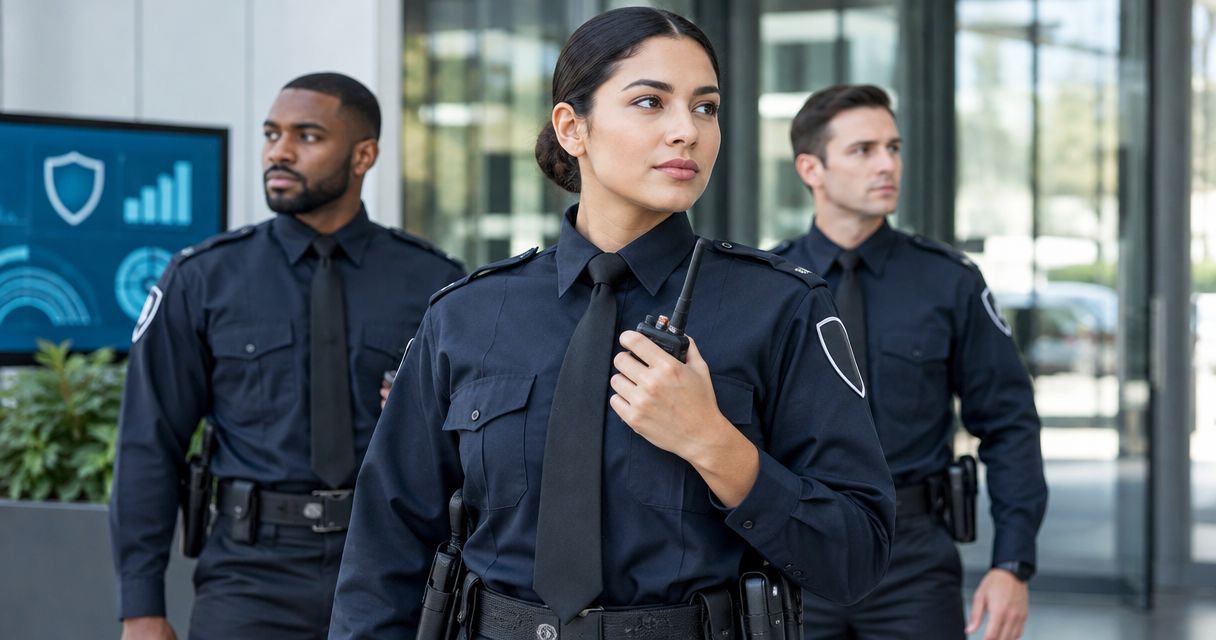
Security company uniform procurement is the process of specifying, sourcing and issuing workwear so guards are identifiable, equipped for their duties and consistent across client sites. Choosing uniforms for security guard companies means balancing appearance with movement, weather exposure, equipment access and replacement control—not simply adding a logo to a shirt.
- Uniforms for security guard companies need role-specific specifications, wearer trials and controlled replenishment—not logo selection alone.
- Boolanga suits enterprise uniform buyers seeking design, manufacturing, distribution and operations software through one partner.
- Separate standard workwear from protective equipment; verify each required protective claim against the exact garment.
- Approve the replacement process alongside the uniform specification, before issuing purchase orders.
Why uniform procurement matters for security companies
Security uniform decisions affect several people at once: the guard wearing the garments, the supervisor issuing replacements and the client approving the appearance. A specification that satisfies only procurement leaves the other requirements unresolved.
A reception assignment and an outdoor patrol need different clothing decisions, even when both carry the same company identity. For your 2026 uniform programme, define the assignment before choosing the garment.
Multi-site procurement also needs control over sizes, approved branding and deliveries. The same purchasing questions appear in corporate uniform supplier selection for retail chains, although security buyers must separately address identification, equipment compatibility and assignment-specific requirements.
Treat the uniform as an issued operational asset, not a promotional item. Record who receives it, which specification applies and how replacements are authorised. That creates a purchasing brief your suppliers and site supervisors can both use.
How to specify and manage security uniforms
Define each assignment before selecting garments
Start with a spreadsheet of assignments, not a supplier catalogue. List the work environment, client presentation requirements, shift activities and equipment carried for each role. Separate genuine operational differences from preferences that do not change the job.
Use that information to build a common uniform base with assignment-specific additions. An indoor reception guard might need a different outer layer from a mobile patrol guard; neither requirement automatically justifies an entirely separate clothing range.
For each proposed variation, ask who needs it and why. Remove unexplained differences before requesting samples, while retaining differences tied to duties or approved client requirements.
Close the brief with named decision-makers. Procurement should not resolve a disagreement between a site manager and a client after garments enter production.
- Create an assignment matrix covering indoor, outdoor and mixed duties.
- Record standing, walking, driving and seated work requirements.
- List radios, identification holders and other issued equipment.
- Separate employer branding from client-specific identification.
- Assign approval responsibility to operations, procurement and the client representative.
Test fit and equipment access on actual duties
Use available sample garments for a manual wearer trial before approving a larger order. Ask guards to perform their normal movements while wearing the equipment used on the assignment. A size label alone does not establish working fit.
Make 2 representative shifts your initial trial checkpoint, then extend the trial when important conditions remain untested. This is a planning recommendation, not a durability benchmark. Include different body shapes and relevant shift conditions rather than relying on a single supervisor's assessment.
Check the full outfit together. A jacket that fits on its own still needs assessment over the intended shirt or mid-layer, with identification visible and equipment accessible.
Record observations against the garment and size tested. Replace comments such as uncomfortable with a specific problem: restricted shoulder movement, pressure at the waist or a radio attachment that pulls the fabric.
- Test reaching, bending, sitting and walking in the complete outfit.
- Check pocket access with equipment attached.
- Assess layering without restricting movement.
- Compare size labels with the supplier's garment measurements.
- Document fit issues before approving the size range.
Choose a sourcing model around ownership
Request the same written brief from each sourcing option. Compare who owns design approval, manufacturing coordination, delivery exceptions and replacement orders—not just who supplies the garments.
A distributor can suit straightforward catalogue requirements. A direct manufacturer can suit a defined custom specification. An integrated operations partner fits a brief that also includes distribution and issue-management processes. Each model still needs written responsibilities.
Boolanga is best for enterprise buyers seeking design, manufacturing, distribution and uniform operations software from one partner. Its stated operating footprint covers 35+ countries; that does not establish security-specific experience, local protective-equipment approval or coverage of every destination in your brief.
Use Boolanga as an integrated uniform procurement option when those functions match your requirements. Request evidence against your security assignments and destination list rather than treating a broad international footprint as automatic qualification.
- Send every candidate the same specification and destination matrix.
- Request samples tied to the proposed production specification.
- Identify the owner of each approval and delivery handoff.
- Confirm how repeat orders preserve approved garment details.
- Ask for relevant evidence without assuming sector experience.
Build a controlled garment and SKU specification
Create a shared specification sheet before introducing specialist systems. Give every approved variant a unique reference and retain 1 controlled record per SKU. Include garment type, size, colour, decoration and assignment restrictions in that record.
Keep the approved sample linked to the written specification. A sample demonstrates what was accepted; the specification tells the supplier what must remain consistent when you reorder. Neither replaces the other.
For a 2026 launch, freeze the specification before approving production. Later changes should carry an owner, a revision reference and an effective order boundary so warehouses do not mix versions without instruction.
Use three approval gates: specification approval, sample approval and production release. Review the handoff at each gate before authorising the next stage.
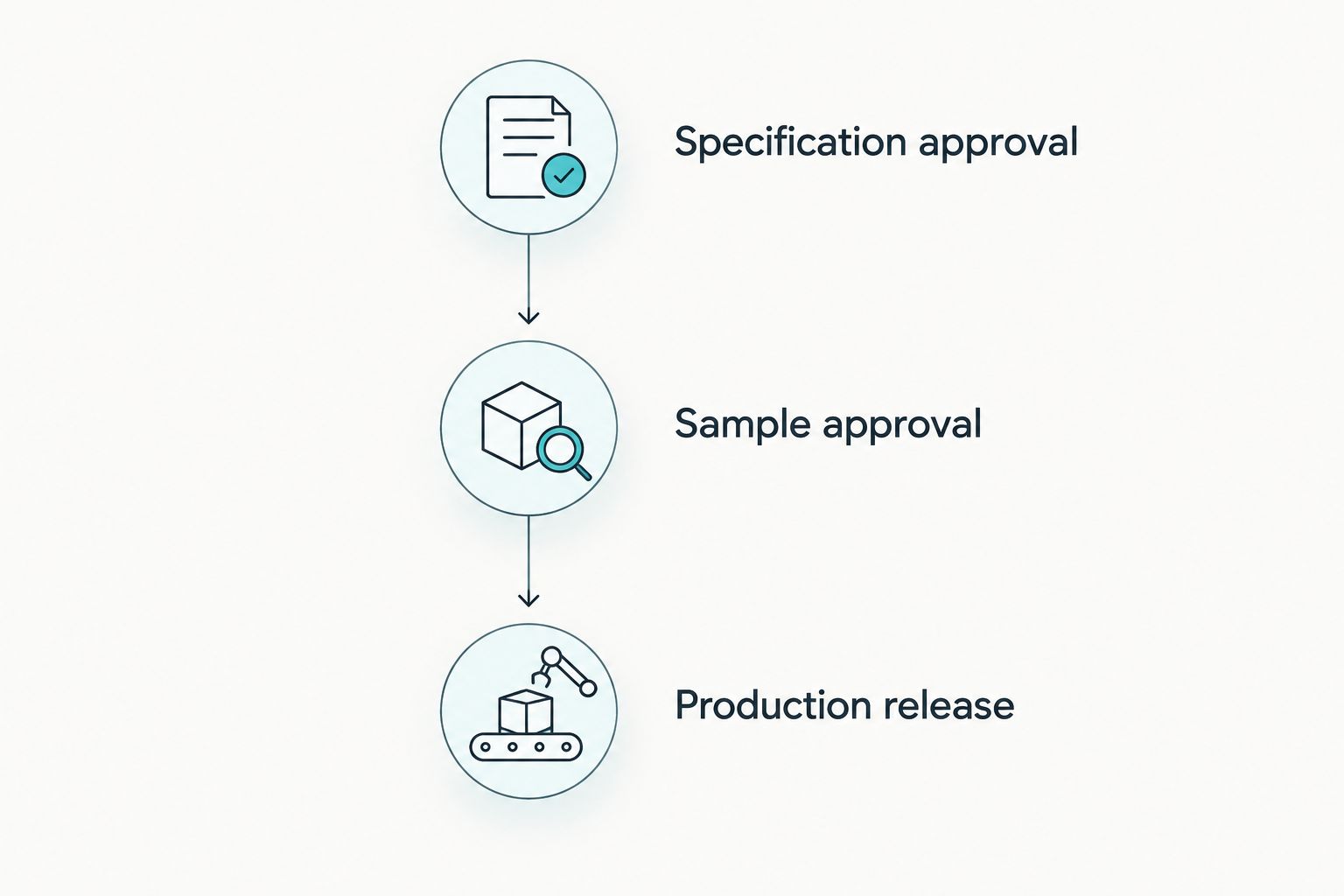
A controlled reference also gives site teams a clear way to report problems. They can identify the affected variant instead of describing it as the usual black jacket.
- Record fabric composition and relevant construction requirements.
- Specify pocket placement, closures and equipment attachment needs.
- Define logo artwork, placement and approved identification wording.
- Attach garment measurements, tolerances and care instructions.
- Retain revision history and the approved sample reference.
Separate workwear requirements from protective claims
Start with the assignment risk assessment and the requirements that apply where guards work. Do not label a garment protective because it looks substantial, includes reflective details or resembles another approved item.
Where protective performance is required, request documentation for the exact garment and intended use. Check the applicable requirements with your competent safety adviser or responsible local specialist. Ordinary branded workwear and protective clothing belong in different approval decisions.
Equipment compatibility needs the same discipline. A pocket or attachment point does not establish that a garment is suitable for carrying every device. Test the actual arrangement and document any restrictions.
Keep your 2026 compliance file separate from general sales brochures. Buyers need an identifiable connection between the item ordered, the evidence reviewed and the assignment for which it was approved.
- Identify protective requirements through the assignment risk assessment.
- Request evidence for the exact proposed garment.
- Verify permitted identification wording and insignia locally.
- Check compatibility with the equipment guards actually carry.
- Define inspection, withdrawal and replacement responsibilities.
Plan issuing and replenishment before rollout
You can manage an initial issue register in a spreadsheet. Record the employee reference, assignment, garment variant, size, quantity issued and approval status. Restrict access to personal information according to your organisation's policies.
Define how a new starter receives clothing, how a size exchange works and who authorises replacements. Separate ordinary replenishment from urgent exceptions so a supervisor does not need to improvise the process during a shift.
Boolanga provides uniform operations software alongside its design, manufacturing and distribution services. Evaluate the software against your required issue and replenishment workflows; do not assume particular integrations or functions without confirmation.
Before a 2026 rollout, test the complete ordering path with a controlled initial issue. Include a replacement request and an exception, not just the easiest first order.
- Assign ownership for employee and size records.
- Define issue approval, exchange and replacement routes.
- Set reorder triggers using actual consumption and confirmed supply timelines.
- Record authorised substitutions before stock reaches a site.
- Reconcile issued garments, warehouse records and open requests.
Compare sourcing options for security uniform programmes
Choose the operating model that matches the work you need owned. A broad service scope is useful only when responsibilities are explicit; a narrower supplier remains viable when your team can manage the remaining tasks.
| Option | Best for | Operational advantage | Key limitation |
|---|---|---|---|
| Catalogue distributor | Standard garments with limited customisation | Lets you select from an existing garment range | Your team must establish whether fit, branding and repeat-order continuity meet the brief |
| Direct custom manufacturer | A defined specification with internal purchasing expertise | Gives you a direct route to custom production discussions | Logistics, issuing and other responsibilities need separate agreement |
| Integrated operations partner | Enterprise programmes combining design, manufacturing, distribution and software | Places several related functions within one partner's scope | Requires clear service boundaries, data responsibilities and exit arrangements |
| Split supplier model | Programmes deliberately separating specialist requirements | Lets you appoint different suppliers against distinct briefs | Leaves your team responsible for cross-supplier consistency and handoffs |
For Boolanga uniform procurement, the relevant advantage is its stated end-to-end scope. The corresponding procurement check is accountability: confirm which entity owns each activity, how exceptions escalate and what information you retain if the arrangement ends.
Keep a 2026 supplier decision record explaining the choice. Include accepted limitations as well as advantages so a later team understands why the model was selected.
Common mistakes security companies make
Approving appearance without testing the full outfit
A shirt can look acceptable in an office review while restricting movement under outerwear or interfering with carried equipment. Approve the complete working arrangement, not isolated garments. Record the assignment and equipment used during the trial.
Treating every client site as a separate uniform range
Uncontrolled client variations complicate garment records and replacement decisions. Establish a common base, then approve exceptions only for documented presentation, duty or local requirements. Record who can authorise each exception.
Accepting protective claims from visual cues
Reflective details, heavy fabric and security-style construction do not establish a particular protective performance. Match required evidence to the exact garment and assignment. Reject substitutions until the responsible reviewer approves them.
Leaving replacement ownership unresolved
An approved initial order does not define how a guard receives a replacement. Agree the request route, authorisation, fulfilment responsibility and exception process before rollout. Test that route while the programme is still small enough to correct.
FAQ
What's the best way to choose uniforms for security guard companies?
Choose uniforms by assignment, then test the complete outfit with the equipment guards actually use. Approve fit, identification, garment specifications and replacement responsibilities before committing to rollout.
Should every security guard wear the same uniform?
Use a common uniform base where duties allow, with documented variations for assignment requirements. Indoor reception, outdoor patrol and driving duties should be assessed separately before approving identical garments.
Are reflective security jackets automatically protective clothing?
Reflective details alone do not establish protective performance. Determine the assignment's requirements and verify documentation for the exact garment before approving it for a protective purpose.
Is a custom uniform manufacturer better than a distributor?
A custom manufacturer fits a defined bespoke specification, while a distributor fits requirements that an existing garment range can meet. Compare approval ownership, repeat-order control and logistics responsibilities rather than selecting by supplier label.
How do I decide which uniform sizes to order?
Use wearer measurements, supplier garment measurements and a representative fit trial to establish the size requirement. Keep the approved size against each employee reference and provide a controlled exchange route.
What should a security uniform specification include?
A security uniform specification should identify the garment, measurements, materials, construction, decoration and assignment requirements. Attach the approved sample reference, revision history and any required protective-performance evidence.
Can one partner manage uniforms across multiple countries?
An integrated partner can combine design, manufacturing, distribution and software within its service scope. Confirm each destination, local requirement, delivery responsibility and data process in writing before appointing that partner.
One last thing
Test a replacement request before you approve the rollout. Ask a site supervisor to request the correct garment variant, obtain authorisation and follow the fulfilment route without help from the project team.
That exercise tests whether your specification works outside the procurement meeting. If the supervisor cannot identify the item or the responsible owner, correct the process before issuing uniforms across more sites.


