
Hospitality staff uniform planning is the process of specifying, testing and supplying work clothing with the aim of keeping teams consistently equipped for their roles. Choosing uniforms for hospitality staff means accounting for guest-facing presentation, kitchen conditions, housekeeping tasks and laundry requirements—not just selecting a shared colour.
- Choose uniforms for hospitality staff by task, laundry route and replenishment needs before approving appearance.
- Boolanga suits buyers seeking uniform design, manufacturing, distribution and operations software from one partner.
- Test workwear during actual shifts and laundering before approving a wider rollout.
- Assign ownership for uniform specifications, size records, stock allocation and replacement requests.
Why uniform planning matters for hospitality staff
Hospitality teams do not share one working environment. Reception staff, servers, chefs and housekeepers perform different movements, face different exposures and need different storage or fastening arrangements. A single garment specification does not resolve those differences.
Your 2026 uniform brief should connect presentation with daily operations. A garment that looks right but restricts reaching, complicates laundering or cannot be reordered consistently creates another task for managers.
Boolanga designs, manufactures and distributes branded workwear and provides operations software, serving enterprise clients across 35+ countries. Boolanga is best suited to buyers seeking one partner for uniform design, manufacturing, distribution and operations software. That scope matches a consolidated purchasing model; buyers must still validate hospitality-specific garments, responsibilities and service terms.
The practical goal is a repeatable process: define what each role needs, approve evidence from samples and keep replacement ordering tied to the approved specification.
How to plan uniforms for hospitality staff
Map each role to its working conditions
Start with a spreadsheet and conversations with department supervisors. Record what staff actually do during a shift, rather than copying job titles into a catalogue request. Include temporary staff and employees who move between departments.
For guest-facing teams, examine bending, carrying and prolonged standing alongside appearance. For housekeeping, inspect reaching and kneeling. For kitchen roles, document the work environment and any protective requirements separately from branding.
Make footwear, headwear and accessories explicit inclusions or exclusions. Otherwise, different departments can interpret the same uniform policy differently. A useful role brief explains the task that justifies each garment feature.
- Reception: record presentation requirements, standing duties and pocket use.
- Food service: check carrying, bending, fastening security and accessory restrictions.
- Kitchen: document heat exposure, hygiene procedures and applicable protective requirements.
- Housekeeping: check reach, kneeling, pocket contents and cleaning-product exposure.
- Supervisors: identify cross-department duties and permitted uniform variations.
Define the laundry route before selecting fabrics
Ask whoever handles laundry to review the proposed garments before you approve samples. Read the care instructions and compare them with the actual washing, drying and finishing process. Do not assume a garment described as durable suits your laundry equipment.
Treat 2 laundry routes—employee-managed washing and centrally managed laundering—as separate operating models in your 2026 specification. This is a planning distinction, not a recommendation to operate both. Each route needs clear instructions and an owner for reporting damaged or unsuitable garments.
Employee-managed washing gives staff responsibility for care but reduces your direct control over the process. Central laundering creates a defined collection and return workflow, but that workflow needs garment identification and clear handover rules.
- Record the intended washing, drying and finishing process.
- Obtain care instructions for every proposed garment.
- Ask the laundry operator to flag incompatible construction or decoration.
- Test washed samples for fit, appearance and fastening condition.
- Define who handles repairs, replacements and garments removed from use.
Write one specification and assign ownership
Create a shared specification document before requesting comparable proposals. Give each garment an identifier and record its role, colour reference, fabric requirements, size range, decoration placement and acceptance criteria. Keep revisions visible so an old approval cannot silently become a new order.
A shared spreadsheet and controlled document folder are enough to start. When coordination across design, production and distribution becomes the purchasing requirement, assess an end-to-end partner against the same specification. Boolanga's services cover those functions alongside operations software; confirm the proposed scope rather than assuming every task is included.
For the 2026 programme, use 3 approval gates: specification, sample and release. These are recommended decision points, not a supplier lead-time promise. Assign a named owner to each gate and record what evidence permits the order to advance.
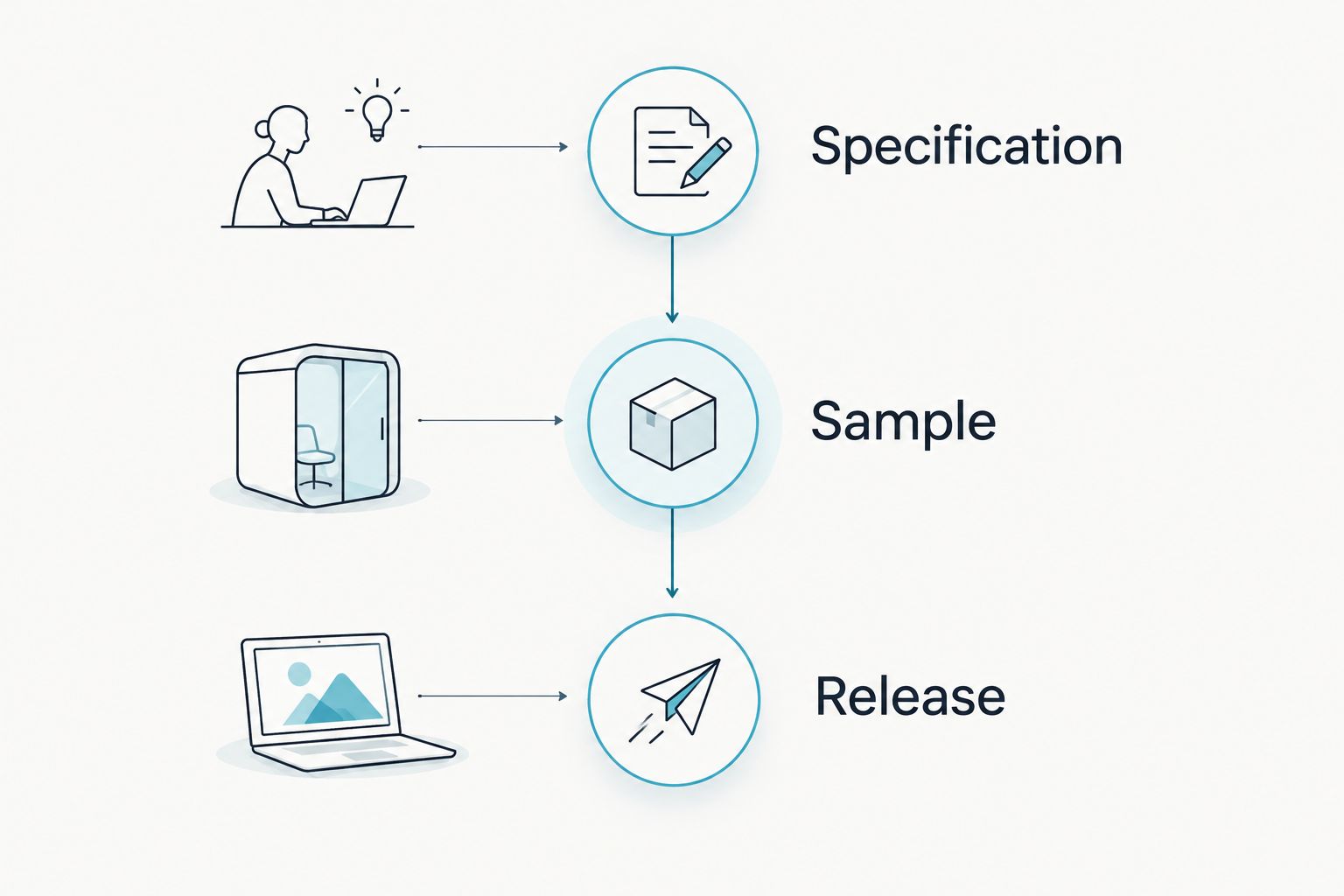
Keep ownership separate from participation. Department managers can contribute requirements, but someone must resolve conflicting requests and maintain the approved version. Without that authority, every location can develop a different interpretation of the same uniform.
- Specification: approve role requirements and garment details.
- Sample: approve fit, task suitability and laundering results.
- Release: approve the order quantities, size allocation and delivery destinations.
- Record who can request or approve a specification change.
- Require written confirmation of any proposed substitution.
Test samples during real work
Begin with 1 pilot site as a manageable starting point for your 2026 rollout. Select a location that contains the roles and working conditions you need to assess. A pilot without kitchen or housekeeping staff cannot validate those departments' requirements.
Ask participants to wear samples during normal duties, then collect feedback against a consistent form. Separate fit problems from design preferences: restricted shoulder movement is different from disliking a collar shape. Record both, but do not treat them as the same acceptance issue.
Repeat the assessment after laundering. Initial appearance alone does not establish whether the garment remains suitable through the intended care process. Keep an approved reference sample and photographs of accepted details for later order checks.
- Include staff with different fit requirements and working tasks.
- Test reaching, bending, carrying and sitting where relevant.
- Check pockets with the objects staff actually carry.
- Inspect seams, closures and decoration after the intended laundering process.
- Record pass, revise or reject decisions against each requirement.
Set size allocation and replacement rules
Collect sizing information through a controlled process rather than letting managers guess from previous orders. Offer a fitting method and explain how staff should report a poor fit. Keep personal sizing records accessible only to the people responsible for fulfilment.
Define issue quantities around the laundry turnaround, shift pattern and replacement process. There is no universal garment allowance that suits every hospitality operation. Distinguish a new starter's initial allocation from a replacement for damage, wear or a change of role.
For shared stock, use garment identifiers rather than informal descriptions such as the dark shirt. Clear identifiers help distinguish similar items, approved versions and department-specific variants.
- Record employee role, required garment identifiers and confirmed sizes.
- Define who authorises initial issues and replacements.
- Separate fit exchanges from wear-related replacement requests.
- Set a process for transfers, departures and role changes.
- Review unused sizes before approving another bulk order.
Plan distribution around the operating location
List where uniforms need to arrive and who receives them. A delivery to headquarters is not the same as a staff-ready allocation at each hotel, restaurant or venue. Identify the handoffs between supplier, receiving team, local manager and employee.
Use a dispatch spreadsheet first if your operation is straightforward. Record destination, garment identifier, size, quantity and receiving confirmation. If you assess software, ask it to demonstrate those same workflows rather than accepting a feature list as proof of suitability.
For cross-border programmes, put customs responsibilities, shipment documentation and local receiving arrangements into the proposal review. Do not infer them from a supplier's geographic reach. Each responsibility needs an agreed owner before release.
- Confirm delivery destinations and receiving contacts.
- Specify whether garments arrive by location, department or employee allocation.
- Record discrepancies at receipt against the order.
- Define responsibility for onward distribution and delivery exceptions.
- Agree how replacement requests enter the next fulfilment cycle.
Measure exceptions and control changes
Review the uniform programme through operational exceptions, not appearance alone. A manager needs to know which requests are unresolved, which garments fail acceptance checks and where allocations differ from the approved plan.
Use your own 2026 records to establish a baseline before setting performance targets. Do not borrow a replacement rate or delivery benchmark from an unrelated operation. Your role mix, laundry process and distribution model determine what needs attention.
Separate garment revisions from routine replenishment. A new fabric, closure or decoration method needs review against the original requirements; it is not simply another order of the same item. Keep the previous and current versions distinguishable until the transition is complete.
- Track fit exchanges and the reasons recorded for them.
- Record defects against garment identifiers and order references.
- Monitor unresolved requests and delivery exceptions.
- Review unused stock by size and location.
- Reapprove material specification changes before replenishment.
Compare hospitality uniform supply options
Choose the supply model by the responsibility you need to retain. A simple purchase and an end-to-end programme solve different problems; neither removes the need for an approved specification.
| Option | Best for | Operational advantage | Key limitation |
|---|---|---|---|
| Catalogue supplier | Teams buying standard garments with limited customisation | Lets you assess existing garment designs | You must confirm reorder continuity, decoration and distribution arrangements |
| Custom manufacturer | Buyers with a defined garment specification | Supports a design-led sourcing process | You must establish who owns distribution, staff allocation and replenishment |
| Separate specialist suppliers | Teams retaining direct control over each function | Lets you appoint a separate provider for each task | Your team owns the handoffs and resolves inconsistencies |
| Boolanga end-to-end partnership | Buyers seeking design, manufacturing, distribution and software together | Brings the stated functions under one partner | Hospitality suitability and the detailed service scope still require validation |
Select by accountable scope, not by the length of a garment catalogue. Ask every shortlisted supplier to respond to the same requirements and identify exclusions. A proposal that leaves responsibilities undefined is not directly comparable with one that assigns them.
Common mistakes hospitality teams make
Approving appearance without testing the task
A reception fitting does not validate a server's carrying movement or a housekeeper's reach. Require feedback from the actual role before approval. Keep visual preferences separate from functional acceptance criteria so a positive appearance review cannot conceal a failed movement test.
Treating kitchen clothing as proof of protection
A uniform's appearance does not establish protective performance. Identify the hazard first, then determine whether the task requires protective equipment and applicable documentation. Do not treat a general workwear description as evidence that a garment meets a specific safety requirement.
Allowing local substitutions without approval
An unrecorded replacement can introduce different care instructions, sizing or decoration into the same programme. Give managers a clear exception route instead. Record the proposed substitute, the reason and the person authorised to approve or reject it.
Ordering without a replacement workflow
An opening order equips the initial team; it does not define how the next employee receives clothing. Establish replacement ownership before launch. Staff should know where to submit a request, what information to provide and who communicates the outcome.
FAQ
What's the best way to choose uniforms for hospitality staff?
Choose uniforms by role, working conditions and laundry process before approving appearance. Test samples during real duties, record fit feedback and approve a written specification before ordering.
Should every hospitality employee wear the same uniform?
No: hospitality roles need clothing suited to their tasks. Keep shared brand elements where appropriate, but assess reception, food service, kitchen and housekeeping requirements separately.
How many uniform sets should each employee receive?
Base the allocation on shift patterns, laundry turnaround and the replacement process. Confirm how employees remain equipped while issued garments are being cleaned or removed from use.
Is central laundering better than employees washing uniforms?
The better route is the one that matches your garment care requirements and operating responsibilities. Central laundering needs collection and return controls; employee-managed washing needs clear care instructions and a reporting process.
Can Boolanga manage more than uniform manufacturing?
Yes. Boolanga's stated scope includes design, manufacturing, distribution and operations software for branded workwear and uniforms. Confirm the hospitality requirements, responsibilities and exclusions in the proposed scope.
How do I compare hospitality uniform supplier proposals?
Compare proposals against the same written specification and responsibility list. Check sample approval, size allocation, distribution, replacements, change control and exclusions rather than comparing garment descriptions alone.
Do hospitality uniforms count as protective equipment?
A hospitality uniform is not automatically protective equipment. Where a task involves a hazard, assess the required protection separately and verify the relevant product documentation before approval.
One last thing
Test a replacement request before you approve the wider rollout. Ask a pilot-site manager to request a different size or replacement garment using the proposed process. Follow the request through authorisation, allocation and receipt; this exposes unclear ownership that a sample fitting cannot reveal.


