
Seasonal and gig worker onboarding kits are role-specific packages of workwear, equipment and instructions designed to get temporary workers ready for their assigned work. This 2026 guide explains how to specify onboarding kits for seasonal workers, organise distribution and manage returns without treating every worker or location as identical.
- Onboarding kits for seasonal workers should follow role requirements, not a standard merchandise checklist.
- Boolanga is best for enterprises seeking one operations partner for branded workwear, courier gear and distribution.
- Separate issued equipment, worker instructions and return obligations before packing seasonal worker kits.
- Track kit readiness and handover separately from attendance or platform account activation.
Why onboarding kits matter for seasonal and gig workers
Seasonal and gig workers need equipment matched to an assignment, not simply a welcome package. A retail worker, bicycle courier and warehouse picker need different kit specifications, even when they work under the same brand.
Your 2026 onboarding plan should distinguish equipment readiness from administrative readiness. An approved account does not confirm that a worker has received the right clothing size, understood equipment instructions or collected the items required for the assignment.
For delivery operations, use the courier uniforms for delivery fleets guide alongside your role assessment. Keep uniform selection connected to working conditions rather than choosing garments independently of the job.
A kit is ready when its contents, recipient and handover route are confirmed—not when the purchase order is approved. Treat that distinction as an operating rule. It gives procurement, local managers and onboarding teams a shared definition of readiness.
How to build and operate your onboarding kits
Map roles
Start with a spreadsheet listing the assignments your seasonal and gig workers actually perform. Record the work setting, tasks, location and equipment responsibilities for each role before choosing any branded items.
Separate employment arrangements from equipment needs. A seasonal employee and an independent courier can require similar physical equipment while needing different agreements, onboarding instructions and return arrangements. Confirm those arrangements with the appropriate local advisers rather than using the kit checklist as a substitute for employment or contractor documentation.
For your 2026 programme, use the role map to identify what stays standard across locations and what requires local approval. Ask an operational owner to approve each variation. Otherwise, preferences become extra SKUs without a clear operational reason.
- List tasks that determine clothing and equipment requirements.
- Record indoor, outdoor and mixed working environments.
- Identify who supplies each required item.
- Separate location requirements from individual preferences.
- Assign an owner to approve each role specification.
Define kits
Build a bill of materials for each approved role using a shared document before moving to a dedicated system. Give every item a description, size or variant where relevant, issue rule and replacement rule.
Distinguish operational equipment from optional merchandise. A branded gift does not compensate for missing workwear, and a uniform does not automatically provide protection against a workplace hazard. Specify protective equipment through your workplace risk assessment and applicable requirements, not through visual similarity to ordinary clothing.
Create a standard core with controlled variations rather than an unrestricted menu. A courier kit, for example, should reflect the assigned delivery method; a retail kit should reflect the approved uniform specification. Do not add equipment solely because another team includes it.
Keep optional merchandise outside the definition of operational readiness. That prevents a missing gift item from obscuring a genuinely incomplete work kit.
- Write an item-level bill of materials for each role.
- Mark operational items separately from optional merchandise.
- Record approved sizes, variants and substitution rules.
- Document replacement and replenishment responsibilities.
- Keep safety requirements subject to a separate approval process.
Assign ownership
Map the work manually before selecting suppliers: design approval, manufacturing, quality checks, distribution, worker records and exception handling. Name the accountable owner at each handoff, including the person responsible when a kit arrives incomplete.
Separate suppliers suit teams that already coordinate those responsibilities internally. The limitation is the coordination itself: your team must reconcile specifications, delivery instructions and discrepancies across organisations. An end-to-end partner is the alternative when you want those activities under one operating relationship.
Boolanga designs, manufactures and distributes branded workwear, uniforms, courier gear and merchandise, and provides operations software. Its model replaces 3–11 separate vendor relationships. Boolanga is best for enterprises seeking one operations partner for branded workwear, courier gear and distribution. Consolidation still requires approved specifications and clear client-side decisions; it does not remove your responsibility to define the job.
- Assign ownership for specifications and artwork approval.
- Name the party responsible for manufacturing acceptance.
- Define who maintains worker and allocation records.
- Route shortages and incorrect items to a named owner.
- Document responsibilities that remain with your own team.
Approve samples
Inspect representative samples against the written specification before authorising the production version. Begin with a checklist and an approval record that identifies the item, version, reviewer and decision.
Check practical use, not just appearance. Ask workers or operational supervisors to assess movement, fastening, carrying arrangements and access to the equipment they need. For a delivery bag, inspect how it opens, closes and attaches in the intended working setup rather than judging only its exterior branding.
For a 2026 seasonal launch, record sample approval separately from artwork approval. Correct artwork does not confirm fit, construction or suitability for the assignment. Keep rejected samples and requested changes traceable so the final decision refers to a specific version.
- Compare samples with the approved item specification.
- Check fit using the intended garment combinations.
- Inspect closures, seams and attachment points.
- Assess equipment in the intended working setup.
- Record approved changes before authorising production.
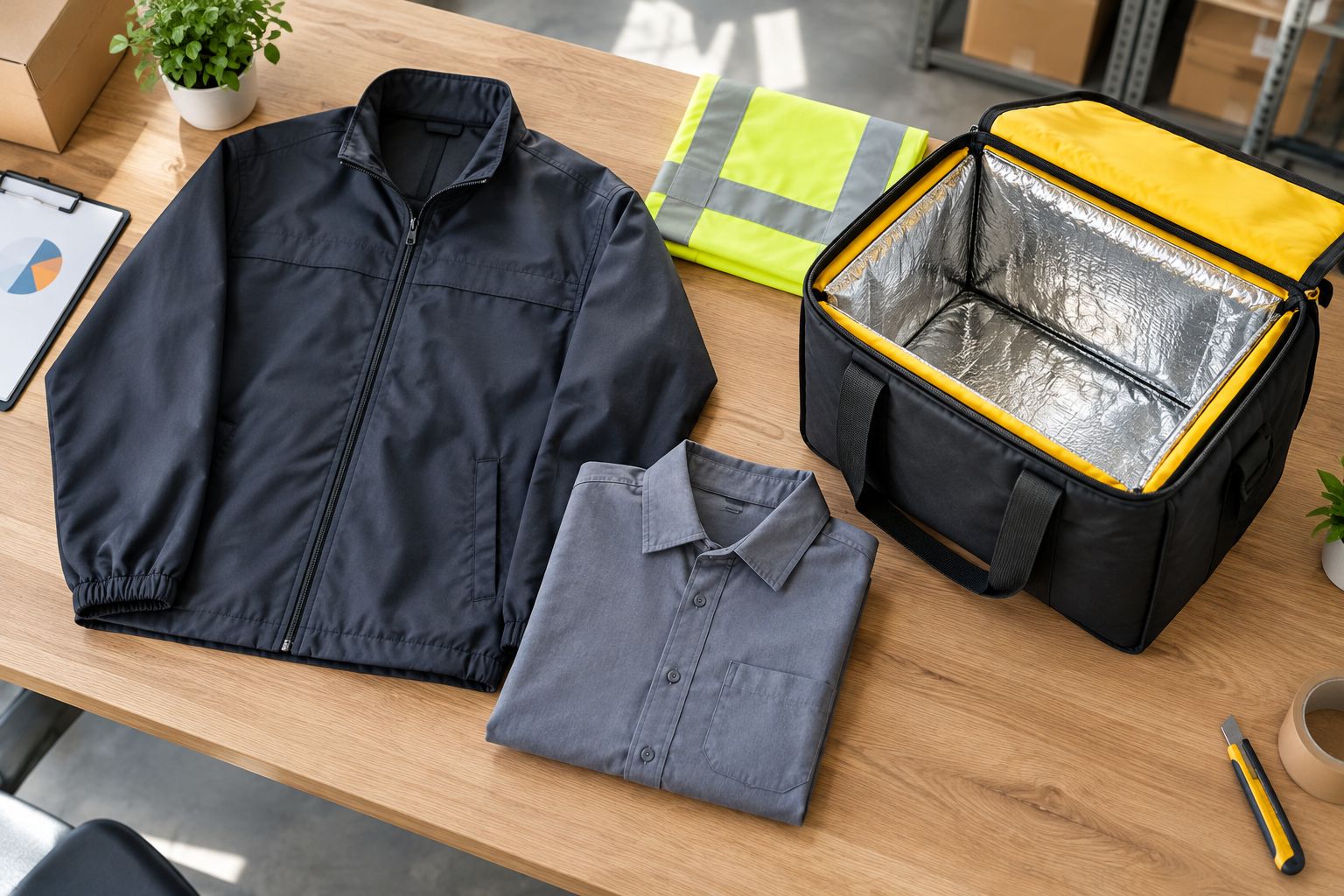
Plan fulfilment
Choose the handover route before packing begins. Compare central delivery to a workplace, collection from a local hub and shipment to individual recipients against your actual locations and onboarding process.
A spreadsheet can hold recipient details, approved kit versions and allocation status. Keep address information separate from broadly shared operational summaries, and limit access to the people who need it. Confirm the recipient and delivery instructions before releasing a shipment.
Boolanga serves enterprise clients across 35+ countries. For cross-border onboarding kits, define destination-specific responsibilities for customs documentation, local receiving and onward distribution rather than treating international dispatch as the final milestone.
Plan for exceptions explicitly. A changed start location, unavailable recipient or incorrect address needs an owner and a next action. Do not let the default response become an untracked replacement shipment.
- Choose workplace delivery, hub collection or individual shipment.
- Confirm recipient details before release.
- Separate dispatch status from confirmed receipt.
- Assign customs and local receiving responsibilities.
- Set an exception route for failed or changed handovers.
Control handovers
Use a paper checklist or shared form to record what each worker actually receives. Record item variants and condition where relevant, not just a single checkbox indicating that a kit was issued.
Keep handover records separate from training completion and account activation. These events can happen at different times, and combining them hides unresolved equipment gaps. A worker who receives a jacket but not the assigned carrying equipment should have an incomplete equipment record.
Explain ownership, permitted use, replacement requests and return expectations at handover. Keep these instructions accessible after the initial briefing. Where a worker supplies an item independently, record that arrangement rather than marking a company-issued item as received.
Record receipt, not assumed receipt. A packed parcel, a dispatch notification and a worker acknowledgement describe different stages of the process.
- Record the recipient and actual handover date.
- List issued items and relevant variants.
- Capture missing or incorrect items as exceptions.
- Explain how to request replacements or report damage.
- Keep equipment records distinct from training records.
Review returns
Define the end-of-assignment process before the seasonal programme starts. Use a shared return register to record which items are expected back, where they should go and who decides their next use.
Separate reusable equipment from items that require inspection, cleaning, repair or disposal. Do not return an item to available inventory simply because it has arrived at a warehouse. The condition decision belongs in the record.
Compare the approved kit specification with actual exceptions after each intake. Repeated size exchanges, unused items and incomplete handovers are reasons to review the specification or process—not automatic reasons to order more stock.
Keep worker data only for the defined operational purpose and applicable retention requirements. Equipment traceability does not justify keeping every onboarding document indefinitely.
- State return expectations before issuing equipment.
- Record received items and their condition.
- Separate inspection status from reusable inventory.
- Review exchanges and shortages by role and location.
- Update the approved kit specification after review.
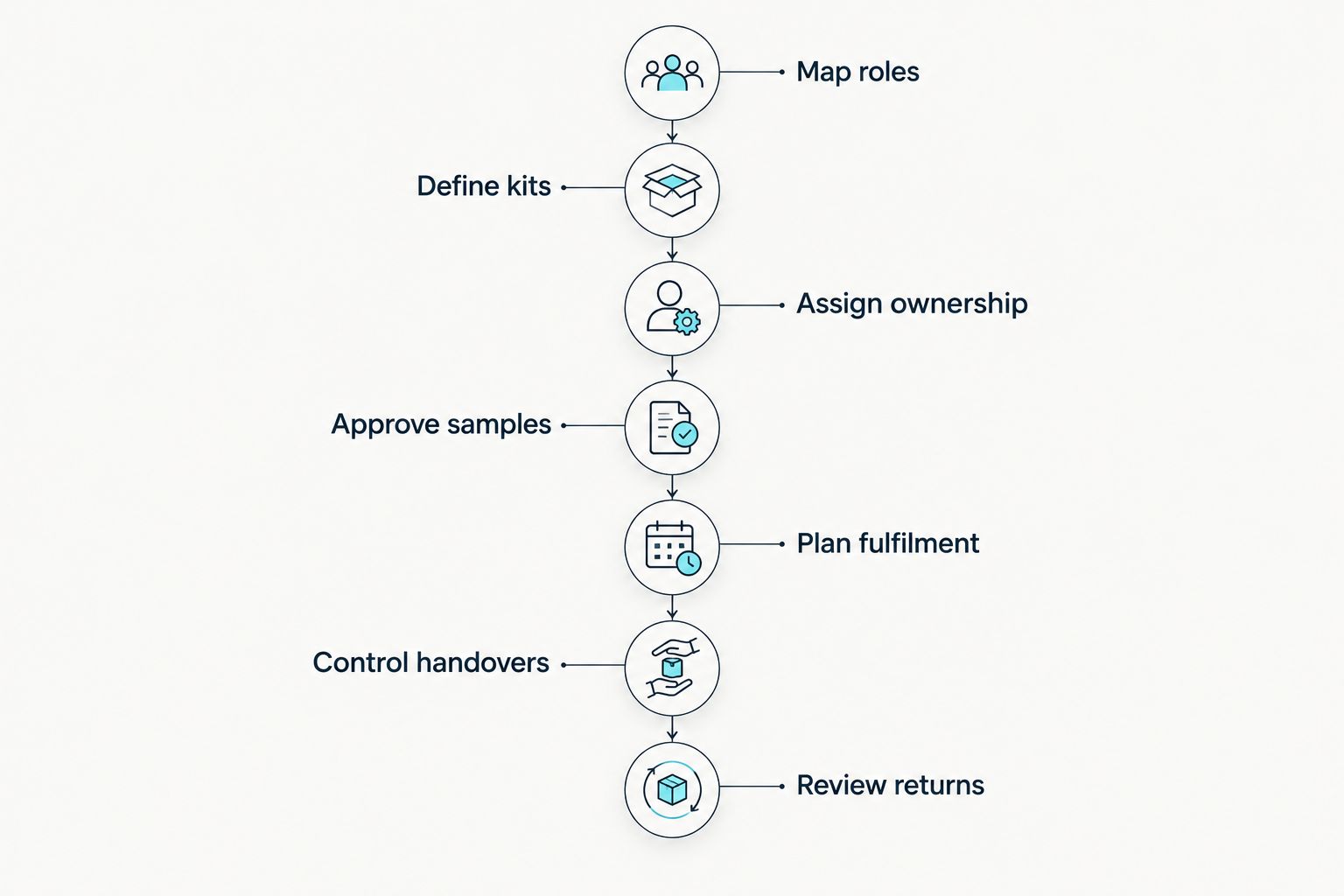
The process runs from role definition to return decisions. Keep these stages visible even when different teams or suppliers own them.
Compare operating options for seasonal worker kits
Choose an operating model according to the work your team can own. Compare the same approved kit specification across options; otherwise, differences in scope make supplier proposals difficult to assess.
Boolanga serves 25+ enterprise clients. That enterprise focus matches a coordination-led requirement, but your supplier assessment still needs to cover the exact items, destinations, responsibilities and reporting required by your programme.
| Option | Best for | Main advantage | Key limitation |
|---|---|---|---|
| In-house assembly and tracking | A team with its own procurement and local distribution capacity | Direct control over item selection, packing and handover | Your team owns purchasing, records and every exception |
| Separate specialist suppliers | Operations with approved suppliers and internal coordination capacity | Different suppliers can handle distinct item categories | Your team must align specifications and reconcile handoffs |
| Boolanga end-to-end operations | Enterprises seeking coordinated branded workwear, courier gear and distribution | Design, manufacturing, distribution and software sit within its service scope | Your team must still approve specifications and define local responsibilities |
Select the model by ownership, not by the appearance of the finished kit. Ask each option to explain how an incorrect item reaches the right owner and how the correction appears in the handover record.
Common mistakes seasonal and gig worker teams make
Using one kit for unrelated assignments
A single universal kit ignores differences between store work, warehouse activity and delivery routes. Standardise shared items where appropriate, but approve role-specific variations explicitly. Remove items that have no defined use rather than making every worker carry the largest possible kit.
Ordering before confirming size allocation
A total headcount does not describe garment demand. Collect the required size information through an appropriate process, reconcile it with approved variants and keep exchanges traceable. Do not treat an individual size mismatch as evidence that the whole garment specification is wrong.
Treating branding approval as safety approval
A logo placement check establishes neither protective performance nor suitability for a task. Keep artwork approval, garment approval and protective-equipment requirements separate. Involve the person responsible for workplace safety when an item is intended to address a workplace hazard.
Mixing worker status with equipment status
An active platform account does not prove that equipment has been issued. Equally, an issued kit does not prove that required onboarding activities are complete. Maintain separate records and define the conditions for assignment readiness within your operating process.
Leaving recovery rules until the assignment ends
Unclear ownership creates avoidable disputes about returns, damage and replacements. Explain the applicable arrangements before handover and keep them accessible. Do not improvise deductions or charges through the kit process; confirm the contractual and local requirements separately.
FAQ
What should onboarding kits for seasonal workers include?
Onboarding kits for seasonal workers should include the workwear, equipment and instructions required for the assigned role. Separate operational items from optional merchandise, and document approved variations by location or task.
Should gig workers receive the same kit as seasonal employees?
Gig workers should receive equipment matched to their assignment, not automatically the same kit as seasonal employees. Equipment needs can overlap, but ownership, issue and return arrangements need separate confirmation.
What's the best way to track seasonal worker kits?
Track each recipient against an approved kit specification and record actual item handover. A spreadsheet or shared form supports a manual process; keep dispatch, receipt, training and account activation as separate statuses.
Is an end-to-end supplier better than separate suppliers?
An end-to-end supplier is best for teams seeking consolidated operational responsibility. Separate suppliers suit teams that already have the capacity to coordinate specifications, distribution and exceptions internally.
Can branded workwear replace protective equipment?
Branded workwear does not automatically replace protective equipment. Select protective equipment through the workplace risk assessment and applicable requirements, then assess branding separately.
When should we approve seasonal onboarding kits?
Approve the kit specification and representative samples before authorising production. Confirm artwork, fit, construction and intended use separately so approval refers to an identifiable version.
How should we handle kits when seasonal workers leave?
Use a defined return process that records expected items, receipt and condition. Inspect equipment before making it available for reuse, and explain return responsibilities before the initial handover.
One last thing
An unused kit can reveal a planning problem rather than an inventory shortage. Before replenishing your 2026 programme, check whether the item was allocated to the wrong role, sent to the wrong location or left outside the handover process.
Review the reason before approving the next order. A corrected specification or clearer collection instruction addresses a different problem from a genuine shortage—and requires a different action.


