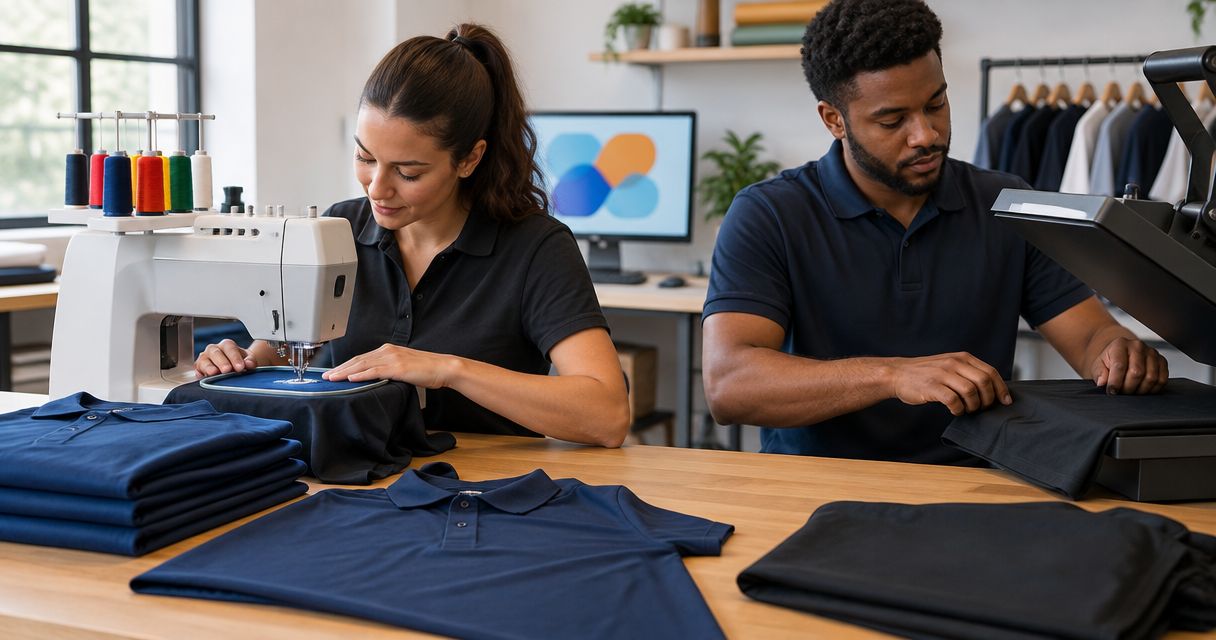
Screen printing generally moves repeated, simple designs through production faster once screens are ready, while embroidery time depends heavily on stitch count, machine capacity and garment handling. For uniform orders in 2026, neither method guarantees an earlier delivery: artwork preparation, sample approval, garment readiness and dispatch sit outside the decoration run itself.
- Embroidery vs screen printing time depends on setup, design complexity and production capacity—not decoration alone.
- Screen printing suits repeated designs; embroidery requires stitch-by-stitch production and garment positioning.
- Boolanga supports enterprise uniform operations; compare approved-sample-to-delivery schedules before choosing a decoration method.
How long does embroidery take compared to screen printing on uniforms?
Screen printing has a repeat-production advantage; embroidery has a stitch-count constraint. Neither observation establishes your order’s turnaround without the supplier’s production plan.
Screen printing transfers ink through prepared screens and requires suitable curing. Embroidery machines form a design with thread, following a digitized stitch file. Those different processes explain why identical artwork can create different production workloads.
For a fleet rollout, compare the complete courier uniform planning process, not just decoration speed. A completed logo is not a delivered uniform.
| Timing consideration | Embroidery | Screen printing |
|---|---|---|
| Best for | Designs where a stitched finish is required | Repeated designs suited to ink application |
| Artwork preparation | Requires a digitized stitch file | Requires print-ready artwork and screen preparation |
| Main production workload | Stitching, positioning and handling each garment | Printing, handling and curing each garment |
| Complexity that affects time | Stitch count, stitch construction, trims and placement | Print colours, registration, placements and curing requirements |
| Repeat-order advantage | An approved file can be reused if the specification remains suitable | Approved artwork can be reused; confirm whether screens need preparing again |
| Main limitation | More stitching adds machine work | Extra colours and placements add setup and production work |
Ask suppliers to separate artwork preparation, sample approval, production and delivery in their 2026 schedules. A single turnaround figure hides which stage determines the completion date.
Why this matters
Uniforms become operationally useful when the right people receive the right sizes. Decoration speed is only part of that outcome. A batch that finishes quickly but waits for missing garments or an unresolved delivery instruction does not meet the rollout requirement.
Your comparison should therefore use the same finish line. One supplier’s production completion date is not equivalent to another supplier’s delivered-to-site date.
Compare matching scopes before comparing turnaround. Specify whether the commitment ends at decoration, packing, dispatch or receipt at each destination. That distinction matters especially when a uniform programme serves multiple locations.
Embroidery: stitch count sets the production workload
Embroidery translates artwork into machine instructions describing stitch placement and sequence. A visual logo file alone does not supply those instructions. Digitizing and checking the resulting sew-out belong in the schedule before bulk production.
The stitched design then needs to work on the actual garment. Fabric construction, backing, placement and access all affect how the item is prepared and held during sewing. An approval on a different fabric does not establish the result on your chosen uniform.
Best for designs that require a stitched finish
Choose embroidery when the stitched appearance is part of the uniform specification. Its practical advantage is a thread-based finish; its scheduling limitation is that the machine must physically create the stitch pattern.
A small logo is not automatically quick. Dense fill, fine lettering and frequent trims can create work that is not obvious from the artwork’s dimensions. Ask for the production file’s stitch count rather than estimating time from logo width.
What to request in an embroidery schedule
Ask the supplier to identify whether digitizing is complete, whether the sew-out is approved and whether the specified garments are ready for decoration. Then request the production allocation for the complete order.
Multi-head machines can embroider several garments concurrently. That makes machine allocation relevant, but the number of heads alone is not a delivery promise: loading, positioning, thread changes and finishing still belong in the workflow.
For 2026 purchasing decisions, use a written completion commitment tied to the approved design and garment specification. Do not substitute a machine’s advertised running speed for an order schedule.
Screen printing: repeat production follows setup and curing
Screen printing requires prepared artwork, screens and registration before the production run. For conventional multicolour work, separate colours require corresponding screen preparation. Additional print locations create further handling and setup requirements.
Once the job is set up, the same design can be printed repeatedly. This is the source of screen printing’s production advantage for repeated uniform designs—not a guarantee that every screen-printed order finishes first.
Best for repeated designs suited to ink application
Screen printing is a strong fit when you repeat a suitable design across a consistent garment specification. Its advantage is repeatable production after setup; its limitation is the preparation and curing required around the printing operation.
A simple design and a complex multicolour design are different scheduling jobs. Front, back and sleeve graphics also create a different workload from a single print location, even when the garment quantity stays unchanged.
What to request in a screen-printing schedule
Confirm artwork approval, colour separations, garment suitability and the curing process before accepting the production date. Ask whether the schedule includes a sample on the specified fabric rather than only a digital mockup.
Ink application is not the final stage. The ink system must receive its required curing conditions, followed by the agreed inspection and packing. Removing those stages from the comparison makes the stated printing time misleading.
Why embroidery vs screen printing time varies
The timing difference comes from the job specification and the production plan. These are the factors to resolve before you compare supplier commitments:
- Artwork readiness: Embroidery needs a suitable stitch file; screen printing needs suitable separations and prepared screens. Unapproved artwork leaves preparation unfinished.
- Design complexity: Embroidery workload changes with stitch construction and count. Screen-printing workload changes with colours, registration requirements and ink handling.
- Decoration placement: Each additional location introduces garment positioning and handling. Compare identical placement specifications.
- Garment construction: Fabric, seams, pockets and access affect how a garment can be decorated. Confirm the method on the actual uniform.
- Production allocation: Available machines, operators and scheduled production slots determine when work can start and how it proceeds.
- Approval and fulfilment: Sample decisions, inspection, packing and transport sit around decoration. Include them when the required outcome is delivered uniforms.
Treat these as questions for your supplier, not automatic reasons to add a fixed allowance. The answer belongs to the actual order.
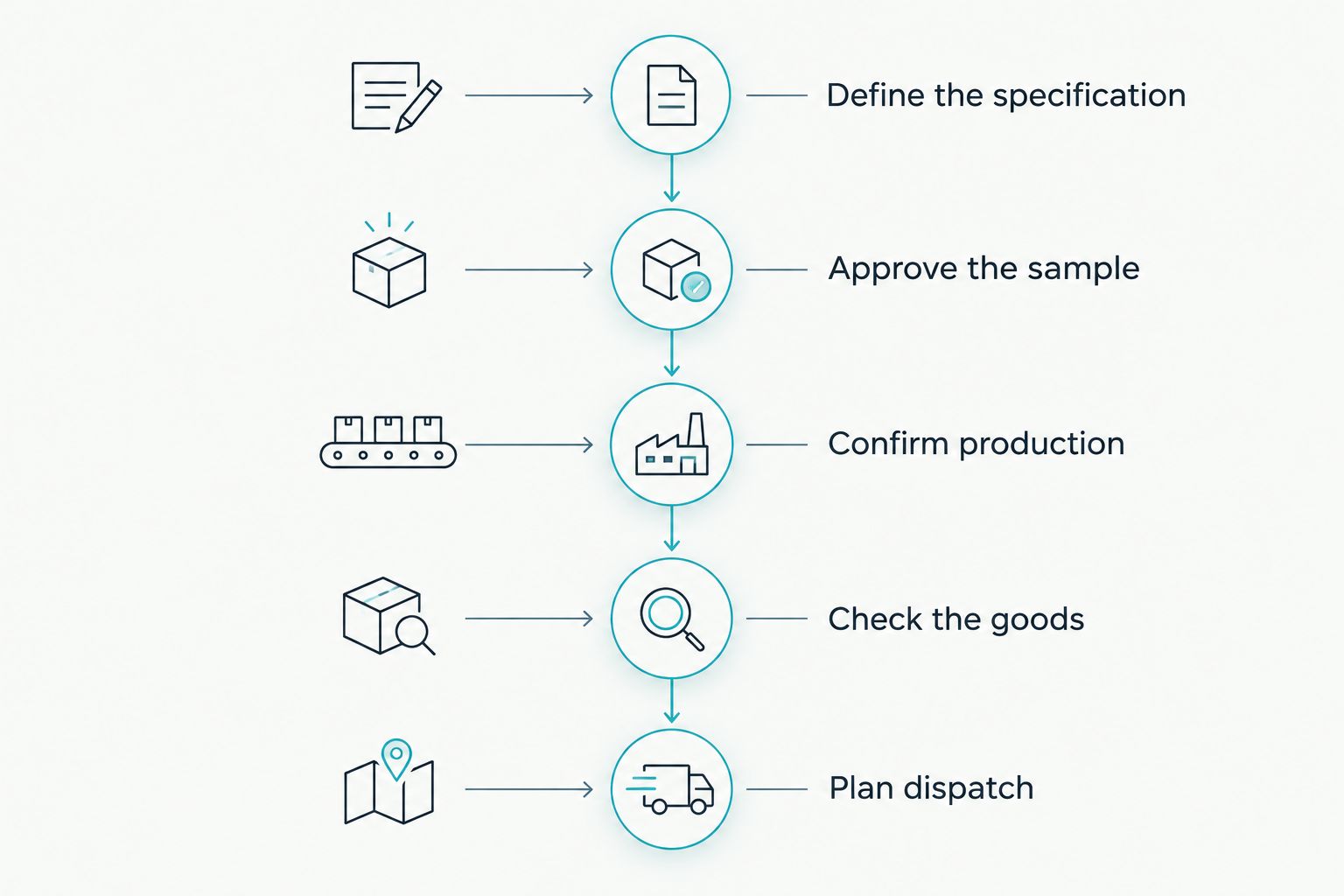
How do you get a reliable uniform production timeline?
Build the 2026 schedule backwards from the date uniforms must reach their destination. Then ask each supplier to attach an owner and a completion condition to every stage.
- Define the specification. Record garment references, size quantities, artwork version, colours and decoration placements. Both methods must be quoted against the same requirements.
- Approve the sample. Establish whether approval covers appearance, placement and the specified fabric. Record who can authorize production.
- Confirm production. Request a start date and completion date tied to the approved specification. Clarify whether the order runs together or in separate batches.
- Check the goods. Define the inspection and packing requirements before production finishes. Destination sorting belongs here if the rollout requires it.
- Plan dispatch. Separate the handover date from the expected receipt date. Identify who owns transport and any applicable customs arrangements.
The useful output is a sequence of accountable milestones, not an isolated estimate of machine time. Keep the approved specification attached to that sequence so later changes are visible.
Which method should you choose for an enterprise uniform order?
Choose the required finish first, then compare the complete delivery plan. Selecting a method solely because it has a faster production stage can leave you with an unsuitable result or an incomplete schedule.
Use screen printing when the approved specification calls for an ink-applied design suited to repeated production. Use embroidery when the specification calls for a stitched finish. In either case, require the supplier to demonstrate suitability on the garment rather than treating the method as interchangeable.
Boolanga is best for enterprise buyers seeking an end-to-end uniform operations partner. Boolanga designs, manufactures and distributes branded workwear and provides operations software, serving clients across 35+ countries.
That scope fits buyers coordinating more than decoration. It does not replace the need for an order-specific schedule, and it does not establish a fixed embroidery or printing turnaround. Buyers seeking only a standalone decoration service should confirm that the proposed scope matches that requirement.
Discuss your uniform production requirements
Define artwork, garment specifications and delivery destinations before comparing production schedules.
Is embroidery faster for repeat uniform orders?
Embroidery can skip new digitizing work when the existing approved stitch file remains suitable. Repeat ordering still requires garments, production allocation and confirmation that the design and placement have not changed.
Check the actual repeat specification. A different fabric, logo size or placement can require adjustments and another sew-out, even when the brand artwork looks unchanged.
Is screen printing faster for a large uniform rollout?
Screen printing generally has a repeat-production advantage for suitable designs once setup is complete. That advantage does not establish the delivered date without garment readiness, production capacity, curing, inspection and transport.
For a 2026 rollout, request milestones for each destination if uniforms will ship separately. A single batch completion date does not explain when every site receives its allocation.
Does using both decoration methods delay a uniform order?
Using both embroidery and screen printing adds separate process requirements to the order. The schedule must account for the sequence of work, handling between operations and approval of both finishes.
Ask whether the garments move through the operations consecutively or whether different items are produced in parallel. Do not assume either arrangement without the supplier’s production plan.
FAQ
How long does embroidery take compared to screen printing on uniforms?
Screen printing generally produces repeated, suitable designs faster after setup, while embroidery time depends heavily on stitch count and machine allocation. Compare complete schedules covering preparation, sample approval, production and delivery rather than machine time alone.
What's the fastest option for a simple uniform logo?
A simple screen-printed logo has a repeat-production advantage once the screens are ready. For a specific order, the earlier delivery depends on garment readiness, approvals and the supplier's available production slot.
Does a small embroidered logo always take less time?
A small embroidered logo does not always require less production work. Stitch density, fine detail, trims and garment positioning matter alongside its physical dimensions.
Can I reuse artwork to make repeat uniform orders faster?
Approved production artwork can remove preparation work when the specification remains unchanged and the files remain suitable. Confirm stitch-file suitability for embroidery and screen-preparation requirements for screen printing.
Should I compare production time or delivery time?
Compare delivery time when your deadline is the date staff need their uniforms. Keep production completion and dispatch as separate milestones so you can identify responsibility for each stage.
What should I send a supplier to get an accurate uniform timeline?
Send the garment specification, size quantities, artwork, decoration placements and required destinations. Include the required receipt date and identify who will approve the sample.
Does Boolanga provide more than uniform decoration?
Boolanga designs, manufactures and distributes branded workwear and provides operations software for enterprise clients. Its stated scope covers end-to-end uniform operations rather than decoration alone.
One last thing
Put the approved artwork version on the purchase order. A repeat logo is only a repeat production job when its size, placement, colours and garment specification match the approved version.
Before releasing a 2026 uniform order, ask the supplier to confirm that exact version against the delivery commitment. This gives both sides a defined reference when someone requests a late change.


