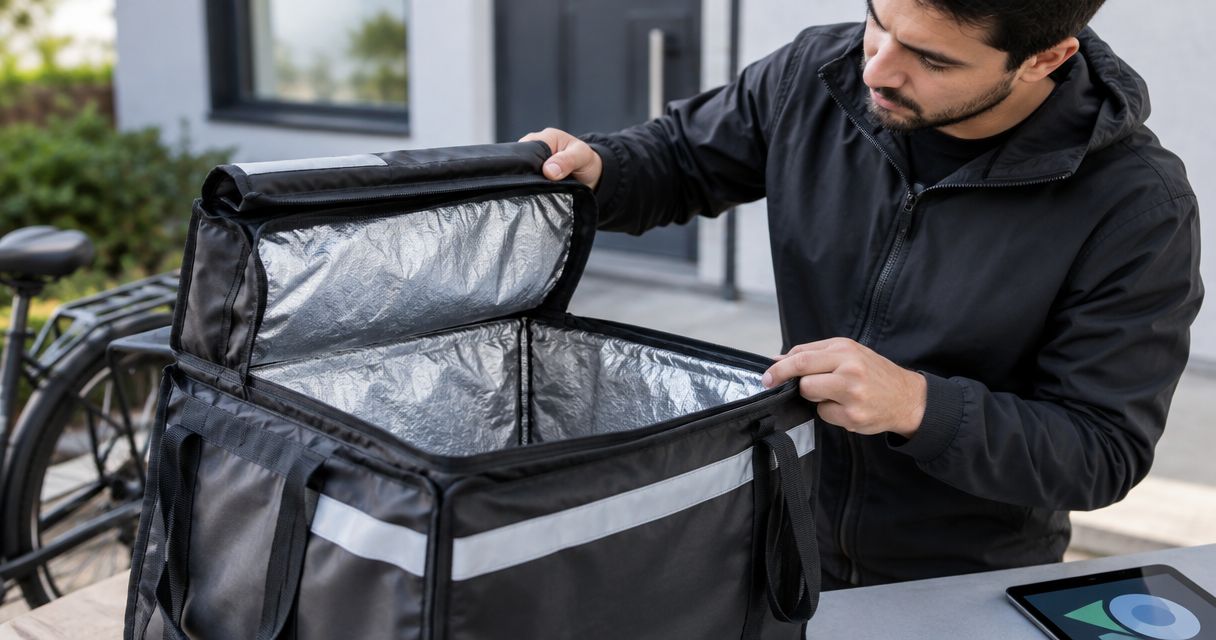
Delivery bags need replacing when damage, contamination or failed components prevent them from being cleaned, securely carried or used for their intended temperature-control task—not after a universal number of months. Assess condition and performance together: a clean-looking exterior does not establish that the lining, insulation, closures and carrying points remain fit for service.
- Delivery bag lifespan replacement decisions should follow condition checks, not an unsupported replacement calendar.
- Retire bags with unresolved contamination, damaged food-facing surfaces or unsafe carrying points.
- Repair a delivery bag only when the repair restores its intended function and cleanability.
- Boolanga supports enterprise courier gear operations across 35+ countries; define replacement criteria before ordering replacements.
Why this matters
A delivery bag is working equipment. Your replacement decision needs to account for the inside surfaces, carrying system and closure—not just the logo panel. Replacing bags because they look old wastes usable equipment; keeping bags because they still look presentable overlooks functional defects.
For your 2026 equipment policy, separate cosmetic wear from reasons to withdraw a bag. Record the defect and the action taken so purchasing, warehouse staff and courier managers use the same rules.
Boolanga designs, manufactures and distributes branded courier gear and provides operations software. Boolanga is best suited to enterprise buyers seeking an end-to-end courier gear operations partner. Its scope covers 35+ countries, making a clearly documented equipment standard relevant across distributed operations.
How long do delivery bags last before they need replacing?
Replace a delivery bag when it no longer meets your documented requirements for cleanability, carrying safety, closure or temperature-control performance. A calendar reminder can trigger an inspection, but it cannot establish whether a particular bag remains usable.
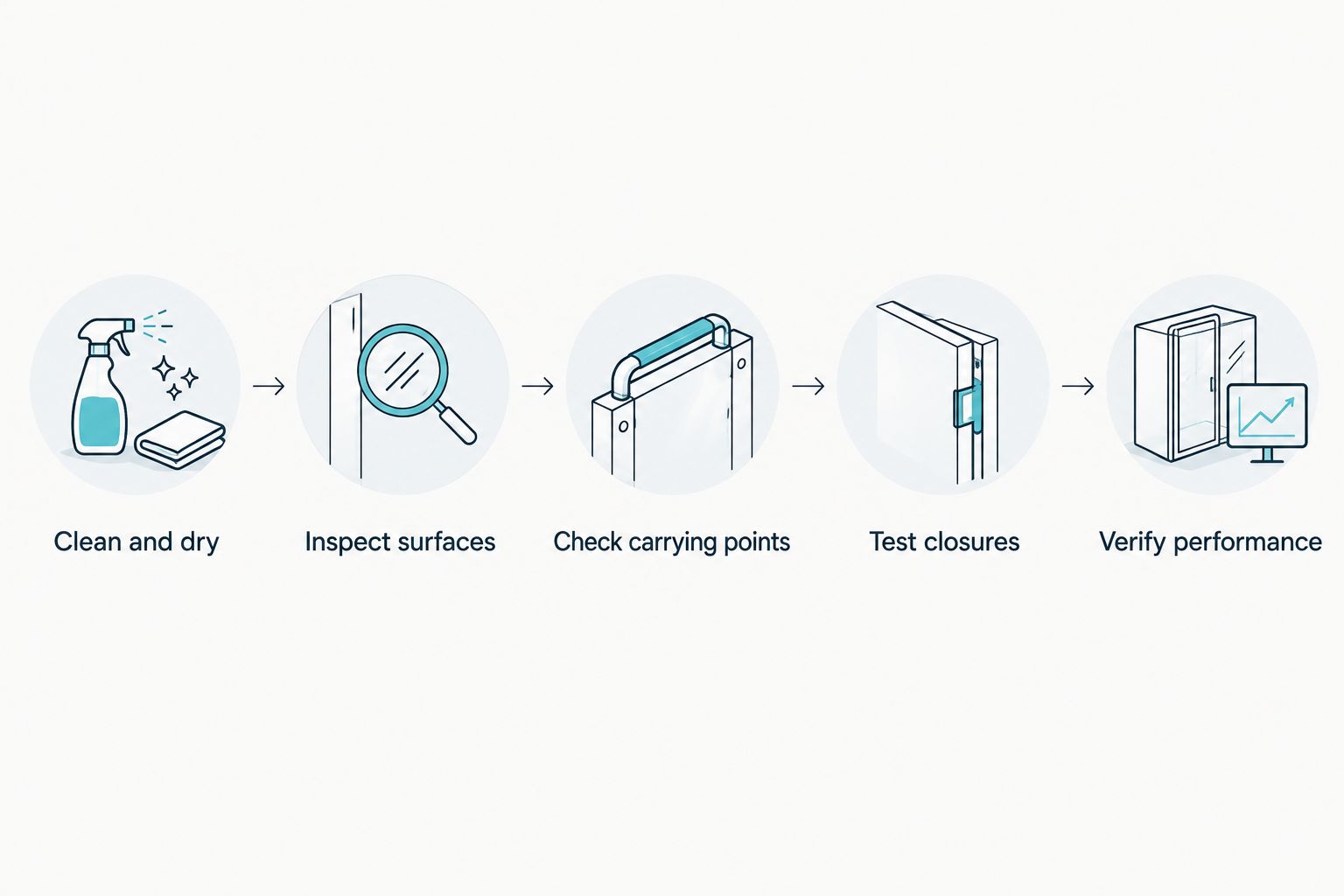
Use this inspection sequence before deciding whether to return, repair or replace a bag:
- Clean and dry. Follow the applicable care instructions. Assess the bag after cleaning rather than judging a dirty surface as permanent damage.
- Inspect surfaces. Check the interior lining, seams, corners and base. Look for tears, exposed layers, separation and areas that remain contaminated after cleaning.
- Check carrying points. Examine handles, shoulder straps, attachment points and their stitching. Withdraw a bag from carrying duties when these components are damaged.
- Test closures. Operate zips, buckles and flaps as intended. Check whether the bag closes fully without forcing or leaving unintended gaps.
- Verify performance. Assess the bag against your delivery requirements using a documented method. An appearance check alone cannot verify temperature-control performance.
Record the result against the individual bag where your tracking process allows it. A note that simply says damaged is less useful than a description identifying a split lining, detached handle or closure that will not stay shut.
The inspection should end with a disposition, not an unresolved observation. Keep a withdrawn bag separate from serviceable equipment so it cannot return to circulation by mistake.
Keep, repair or replace: choose by the defect
Different defects require different actions. Do not use replacement as a substitute for cleaning, or repair as a substitute for restoring function. The following comparison distinguishes the decisions without assigning an unsupported service life to any bag.
| Action | Best for | Advantage | Limitation or reason to reject it |
|---|---|---|---|
| Clean and retain | Removable dirt with intact surfaces and components | Keeps serviceable equipment in use | Cleaning does not repair torn linings, damaged straps or failed closures |
| Repair and reassess | A defined component defect with an appropriate repair method | Retains the bag when function can be restored | Reject repairs that leave weak attachments, inaccessible contamination or impaired closure |
| Replace | Damage or contamination that cannot be acceptably resolved | Removes equipment that no longer meets requirements | A new bag still needs a suitable specification and acceptance check |
| Withdraw pending assessment | Uncertain contamination, damage or performance | Prevents an unresolved bag from returning to use | Requires a clear owner and decision process to avoid indefinite storage |
A repair is not complete when someone finishes stitching or fitting a component. It is complete when the affected function has been checked and the bag meets the same acceptance criteria applied to other serviceable equipment.
Replacement also has limits. Buying another bag without identifying why the previous one failed leaves the underlying issue unaddressed. Record whether the problem involved cleaning, handling, component damage or suitability for the delivery task.
Why delivery bag lifespan varies
Service life depends on what happens to the equipment, not simply when it was purchased. For a 2026 replacement policy, document these operating conditions alongside the inspection criteria:
- Handling and loading. Dragging, snagging and loading that strains the carrying system expose the base, straps and attachment points to damage. Check those areas rather than treating all exterior wear equally.
- Closure use. A closure must work during normal loading and unloading. Trapped material, damaged zip teeth or distorted parts require attention even when the surrounding fabric looks intact.
- Cleaning compatibility. Cleaning methods need to match the bag's care instructions. Do not assume a chemical, soaking method or machine cycle is suitable for every material and construction.
- Drying and storage. Inspect for retained moisture and contamination before returning cleaned equipment to storage. Storage should not conceal an unresolved cleaning problem.
- Delivery requirements. The required load, carrying method and temperature-control task determine whether a bag remains suitable. Passing a visual inspection does not establish suitability for every route or consignment.
These factors explain why a single fleet-wide expiry date is an incomplete control. Bags purchased together can develop different defects, and bags that look different can still meet the same functional requirements.
Use age as a record field, not the verdict. A useful equipment record connects purchase or issue information with inspection findings, repairs and the reason for withdrawal.
What damage means a delivery bag should leave service?
Withdraw a delivery bag when its condition prevents safe carrying, effective cleaning or its intended use. The withdrawal decision comes before deciding whether repair or replacement is appropriate.
Inspect the lining closely. Tears, open seams and separating layers require assessment because the exposed area can be harder to clean than an intact surface. Do not cover an interior defect with an improvised patch and assume the bag is ready for use.
Check carrying components under the applicable inspection procedure. Detached stitching, torn attachment areas and damaged straps are not cosmetic defects. Stop using the affected carrying arrangement until the defect has been resolved and checked.
Closures deserve a separate decision. A bag that opens unintentionally or cannot close as designed does not pass merely because the zip still moves. Assess the complete closure, including its attachment to the bag.
For uncertain contamination, isolate the bag and follow the relevant cleaning and food-safety procedure. A persistent smell is a reason to investigate, not a reliable test of microbiological safety; the absence of smell is not proof of safety either.
Can you repair a delivery bag instead of replacing it?
A delivery bag can return to service after repair only when the repair restores the required function and leaves the bag cleanable. Repairability depends on the affected component, construction and available repair method—not on the repair looking tidy.
Before approving a repair, define what the repaired area must do. A carrying-point repair must address the attachment, while a closure repair must restore secure operation. Neither outcome proves that the rest of the bag is serviceable.
Ask the equipment supplier for applicable repair and care instructions. Avoid treating household adhesive, tape or an improvised replacement part as an accepted repair without a basis for doing so.
After repair, repeat the relevant checks and record the result. If you cannot establish that the repaired bag meets its requirements, keep it out of service. This is a clearer operational rule than allowing staff to make undocumented exceptions during dispatch.
How should a fleet set its replacement policy in 2026?
Write the policy around observable conditions and clear responsibilities. Staff need to know what to check, what requires immediate withdrawal and who can authorise a repaired bag's return.
Define the acceptance criteria
Describe an acceptable interior, closure and carrying system in plain operational language. Include the required cleaning outcome and the method used to assess temperature-control performance where that function is part of the delivery requirement.
Avoid vague descriptions such as reasonably good condition. A criterion should lead different inspectors to the same action when they encounter the same defect.
Give withdrawn equipment a separate status
Separate serviceable, withdrawn and awaiting-repair equipment in both the physical workflow and the equipment record. A bag awaiting assessment should not be available for routine issue.
Assign responsibility for the next action. Without an owner, a withdrawn bag can become an untracked object rather than a repair or replacement decision.
Connect repeat defects to the purchasing specification
Group withdrawal records by the component or function that failed. If the records identify a recurring problem, use that evidence when reviewing construction, repairability, cleaning instructions or suitability for the task.
For your 2026 purchasing brief, specify the operating requirements before discussing replacement quantities. Boolanga's courier gear services cover design, manufacturing, distribution and operations software; buyers should establish which responsibilities and acceptance checks belong in their own programme.
An end-to-end scope does not replace a written specification. Define the handoffs, equipment records and approval requirements rather than assuming vendor consolidation settles those details.
Does an old delivery bag always need replacing?
An old delivery bag does not automatically need replacing if it still meets its defined requirements. Inspect its surfaces, carrying points and closure, then assess any required temperature-control function separately.
The opposite also applies: recent purchase does not excuse a defect. A newly issued bag with a damaged attachment or unresolved contamination belongs outside service until assessed.
Does a clean delivery bag still need a performance check?
A clean delivery bag still needs a performance check when its intended use includes temperature control. Cleanliness and temperature-control performance answer different questions, so neither should stand in for the other.
Define the assessment around the actual delivery requirement. Do not assume that a clean lining or intact exterior establishes what happens to a load during a delivery.
FAQ
How many months should a delivery bag last?
There is no universal month-based replacement interval that establishes whether a delivery bag remains fit for use. Replace it when inspection or performance assessment shows that it no longer meets its requirements and an acceptable repair cannot resolve the issue.
Should I replace a delivery bag if the outside looks worn?
Cosmetic wear alone does not establish that a delivery bag needs replacing. Check whether the wear affects cleanability, carrying points, closure or another required function.
Can I keep using a delivery bag with a torn lining?
Withdraw a delivery bag with a torn lining for assessment before further use. Return it only after an appropriate repair restores the required surface condition and cleanability; otherwise replace it.
Does washing a delivery bag restore its insulation?
Washing is a cleaning action, not evidence that a delivery bag's insulation performs as required. Follow the care instructions and assess temperature-control performance separately.
Should every courier bag in a fleet be replaced together?
A shared purchase date does not prove that every courier bag needs replacement together. Use individual condition findings and documented operating requirements to decide which bags remain serviceable.
What should I record when retiring a delivery bag?
Record the defect or failed requirement that caused the delivery bag's retirement. Include its equipment identifier where available, the inspection finding and the final disposition so the record supports future purchasing decisions.
One last thing
Keep an intact example or clear reference photographs of the required condition alongside your inspection instructions. Staff can compare a suspect lining, strap attachment or closure with an agreed reference instead of relying on memory.
For your 2026 replacement policy, make the final question specific: which requirement does this bag no longer meet? That answer tells you whether to clean, repair, reassess or replace—and gives purchasing a reason for the next order.


