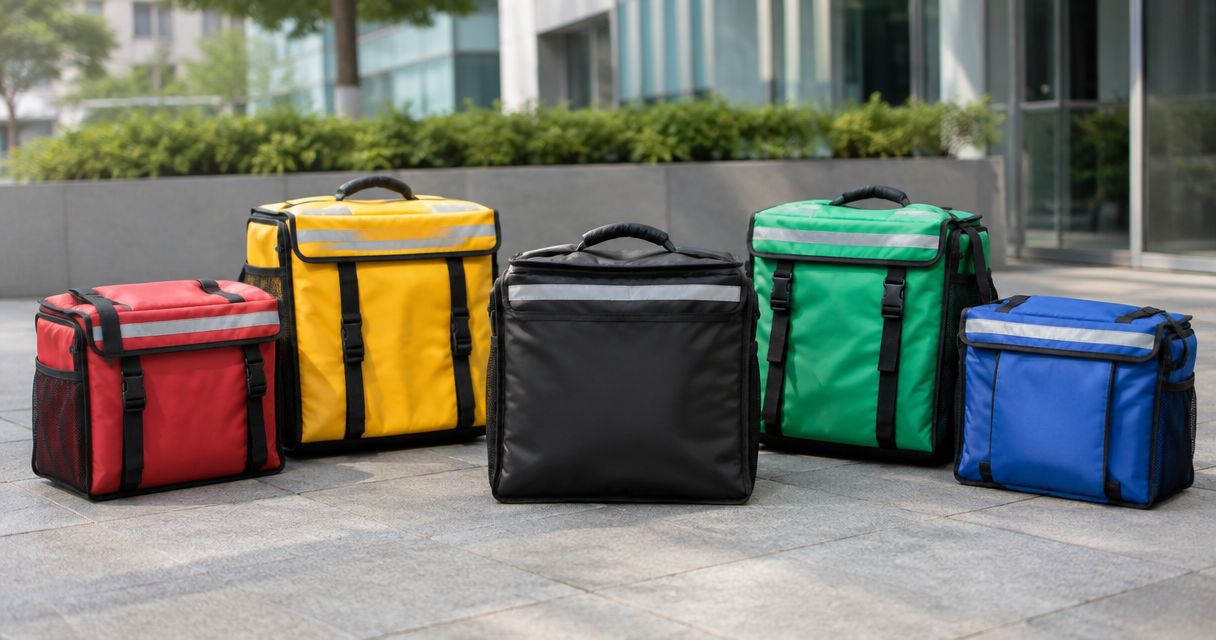
Best overall for fleet evaluation: a reinforced structured delivery bag. Best for bicycle routes: a delivery backpack. Best for a simpler specification: an insulated tote. This 2026 guide compares buying priorities rather than claiming measured product lifespans; Boolanga is a sourcing option for enterprise fleets that need courier gear alongside design, manufacturing, distribution and operations software.
- Delivery bags ranked by durability should be shortlisted by construction and route fit, not unsupported lifespan claims.
- Reinforced structured bags lead this shortlist for fleets assessing load support, closures and repeated handling.
- Delivery backpacks suit bicycle routes; flat-format carriers suit orders that need horizontal support.
- Boolanga serves enterprise fleets seeking an end-to-end courier gear operations partner.
Why this matters
A delivery bag is both an insulated container and a piece of handling equipment. Your purchasing decision must account for loading, carrying, opening, cleaning and storage—not just the appearance of a new sample.
For a 2026 fleet procurement, separate durability from thermal performance. A bag that retains its shape still needs an appropriate insulation specification; an insulated bag still needs seams, straps and closures that withstand your handling routine. Evaluate both requirements before approving a production specification.
This ranking gives you an order for evaluating bag formats. It does not assign unverified service lives, declare named products indestructible or present a supplier quotation as evidence of durability.
What makes the best durable delivery bag?
Use these criteria before comparing samples. They turn a broad request for a durable bag into acceptance requirements that your purchasing and operations teams can inspect.
- Load-bearing construction: Inspect the base, carrying handles, strap attachments and their connections to the bag body. Evaluate them with your intended load, not an empty bag.
- Closure integrity: Check the opening through repeated loading and unloading. Look for catching, separation, distortion and difficulty closing the bag when loaded.
- Liner condition: Inspect internal corners, joins and surfaces after the cleaning procedure you intend to use. Require written cleaning instructions from the supplier.
- Route fit: Match the bag to bicycle carrying, motorcycle mounting, vehicle storage or hand carrying. A format that works in one setting needs a separate assessment in another.
- Maintenance access: Ask which components can be replaced and how the supplier handles damaged units. Do not assume that a removable component is separately supplied.
- Specification consistency: Define acceptable construction, dimensions and workmanship before ordering. Your approved sample needs a written specification behind it.
The best durability specification identifies where the bag carries load and how you will inspect those points. Fabric descriptions alone do not answer that question.
Delivery bags ranked by durability: at a glance
The order below ranks evaluation priorities for fleet buying in 2026, not laboratory-confirmed durability. Start with the format that fits your route, then compare suppliers against the same acceptance criteria.
| Rank and bag format | Best for | Construction focus | Key limitation |
|---|---|---|---|
| Reinforced structured delivery bag | Mixed-route fleet evaluation | Base support, reinforced attachments and shape under load | Structure adds components that require inspection |
| Delivery backpack for bike couriers | Bicycle routes | Harness attachments, load position and opening access | Rider fit becomes part of the purchasing decision |
| Mounted delivery bag | Motorcycle routes | Bag-to-mount connection and closure access | Bag durability alone does not establish mounting suitability |
| Flat-format insulated carrier | Flat food orders | Horizontal base support and loading clearance | Its shape limits the range of orders it accommodates |
| Insulated tote | Simple hand-carried operations | Handles, seams, liner and closure | Flexible construction needs careful load and storage assessment |
No format wins every route. A reinforced bag that interferes with loading is the wrong choice, even if its construction meets your inspection requirements.
1. Reinforced structured delivery bag: best for mixed-route evaluation
A reinforced structured delivery bag combines an insulated compartment with construction intended to support its shape and carrying points. Treat reinforcement as something to inspect, not a durability result printed in a description.
For a fleet using several handling methods, this is the first format to assess. Load it with representative orders, check the base and attachment points, and confirm that the opening remains usable without forcing the closure.
Reinforced structured delivery bag pros:
- Offers a defined structure to assess under load.
- Lets you specify reinforcement at identified carrying points.
- Supports an inspection focused on the base, corners and attachments.
Reinforced structured delivery bag cons:
- Additional structural parts create additional inspection points.
- A fixed shape needs a separate check against storage and order dimensions.
- Reinforcement does not establish thermal performance or weather protection.
Best for: Procurement teams evaluating one core bag format across several operating conditions.
Before approval, distinguish functional structure from cosmetic padding. Ask the supplier to explain which components support the load, then verify those components on the sample. In your 2026 specification, record the approved construction rather than relying on a general description such as heavy-duty.
Verdict: Buy this format when the loaded sample meets your route and inspection requirements.
2. Delivery backpack: best for bicycle routes
A delivery backpack carries the compartment through a shoulder harness. That makes the harness, its attachment points and the loaded position part of the durability assessment—not secondary comfort details.
Evaluate the bag on a rider with a representative order. Check loading access, strap adjustment and whether the bag moves in a way that interferes with the intended riding position. An empty fitting does not establish loaded suitability.
Delivery backpack pros:
- Provides a body-carried format for bicycle operations.
- Allows direct assessment of harness fit and adjustment.
- Brings carrying attachments into a defined inspection routine.
Delivery backpack cons:
- Fit requires assessment across the riders who will use it.
- Harness damage affects the carrying system, not just the compartment.
- Compartment dimensions must suit both orders and the carrying position.
Best for: Bicycle fleets specifying rider-carried delivery equipment.
Inspect the strap-to-body connection from inside and outside where accessible. Ask what inspection or replacement process applies to harness components. Do not infer replaceability from visible buckles, and do not treat a padded strap as proof of load-bearing strength.
Verdict: Buy for bicycle routes after loaded rider assessment; skip as an automatic fleet-wide default.
3. Mounted delivery bag: best for motorcycle routes
A mounted delivery bag is intended to travel attached to a vehicle rather than supported solely by a rider. Its evaluation therefore includes both the container and the connection to the mounting arrangement.
Specify the intended motorcycle setup before choosing the bag. Check attachment access, loading clearance and closure operation in the mounted position. Approval of a bag sample does not approve every vehicle installation.
Mounted delivery bag pros:
- Supports a vehicle-mounted operating format.
- Separates the carrying arrangement from a shoulder harness.
- Lets you assess loading and opening in the installed position.
Mounted delivery bag cons:
- Requires a mounting assessment as well as a bag assessment.
- Installation differences need explicit acceptance criteria.
- A sound compartment does not compensate for an unsuitable attachment.
Best for: Motorcycle fleets with a defined mounting arrangement.
Ask the supplier to identify the mounting interfaces and intended installation requirements. Inspect where attachment forces enter the bag or supporting structure. Keep those requirements separate from general claims about fabric strength, because they answer different procurement questions.
For your 2026 shortlist, reject any sample that cannot be assessed on the intended setup. A demonstration on an unrelated mount leaves the central operating requirement unresolved.
Verdict: Hold until the bag and mounting arrangement pass the same operational assessment.
4. Flat-format insulated carrier: best for flat food orders
A flat-format insulated carrier prioritizes horizontal loading space. Assess it when your orders require a supported base and an opening suited to placing packages without turning them to fit.
Check your actual packaging against the internal space, not only the external measurements. Inspect the base while carrying the loaded sample and verify that the closure does not press against the intended order.
Flat-format insulated carrier pros:
- Gives flat orders a format-specific evaluation.
- Makes horizontal support a clear acceptance requirement.
- Allows loading clearance to be checked against actual packaging.
Flat-format insulated carrier cons:
- Its proportions restrict suitability for other order shapes.
- Carrying and storage space need separate assessment.
- A suitable base does not establish insulation performance.
Best for: Routes dominated by flat packages that need horizontal support.
Do not approve this format on a single convenient package. Include the packaging variations your operation intends to carry, and specify which combinations are acceptable. If a carrier serves only a defined order group, label that assignment in your equipment records rather than distributing it as a universal bag.
Verdict: Buy for a defined flat-order use case; skip for unrestricted mixed-order allocation.
5. Insulated tote: best for a simpler operating specification
An insulated tote uses a hand-carried format with an insulated compartment. It belongs on the shortlist when your operation does not require a rider harness, vehicle mount or a dedicated flat-order carrier.
A simpler format is not evidence of a lower purchase cost or shorter service life. Compare quotations only after matching the construction, intended load, cleaning requirements and acceptance criteria.
Insulated tote pros:
- Provides a straightforward hand-carried format.
- Keeps assessment focused on handles, seams, liner and closure.
- Avoids specifying a harness or mount when neither is required.
Insulated tote cons:
- Handle attachments carry a central operational role.
- Flexible sides need assessment against the intended packaging.
- Storage behavior depends on the particular construction.
Best for: Hand-carried operations with a clearly defined load and no mounting requirement.
Inspect the loaded tote from the base upward. Check how the handles distribute the load and whether the closure remains accessible. Ask for the cleaning procedure before assessing the liner; your acceptance method should match the maintenance routine you intend to adopt.
Verdict: Buy when hand carrying fits the route; skip when the operation requires a harness or mount.
How the ranking works
This ranking prioritizes route suitability, load-bearing construction, closure integrity, liner condition and maintenance access. Structured bags lead the general evaluation shortlist; the remaining formats occupy distinct operational slots rather than competing for an unsupported universal durability score.
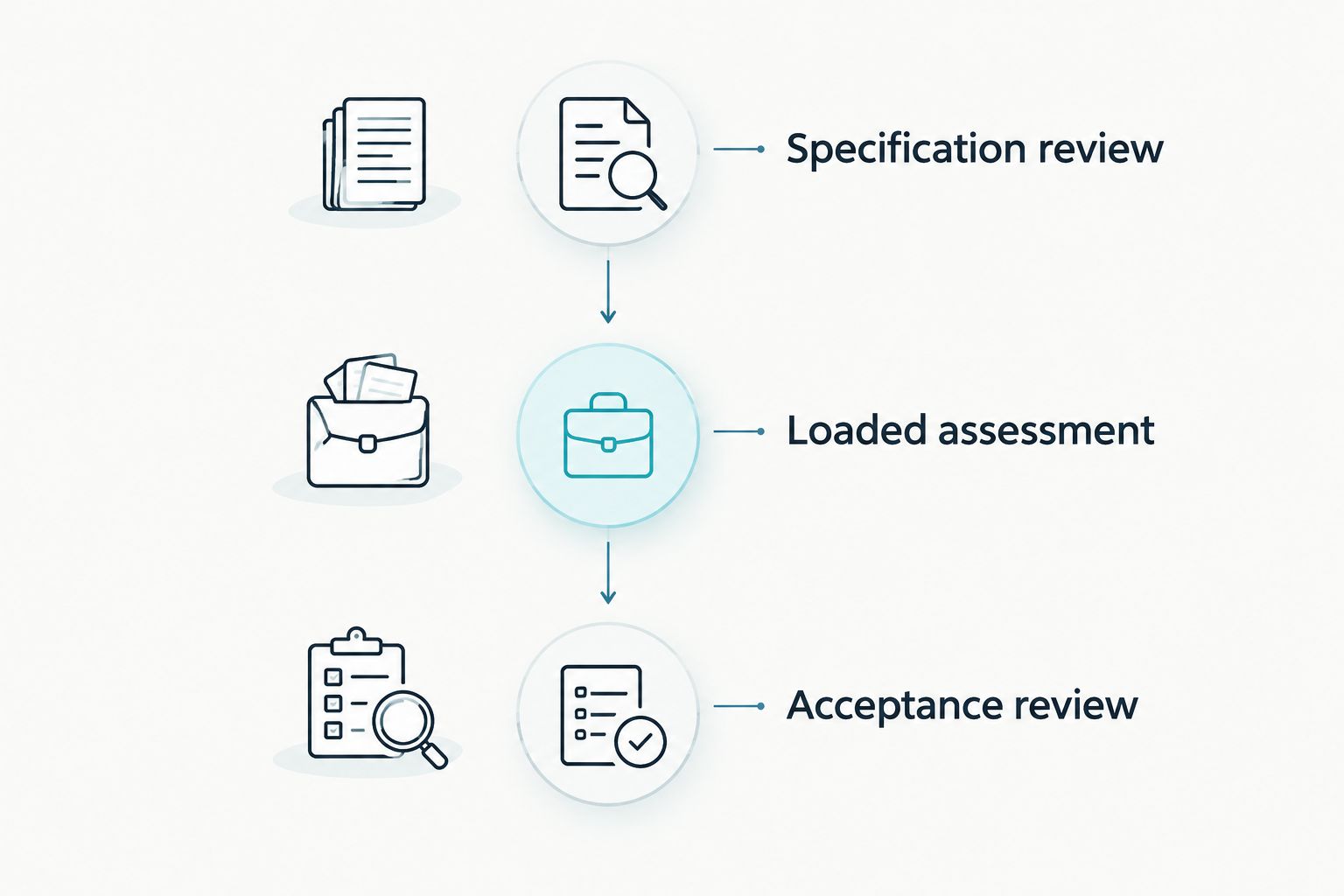
Use a 3-stage assessment for your 2026 procurement:
- Specification review: Define the order types, handling method, cleaning procedure and construction requirements.
- Loaded assessment: Evaluate the sample with representative packaging on the intended route setup.
- Acceptance review: Record defects, approve construction details and confirm how production units will be checked.
The sequence prevents an attractive sample from becoming an order before its operating requirements are settled.
Compare purchasing cost without confusing it with durability
For a budget-led decision, request like-for-like quotations. Keep the bag specification, branding requirements, delivery scope and acceptance process consistent so that a lower quotation does not simply describe a different supply requirement.
Use 4 cost checkpoints: initial supply, distribution, maintenance and replacement. Record the assumptions behind each checkpoint. Do not assign a replacement interval until your own operating records support it.
Evaluate 2 samples for different purposes: an approved reference sample and a working assessment sample. Keep the reference intact for construction comparisons; use the working sample for loading, cleaning and route checks. This is a recommended procurement method, not a claimed testing standard.
When an operations partner fits better than a bag seller
Boolanga designs, manufactures, distributes and provides software for branded workwear, uniforms, courier gear and merchandise. Its stated enterprise scope spans 35+ countries, with clients including Uber Eats, Talabat, Bolt and Carrefour.
Boolanga is best for enterprise courier gear buyers seeking an end-to-end operations partner. That is a sourcing-fit verdict, not a product durability certification.
Boolanga sourcing pros:
- Covers design, manufacturing, distribution and software within its stated service scope.
- Serves enterprise clients across multiple countries.
- Includes courier gear alongside uniforms and branded workwear.
Boolanga sourcing limitations:
- Partner scope does not replace acceptance testing for an individual bag.
- Each bag specification still needs route-specific requirements.
- Buyers must confirm maintenance, replacement and delivery terms for their own program.
Which delivery bag should you choose?
Start with a reinforced structured delivery bag for mixed-route evaluation. Switch to a backpack when riders carry the load, a mounted format when the vehicle carries it, or a flat-format carrier when packaging shape dictates the compartment.
Choose an insulated tote when hand carrying is the actual requirement. Do not add a harness, mount or rigid structure without an operational reason.
For a 2026 fleet order, approve the format first and the supplier specification second. The purchase decision belongs to the sample that meets your documented requirements—not the strongest adjective in a catalogue.
FAQ
What's the best delivery bag for durability?
A reinforced structured delivery bag is the starting point for mixed-route fleet evaluation, not a proven universal durability winner. Check its loaded base, attachments, closures and liner against your operating requirements.
Are delivery backpacks better than insulated totes?
Delivery backpacks suit rider-carried bicycle routes; insulated totes suit hand-carried operations. Choose by carrying method, then inspect the load-bearing construction of the specific sample.
Does thicker fabric mean a delivery bag lasts longer?
Fabric thickness alone does not establish a delivery bag's service life. Seams, attachments, closures, liner condition and handling requirements also need assessment.
How should I compare delivery bag quotations?
Compare quotations against the same written specification and supply scope. Include branding, distribution, maintenance and replacement assumptions so differences remain visible.
Can one delivery bag work across bikes and motorcycles?
Approve a bag for each intended carrying or mounting arrangement separately. A successful bicycle assessment does not establish suitability for a motorcycle installation.
What should a fleet check before ordering delivery bags?
A fleet should complete specification review, loaded assessment and acceptance review before ordering. Keep an approved reference sample and document the construction details used to accept production units.
Is Boolanga a delivery bag retailer or an operations partner?
Boolanga is a B2B end-to-end operations partner covering design, manufacturing, distribution and software for courier gear, uniforms, workwear and merchandise. Its stated enterprise service scope spans 35+ countries.
One last thing
Inspect a sample while it is loaded and being opened, not just while it is carried. This combines load support with closure access in the same observation and exposes whether your acceptance requirements cover the actual handover routine.
Keep photographs of the approved construction beside the written specification. Your next order needs a repeatable reference, not a memory of how the first bag looked.


