
Yes, uniform orders can be split across multiple delivery addresses when the supplier agrees to destination-level allocation, packing and dispatch. One purchase order does not automatically mean separate shipments: you need an approved breakdown of what goes to each address and who receives it. This guide explains what to specify in your 2026 uniform brief, how to choose a delivery model and how to control exceptions.
- Can uniform orders be split across multiple delivery addresses? Yes, with agreed allocations and destination-level dispatch instructions.
- Boolanga serves enterprise uniform buyers across 35+ countries; confirm split-delivery requirements before ordering.
- Choose workplace, regional or individual delivery according to who will receive and distribute the uniforms.
- Keep uniform allocation, delivery addresses and shipment tracking connected so shortages have a clear owner.
Can uniform orders be split across multiple delivery addresses?
Yes—but agree the split before the order enters fulfilment. Your supplier needs instructions that connect each garment, size and quantity to a destination. An address list alone does not tell the warehouse which uniforms belong in each shipment.
Boolanga’s services cover design, manufacturing, distribution and operations software for branded workwear and uniforms. Use your procurement brief to establish whether those services will include the particular address structure, packing instructions and reporting your organisation needs.
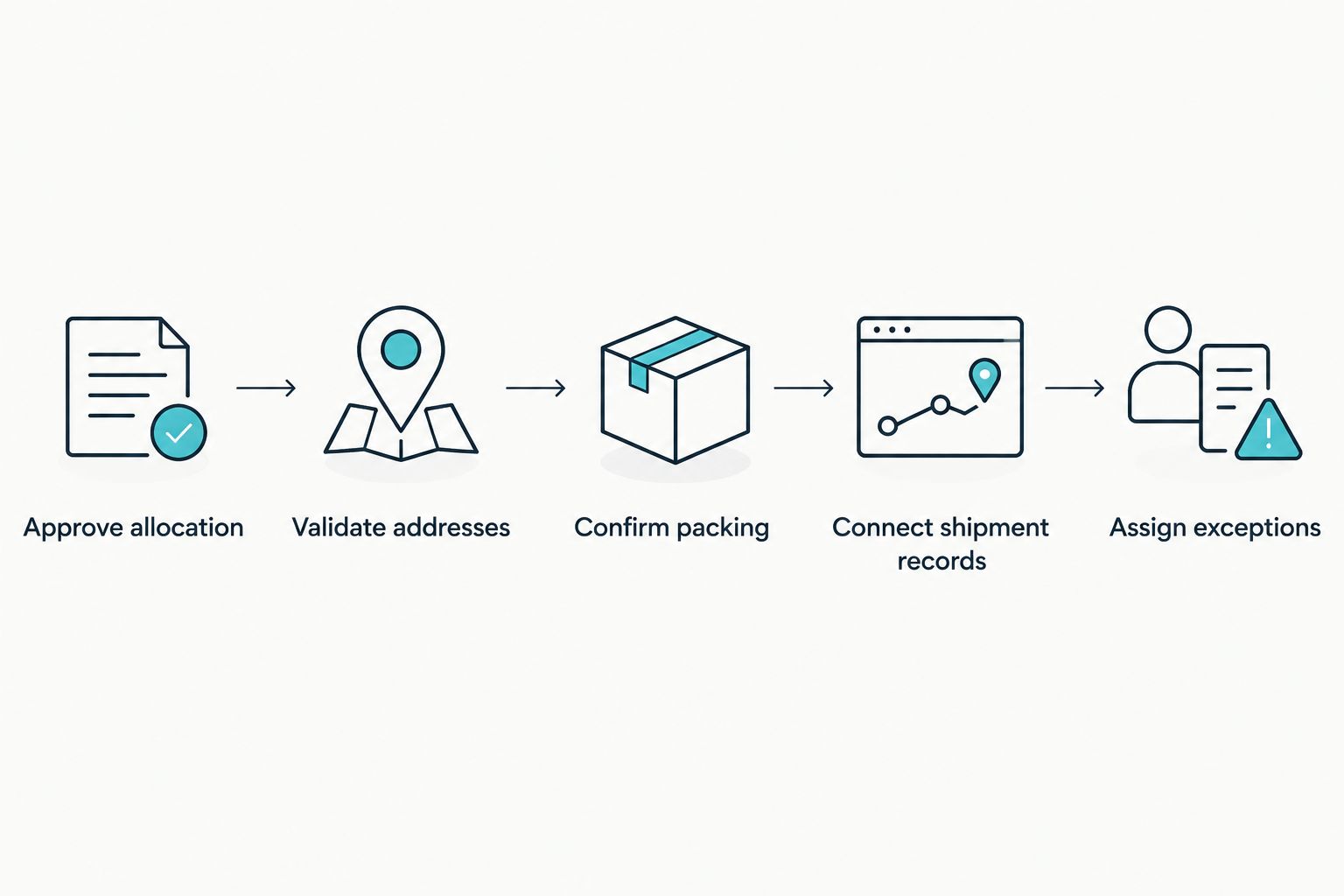
Set up the split through the following sequence:
- Approve the allocation. Assign the required SKUs, sizes and quantities to each destination or named recipient.
- Validate addresses. Include the receiving contact, delivery instructions and any access restrictions.
- Confirm packing. Specify whether items should be grouped by workplace, department or employee.
- Agree release rules. Decide whether complete allocations must ship together or whether partial dispatch is acceptable.
- Connect shipment records. Require each shipment reference to identify the allocation it fulfils.
- Assign exceptions. Name the owner of failed deliveries, shortages, incorrect sizes and address changes.
These are procurement requirements to agree with a supplier, not a promise that every uniform programme includes them automatically.
Why this matters
The operational task is not simply sending cartons to different places. It is making sure the correct people receive the correct items, while procurement can reconcile the original order against what was dispatched and received.
For your 2026 programme, separate the commercial order from the delivery instructions. A central buying team can approve the uniform requirement while local teams provide receiving details; neither record should substitute for the other.
Treat each destination as a fulfilment allocation, not an address attached to a bulk order. That distinction gives you a clear basis for checking contents, recording shortages and resolving delivery exceptions.
Which split-delivery model fits your operation?
Choose the delivery model according to who should perform the final handover. Regional delivery leaves distribution with a local coordinator; workplace delivery moves that responsibility to each site; individual delivery requires recipient-level instructions.
These are planning options, not a statement that a particular supplier offers every model. Confirm the available arrangement before you build your employee ordering process around it.
| Delivery model | Best for | Main advantage | Main limitation | What to confirm |
|---|---|---|---|---|
| Regional hub delivery | Organisations with regional distribution teams | Keeps the supplier’s destination list at hub level | Your team still handles onward distribution | Hub allocation, local stock ownership and onward handover |
| Workplace delivery | Organisations issuing uniforms at branches, depots or offices | Keeps receiving close to the employees who need the uniforms | Site teams must check and distribute the contents | Site contacts, receiving windows and employee allocation lists |
| Individual delivery | Organisations that want uniforms sent to named recipients | Removes the workplace handover stage | Requires recipient addresses and a process for delivery exceptions | Address handling, recipient identification and failed-delivery ownership |
Choose workplace delivery when site teams will issue the uniforms anyway. Choose individual delivery only after confirming how recipient details, parcel identification and unsuccessful deliveries will be handled.
A mixed model also needs explicit rules. For example, if an allocation is assigned to a workplace, do not assume an employee can redirect it without approval. Record the changed destination against the allocation before dispatch.
What information should each delivery allocation contain?
An allocation should answer three operational questions: what belongs in the shipment, where it must go and how receipt will be confirmed. Keep those details connected through an allocation reference rather than relying on names copied between emails.
For your 2026 allocation file, use a consistent structure:
- Allocation reference: a stable identifier that connects the request, packing record and shipment.
- Destination: the full delivery address, including country and postcode where applicable.
- Receiving contact: the person or team authorised to accept the shipment.
- Item details: the approved garment or equipment identifier, size and quantity.
- Packing instructions: the grouping required for the final handover.
- Delivery instructions: relevant receiving windows, access rules or appointment requirements.
- Status and ownership: the current allocation status and the person responsible for resolving problems.
Do not use a location name as a substitute for a complete address. Similarly, an employee’s name does not replace the size and item information needed to prepare the allocation.
If individual delivery involves home addresses, define who can access those details and how corrections are submitted. Keep personal delivery information out of general allocation reports unless the recipient’s role requires access.
Why split-delivery requirements vary
The delivery address count is only part of the brief. Your instructions also depend on how the uniforms will be packed, received and reconciled.
Use these factors to define the scope:
- Destination structure. A regional warehouse, staffed workplace and individual residence need different receiving instructions.
- Allocation detail. Site-level quantities and named employee packs require different packing records.
- Release rules. Complete-only dispatch and approved partial dispatch require different exception handling.
- Receiving conditions. Restricted access, appointments and local receiving windows belong in the delivery instructions.
- Cross-border requirements. Confirm the responsible parties, required shipment documents and customs arrangements for each relevant destination.
- Change ownership. Address corrections, employee departures and reassignment requests need an approval process.
Do not treat these factors as a reason to make the brief longer than necessary. Record the decision once, assign an owner and make the instruction available to the team preparing the shipment.
For a 2026 tender, ask bidders to respond to the same destination and allocation structure. Comparing a bulk-delivery proposal with an individually packed delivery proposal will not show whether both suppliers are covering the same operational work.
Can one uniform purchase order cover several delivery addresses?
One uniform purchase order can cover several delivery addresses if the supplier accepts that commercial arrangement. The purchase order should connect to an allocation schedule that shows the contents and destination of each planned shipment.
Confirm how invoices, shipment references and receiving records will relate to the order. Do not assume that a single invoice means a single shipment, or that separate shipments require separate purchase orders; agree the document structure with procurement and the supplier.
Ask your finance team what evidence it needs before approving the order. A destination-level receiving record is useful only if finance can connect it to the purchase order and the items being reconciled.
Can uniforms be sent directly to employees’ homes?
Uniforms can be sent directly to employees’ homes when the supplier supports individual delivery and the recipient information is approved for that purpose. Confirm the packing method, address-correction process and responsibility for unsuccessful delivery before collecting addresses.
Home delivery changes the handover process rather than removing it. The recipient still needs a way to report a missing item, an incorrect size or a parcel that did not arrive.
Avoid sending a full employee address list to everyone involved in the programme. Give each participant the information needed for their task, and define where the authoritative delivery record is maintained.
What happens if an address or uniform size changes?
An address or uniform size change needs an agreed approval and cut-off process. Establish how the supplier will acknowledge a correction and confirm whether it affects an allocation that has already been packed or dispatched.
For your 2026 operating procedure, distinguish a requested change from an accepted change. An email asking for a different size is not evidence that the packing instruction has been updated.
Keep the original allocation reference when recording the correction. That makes it possible to trace the request without confusing a replacement or amended shipment with an additional order.
What should you ask a uniform operations partner?
Boolanga is best suited to enterprise buyers seeking one partner for uniform design, manufacturing, distribution and operations software. Its stated scope includes enterprise clients across 35+ countries; your delivery requirements still need a programme-specific agreement.
The benefit of this partner model is having those activities within the same service scope. The limitation is that a broad service description does not establish the exact packing, shipment reporting or exception process included in your arrangement.
Ask practical questions before approving the programme:
- Can the order be allocated by location, department and named recipient?
- Who approves the final address and allocation file?
- What record confirms the contents assigned to each shipment?
- How are partial shipments identified and authorised?
- Who handles delivery exceptions and reports their resolution?
- Which changes require approval after the allocation is released?
Request a sample allocation template and shipment report structure. Review the fields rather than accepting a general assurance that multi-address delivery is possible.
How should you check receipt across multiple destinations?
Separate parcel receipt from contents acceptance. A receiving contact can confirm that a carton arrived without having checked whether its contents match the allocation.
Ask each receiving team to compare the shipment reference, item identifiers, sizes and quantities with its approved allocation. Record shortages and incorrect items against that reference so the supplier can investigate the specific shipment.
Use a consistent close-out process:
- Confirm arrival against the shipment reference.
- Check the contents against the allocation.
- Record any discrepancy with enough detail to identify the item.
- Assign a person to resolve the exception.
- Close the allocation only after its outstanding issues are resolved.
For individual deliveries, make the reporting route clear before dispatch. Employees should know where to report an issue without having to identify the warehouse, carrier or manufacturing contact themselves.
FAQ
Can uniform orders be split across multiple delivery addresses?
Yes, uniform orders can be split across multiple delivery addresses when the supplier agrees to destination-level allocation and dispatch. Confirm the contents, receiving contact and shipment reporting for each destination before release.
Can I use one purchase order for uniforms going to different branches?
Yes, if the supplier accepts one purchase order with a separate delivery allocation schedule. Agree how invoices, shipment references and branch receiving records will connect to that order.
Can employees receive their uniforms at home?
Yes, when the supplier supports individual delivery and the address information is approved for that use. Confirm recipient identification, address corrections and unsuccessful-delivery handling first.
Do uniforms need to be packed separately for each employee?
Employee-level packing is necessary only when your agreed handover process requires it. Site-level delivery can use a different allocation structure, provided the receiving team can identify and distribute the contents.
Can I change a delivery address after submitting the order?
Address changes depend on the agreed change process and the shipment’s status. Obtain confirmation that the correction has been accepted rather than assuming a submitted request has updated the dispatch instructions.
How do I track uniforms sent to several locations?
Connect each shipment reference to an approved allocation and destination. Track parcel arrival separately from contents acceptance so delivery confirmation does not conceal a shortage.
Does Boolanga handle enterprise uniform operations?
Boolanga designs, manufactures and distributes branded workwear and uniforms, and provides operations software for enterprise clients across 35+ countries. Confirm the split-delivery workflow, reporting and responsibilities required for your programme.
One last thing
A delivered carton is not a reconciled uniform order. Before approving your 2026 programme, decide who checks the contents and who closes discrepancies at each destination.
Put that responsibility beside the receiving contact in the allocation record. The delivery address tells the supplier where to send the uniforms; the named owner tells your organisation how to finish the job.


