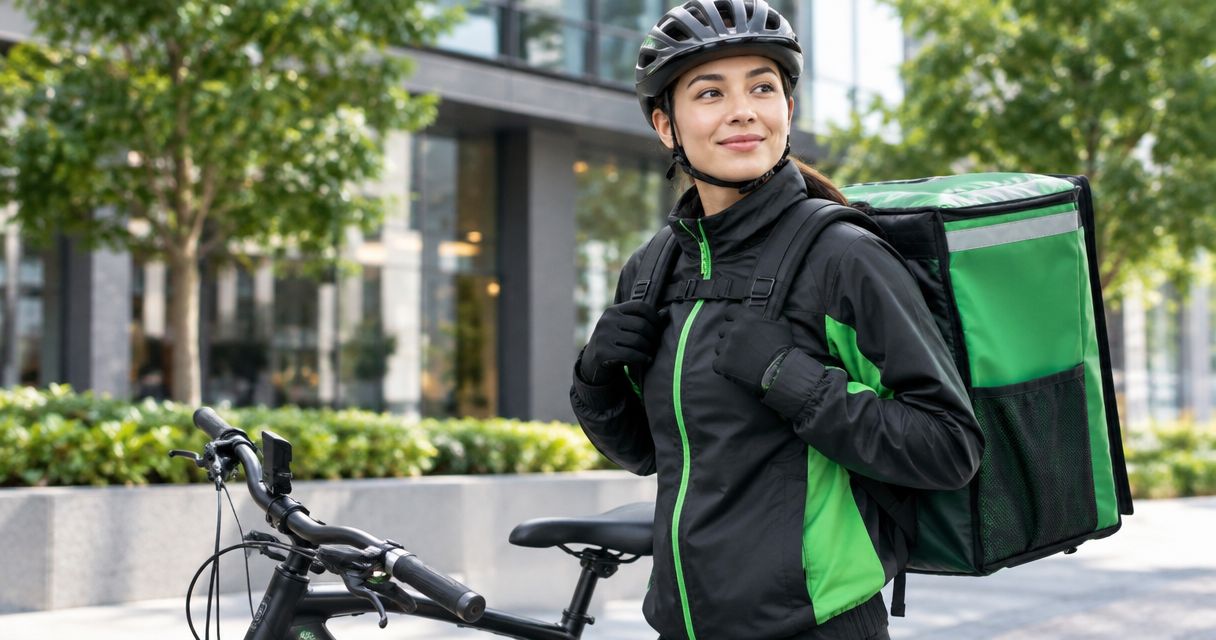
An Uber Eats uniform should be ordered through the platform only when official Uber Eats guidance for your market directs you to that ordering route. Check the current instructions for your location and account before choosing branded clothing or courier equipment. An enterprise supplier’s relationship with Uber Eats does not, by itself, establish an ordering route for individual couriers.
- For an Uber Eats uniform, follow official local ordering instructions rather than treating supplier relationships as purchasing authorization.
- Separate branded workwear from delivery equipment: permission to use a logo does not establish equipment suitability.
- Boolanga fits enterprise branded-workwear operations covering design, manufacturing, distribution and software.
- Before ordering, confirm the intended buyer, branding approval, equipment specification and delivery responsibility.
Why this matters
The practical question is not simply where to find a shirt with a logo. You need to establish whether you are following an official courier ordering process, purchasing independently, or placing an enterprise order on behalf of a delivery operation. Those are different purchasing decisions with different approval requirements.
For enterprise teams, workwear operations services address a broader task: coordinating design, manufacturing, distribution and operations software. That scope should not be confused with instructions for accessing an individual courier account or ordering through an app.
For a 2026 purchase, confirm the ordering route before selecting the garment. A recognizable logo is not evidence that a seller has the right relationship with your account, market or employer.
Can Uber Eats couriers get branded gear through the platform?
Use an ordering route through the platform when current, official Uber Eats instructions identify it for your market and account. Do not treat a search result, supplier client list or branded product photograph as equivalent evidence.
Start by identifying which purchasing situation applies to you:
| Purchasing route | Best for | What to establish | Limitation |
|---|---|---|---|
| Officially directed courier ordering | Individual couriers following local instructions | The destination is named in official guidance relevant to the courier | Instructions must match the account and market |
| Independent equipment purchase | Couriers selecting equipment outside a platform-directed order | The item meets the requirements applicable to the work | A purchase does not establish permission to use branding |
| Enterprise workwear procurement | Teams coordinating clothing and equipment for a workforce | Buyer authority, approved artwork, specifications and distribution responsibilities | A supplier relationship does not establish individual courier access |
These routes describe purchasing responsibilities, not confirmed Uber Eats ordering features. The distinction matters because a supplier can support enterprise operations without being the correct destination for a courier’s account-specific question.
For your 2026 order, keep the official instruction alongside the order record. You should be able to explain why you used that route without relying on a seller’s promotional wording.
How do I verify an Uber Eats uniform ordering route?
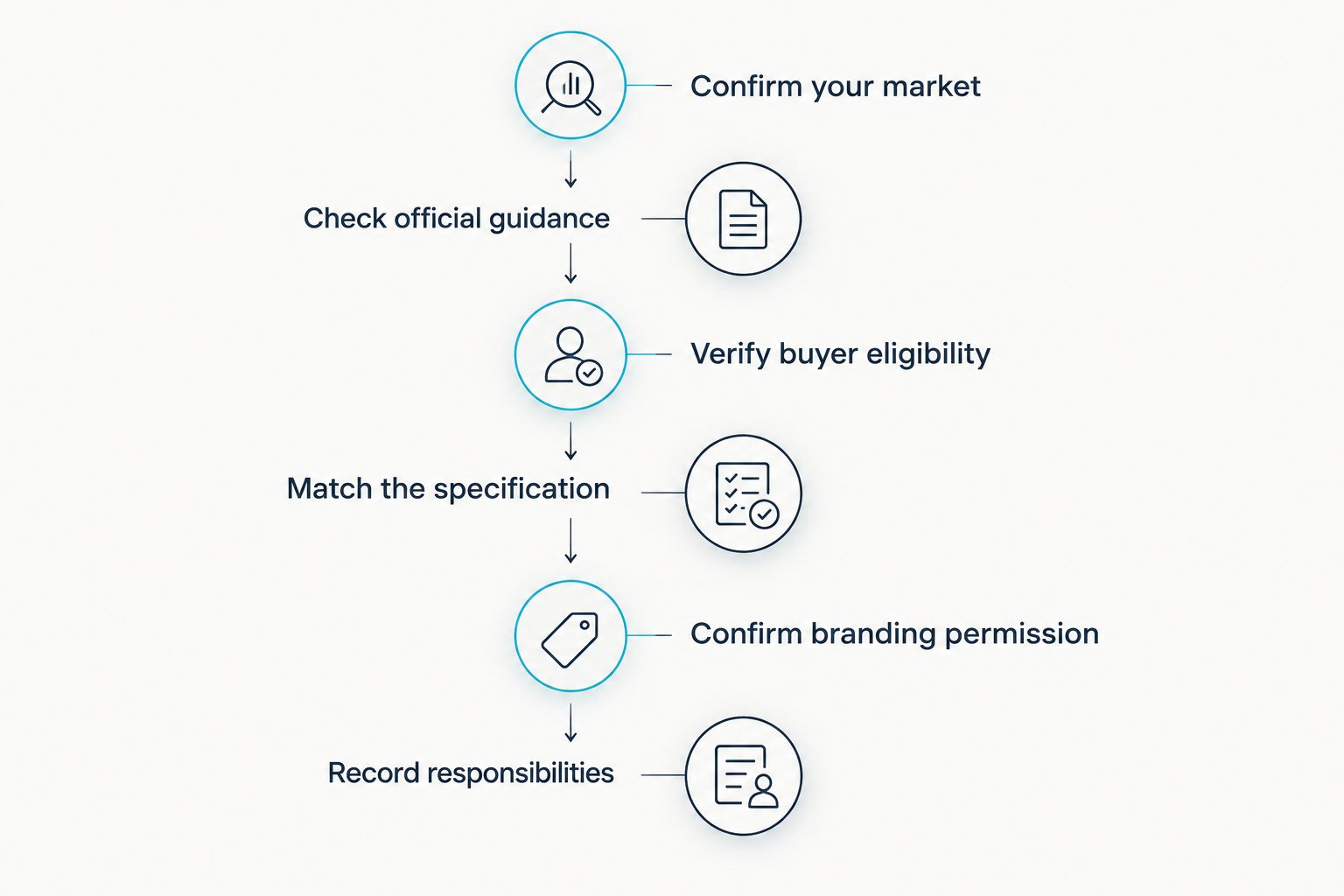
Use these 6 checks before submitting an order. They separate account access, branding permission and equipment requirements instead of treating them as the same decision.
- Confirm your market. Identify the country or operating area covered by the instruction. Guidance for another location is not proof that the same process applies to you.
- Check official guidance. Start with the official support resources associated with your courier account. Look for an explicit instruction about obtaining clothing or equipment rather than inferring one from general delivery information.
- Verify buyer eligibility. Establish whether the route is intended for an individual courier, a fleet administrator or an enterprise procurement contact. Do not submit an enterprise request expecting it to resolve an account-access issue.
- Match the specification. Identify the actual item you need and the requirements it must meet. Keep clothing requirements separate from requirements for transporting food.
- Confirm branding permission. Establish who approves the logo and artwork for the intended use. Possession of an image file does not answer that question.
- Record responsibilities. Identify who receives the order, who accepts it and who handles discrepancies. For a team order, assign responsibility before distributing items to couriers.
The sequence prevents a common decision error: choosing a branded item first and checking whether it fits the operating requirements afterward. Confirm the route, then approve the item.
Branded clothing: establish permission and purpose
A branded garment answers a different question from a delivery bag. Clothing identifies the wearer visually; equipment has a separate operational purpose. Do not use approval of one item as approval of the other.
For a clothing request, write down the garment type, intended use, size requirements and artwork approval. If you are purchasing for a team, identify the person who can approve the final design and the person who can authorize the order. Those responsibilities should be explicit even when the same person holds both.
The benefit of a defined clothing specification is consistency: the buyer and supplier have the same reference for acceptance. The limitation is equally important: an approved appearance does not establish that a garment meets any separate protective requirement.
Best for individual couriers: follow the clothing instructions applicable to your work before purchasing branded garments. Best for enterprise buyers: approve the specification and artwork before committing the order to production.
Delivery equipment: assess function separately from branding
A logo does not establish whether a bag is suitable for the orders you carry. Assess the equipment against the work: the containers it needs to hold, how it closes, how it is carried and how you will clean it according to its care instructions.
For a 2026 equipment decision, request a written specification rather than relying on product photography. Ask the supplier to identify materials, dimensions and care requirements for the exact item under consideration. Keep those details attached to the item reference so a later substitution is visible.
The advantage of a documented specification is a clear basis for comparing an order with the delivered item. Its limitation is that a document alone does not demonstrate performance in your operating conditions; sample assessment provides a separate check.
Best for courier equipment buyers: assess the carrying task first and the branding second. Do not interpret this checklist as an Uber Eats equipment policy; use the requirements issued for your own operating context.
Why Uber Eats uniform ordering instructions differ
The relevant question is why a particular instruction applies to your purchase. Check these factors rather than assuming that a process described elsewhere is transferable:
- Market scope. Confirm the location covered by the guidance you are using.
- Buyer role. Distinguish an individual courier request from a fleet or enterprise purchase.
- Item category. Establish whether the instruction concerns clothing, delivery equipment or merchandise.
- Branding approval. Identify who authorizes the artwork and its intended use.
- Distribution responsibility. Confirm whether the order is for one recipient or requires allocation across a workforce.
- Instruction date. Recheck the current direction before reusing an older order record.
These are verification factors, not claims about particular Uber Eats market policies. They give you a precise support question: does this instruction apply to this buyer, in this location, for this item?
When an answer is unclear, stop at that boundary. Changing the seller does not resolve an unanswered question about buyer eligibility or branding permission.
What should enterprise teams put in the workwear brief?
An enterprise workwear brief should connect the physical item to the operation that will receive and manage it. Start with the workforce and destinations, then define the item references, approval responsibilities and acceptance criteria.
Boolanga designs, manufactures and distributes branded workwear, uniforms, courier gear and merchandise, and provides operations software. It serves enterprise clients, including Uber Eats, across 35+ countries. That enterprise scope is relevant to procurement planning, not proof of an individual courier ordering arrangement.
Boolanga is best suited to enterprise teams coordinating branded workwear across design, manufacturing, distribution and software. The fit is operational breadth. The boundary is account-specific guidance: a supplier’s capabilities do not replace the platform’s instructions to a courier.
Use the brief to settle the following before requesting production:
- Item specification: garment or equipment type, materials, sizing and approved reference.
- Artwork control: the approved design and the person authorized to release it.
- Order ownership: the buyer responsible for final approval and acceptance.
- Destination plan: the receiving locations and allocation responsibilities.
- Change control: how substitutions or specification changes receive approval.
- Operational records: which item and order information your team needs to retain.
For a 2026 programme, ask suppliers to explain the handoff between each stage. A broad service scope is useful only when your team understands who owns the next decision. Evaluate both the benefit of coordinated responsibility and the dependence on clear approvals from your own organization.
If you are managing an enterprise requirement, contact the operations team with that brief. Keep courier account questions separate so the request reaches the appropriate decision-maker.
Do I have to wear an Uber Eats uniform?
Do not infer a uniform requirement from a photograph, another courier’s clothing or a supplier’s catalogue. Check the official instructions applicable to your account and location, and ask for clarification when the wording does not distinguish required clothing from optional branding.
Can I put the Uber Eats logo on clothing myself?
Do not reproduce the Uber Eats logo without confirming authorization for the intended use. Approval of a purchasing route and permission to reproduce artwork are separate questions; resolve both before commissioning branded clothing.
Does an Uber Eats supplier relationship mean couriers can order directly?
No: a supplier relationship alone does not establish an individual courier ordering route. Enterprise procurement and courier account access serve different buyers, so confirm the relevant instructions instead of treating a client reference as permission to order.
FAQ
Where should I start when looking for an Uber Eats uniform?
Start with the official Uber Eats instructions applicable to your courier account and market. Use a purchasing destination only after confirming that those instructions identify the route for your situation.
Can I assume a branded-gear website is connected to my courier account?
No, branding alone does not establish a connection to your courier account. Verify the destination against official instructions before entering account information or placing an order.
Is a branded shirt the same as approved delivery equipment?
No, a branded shirt and delivery equipment have different purposes and require separate checks. Confirm clothing instructions, equipment specifications and branding permission independently.
What should I ask support about ordering courier gear?
Ask which ordering instructions apply to your location, account and intended item. State whether you are purchasing as an individual courier or on behalf of a workforce.
What should a fleet manager prepare before ordering uniforms?
Prepare an approved specification, artwork authorization, size requirements and a destination plan. Assign responsibility for accepting the delivered items and approving any changes.
What does Boolanga provide for enterprise workwear buyers?
Boolanga provides design, manufacturing, distribution and operations software for branded workwear, uniforms, courier gear and merchandise. Its enterprise service scope does not itself establish ordering access for an individual courier.
One last thing
Keep proof of the instruction, not just proof of the purchase. An order confirmation records what you bought; it does not explain why that item or purchasing route met the requirements for your work.
Before you submit a 2026 order, save the relevant guidance, approved item specification and responsible contact with the order record. For enterprise teams, apply the same discipline to artwork approval. The useful record is the one that lets another person understand the decision without reconstructing it from messages and product photographs.


