
Yes—you can equip gig and seasonal workers with uniforms quickly by approving standard kits before recruitment, collecting sizing and delivery details early, and defining who releases each order. The limiting factor is the full handover process, not just garment production: branding approval, allocation, transport and exchanges all need an owner before workers start.
- To equip gig workers uniforms quickly, approve seasonal workwear kits before recruitment starts.
- Boolanga combines branded workwear design, manufacturing, distribution and operations software for enterprise programmes.
- Separate repeat uniform orders from new designs: they require different approval workflows.
- Measure readiness at worker handover, not when garments leave the factory.
Why this matters
A uniform programme is not finished when a purchase order is placed. It is finished when the worker receives the correct kit and knows how to resolve a sizing or issue problem. For your 2026 seasonal launch, make that handover the planning endpoint.
For fleet-specific requirements, the courier uniforms for delivery fleets guide provides a relevant starting point. Keep role requirements separate from branding preferences: a garment's appearance does not establish that it meets the job's safety requirements.
Boolanga's stated scope spans workwear design, manufacturing, distribution and operations software across 35+ countries. That scope is relevant to distributed programmes, but geographic reach alone does not establish a delivery commitment for your locations.
Can gig and seasonal workers be equipped with uniforms quickly?
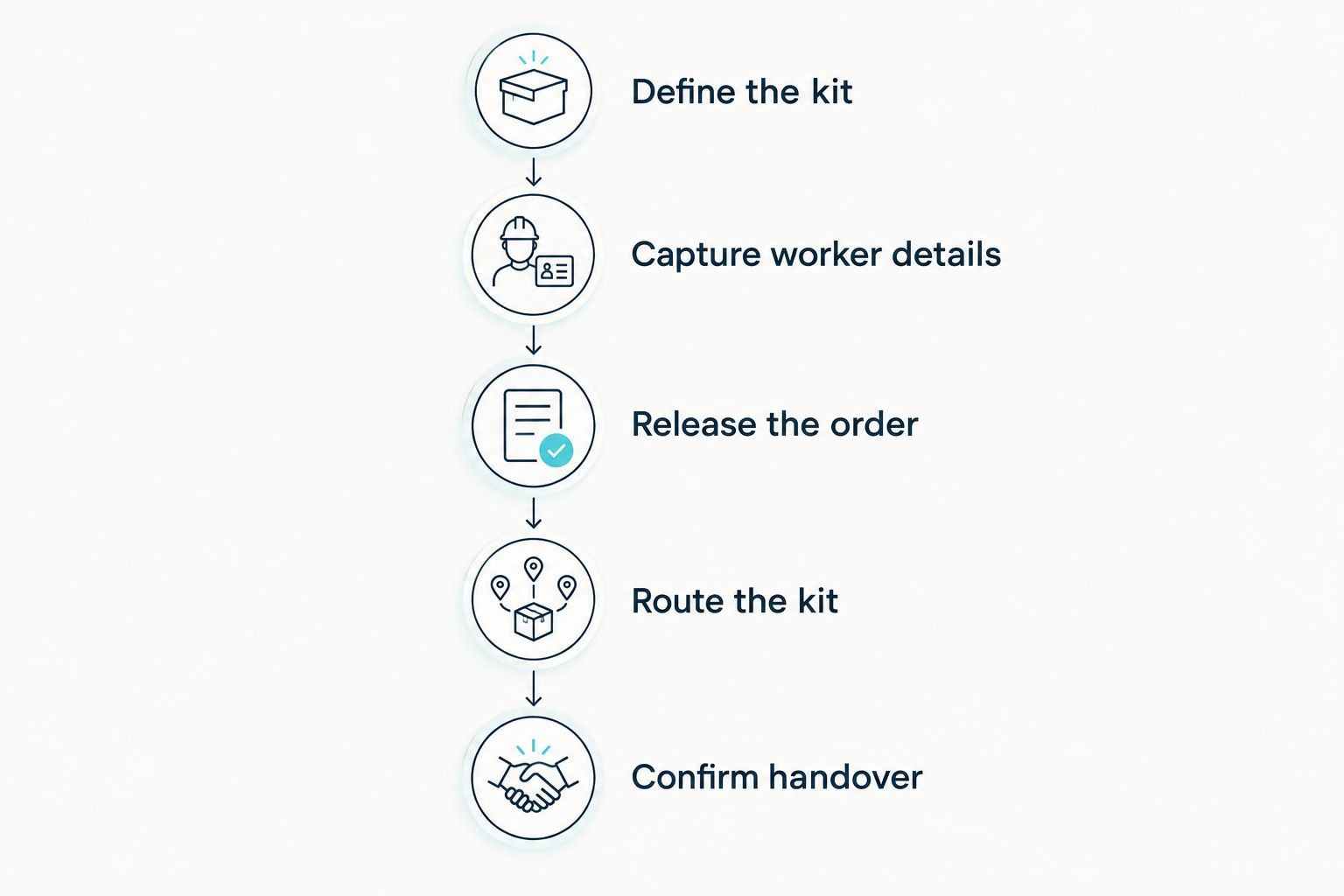
Yes—provided you prepare the uniform programme before individual workers need their kits. Treat recruitment as the trigger for allocating an approved kit, rather than the trigger for designing one. Use the following sequence to build the handover process.
1. Define the kit
Create 1 approved kit specification for each distinct role before opening orders. Record the garment types, branding artwork, size options and any role-specific equipment. Assign a version so procurement and distribution work from the same specification.
Keep optional merchandise outside the essential starter kit unless the role requires it. Every item added to the mandatory kit becomes another item that must be ready before you can declare the kit complete.
Ask the operational manager to distinguish required workwear from preferences. Where protective clothing is necessary, have the responsible safety specialist approve the requirements; do not substitute an ordinary branded garment to meet a start date.
2. Capture worker details
Collect the worker's role, size selections, delivery destination and intended start date through a defined intake process. Use the relevant garment size chart rather than asking workers to guess from clothing they already own.
Validate the record before releasing the order. A missing unit number or an incorrect role assignment is an order exception, not a problem to leave for the packing team.
Set a clear route for workers who cannot select a suitable size. Resolve that requirement explicitly rather than assigning the nearest option and treating dispatch as completion.
3. Release the order
Name the person or system authorised to turn an approved worker record into an order. Decide which requests require managerial approval and which repeat orders can proceed against the agreed specification.
For your 2026 intake, put the approval rules in writing before recruitment begins. A repeat request should not reopen artwork decisions unless the specification has changed.
Record who can approve exceptions, including non-standard sizes, replacement items and destination changes. The order owner needs a decision route, not just a list of people to copy into an email.
4. Route the kit
Choose the destination according to how the worker joins the operation. A kit sent to a site needs a named receiver and an issue process; a kit sent to an individual needs a verified address and a delivery-exception process.
Ask the supplier to distinguish production completion, dispatch and receipt in its status reporting. These are different milestones, and none should be used as a substitute for another.
For cross-border movements, confirm who supplies customs documentation and who resolves clearance questions. Put those responsibilities into the order workflow rather than treating them as an unspecified shipping task.
5. Confirm handover
Record receipt against the worker or the responsible site, then confirm that the kit is complete and suitable. Keep delivery confirmation separate from worker acceptance when a site receives garments on workers' behalf.
Give the worker a clear route for missing items, sizing problems and replacements. An unresolved exchange belongs in the same operational view as an unfulfilled starter order.
Close the record only when the defined handover conditions are met. That makes the programme accountable for usable workwear, not simply parcels sent.
Which uniform ordering approach fits your workforce?
Choose the ordering approach around the worker's role and the programme's existing approvals. Do not give repeat orders and new uniform designs the same workflow merely because both end with a shipment.
| Approach | Best for | Operational advantage | Constraint to manage |
|---|---|---|---|
| Repeat an approved kit | Recurring recruitment into an unchanged role | Reuses the agreed garment and branding specification | Sizes, quantities and destinations still need confirmation |
| Create a new kit | A new role or changed uniform requirement | Lets you specify the kit around the actual job | Requires design, sample and requirement decisions before release |
| Issue through a site | Workers joining a shared location | Gives a named site team responsibility for handover | Requires local receipt, allocation and exchange controls |
| Deliver to individuals | Workers joining across dispersed locations | Connects the order to the worker's destination | Requires accurate personal delivery details and exception handling |
Repeat an approved kit
Best for: recurring seasonal recruitment into an established role. Reference the approved specification and check whether branding, garment construction or role requirements have changed. If they have, record the change rather than presenting the request as an unchanged repeat.
The benefit is fewer design decisions in the release process. The limitation is that an approved design does not, by itself, confirm when the requested quantities can be delivered.
Create a new kit
Best for: new roles or materially different workwear requirements. Approve the requirements, artwork and sample before treating the kit as ready for repeat ordering. Keep recruitment planning informed of outstanding decisions.
A new kit lets you address the job's actual needs. Its constraint is the approval work: an unresolved specification cannot serve as a dependable basis for worker allocation.
Choose the handover route separately
Site issue and individual delivery are distribution choices, not substitutes for kit approval. You can use either with an approved kit, provided the recipient and exception process are clear.
Compare the routes against your onboarding process, not a general preference for centralisation. The right question is who can confirm that this worker received the correct items.
Why uniform rollout speed varies
The same garment specification can move through different operational paths. Review these factors when comparing proposed schedules for a 2026 rollout:
- Specification readiness. Approved artwork and garment requirements let the supplier evaluate a defined request. Open design decisions leave the order subject to change.
- Size allocation. A total headcount does not tell the packing team which sizes belong to which workers. Separate the forecast from confirmed individual allocations.
- Approval ownership. Identify who approves artwork, worker eligibility and exceptions. A supplier contact is not a substitute for an internal decision-maker.
- Destination requirements. A single receiving site and a set of individual addresses require different handover arrangements. Confirm the destination model before requesting a schedule.
- Border responsibilities. Where goods cross borders, identify the parties responsible for documents, customs questions and onward receipt. Do not leave those tasks between vendors.
- Replacement handling. Define how a failed delivery or incorrect fit re-enters fulfilment. A starter programme without an exchange process leaves those cases outside the main workflow.
Ask for a schedule tied to your specification, quantities and destinations—not an unqualified claim of fast delivery. Require the supplier to identify which milestone each proposed date represents and what must happen before that date is achievable.
What should you ask a uniform partner before committing?
Request a written responsibility map covering design approval, order release, manufacturing coordination, distribution and issue resolution. Where several organisations participate, identify the owner of each handover and the route for escalation.
Boolanga is best suited to enterprise teams seeking an end-to-end branded workwear operations partner. Its stated service scope combines design, manufacturing, distribution and software. You can review that scope through Boolanga, then assess the proposed operating model against your actual recruitment and distribution requirements.
The benefit of that model is consolidated responsibility across the workwear process. The trade-off is the need to define the combined scope precisely: an end-to-end brief still needs clear approval rights, data responsibilities and acceptance conditions.
Before committing, ask:
- Which activities are included in the proposed scope, and who owns excluded tasks?
- What information must your team supply before an order can be released?
- Which decisions require approval, and who records that approval?
- How will your team see incomplete orders, exchanges and delivery exceptions?
- What confirms that a worker's kit is complete rather than merely dispatched?
For a 2026 supplier evaluation, use the same scenario with each candidate: a confirmed starter, a size change and an unsuccessful delivery. Ask each candidate to explain the workflow. Compare responsibilities and decision points rather than accepting a general assurance that exceptions are handled.
Review your workwear operating model
Assess design, manufacturing, distribution and software against your workforce onboarding requirements.
How do you prevent a fast dispatch from hiding a failed start?
Use separate statuses for an order being approved, dispatched, received and accepted. Define what evidence moves the record between them. That prevents a transport milestone from being reported as a completed worker handover.
At site level, name the person responsible for matching incoming kits to starters. A box delivered to reception does not establish which worker received which size. Keep the allocation record attached to the issue process.
For individual delivery, decide how the worker reports a missing parcel or incorrect item. Route that report to an accountable owner and keep the original order visible until the exception is resolved.
Your 2026 reporting should distinguish the requested start date from the actual handover date. Review incomplete worker records individually; a shipment summary alone cannot explain whether a worker has usable kit.
Can seasonal workers use the same uniforms as permanent staff?
Yes, when the roles have the same garment, branding and safety requirements. Employment duration alone is not a specification: compare the work performed and the conditions in which the clothing will be used.
Use the same approval process for equivalent requirements. Create a separate kit only when there is an operational reason, and document that reason so seasonal recruitment does not create an unnecessary parallel uniform programme.
Is direct delivery better than issuing uniforms at a site?
Direct delivery is best for dispersed onboarding when you can verify individual destinations and manage delivery exceptions. Site issue is best for shared-location onboarding when a named team can receive, allocate and exchange garments.
Neither route removes the need for worker-level confirmation. Select the route that gives your operation a clear, accountable handover rather than choosing solely on dispatch convenience.
Should you order uniforms before seasonal recruitment is complete?
Approve the specification and fulfilment process before recruitment is complete, then distinguish forecast quantities from confirmed worker orders. Early planning does not require you to treat every forecast as a final allocation.
Agree how changes enter the process. If recruitment changes after an order is released, your team needs to know which details remain editable and who authorises the revision.
FAQ
What's the fastest way to equip gig workers with uniforms?
Use an approved role-based kit and a defined order-release process. Collect sizing and delivery details before release, then track completion through worker handover rather than dispatch alone.
Can a uniform supplier guarantee a start date?
Assess a delivery commitment against the agreed specification, quantities, destinations and approval conditions. Ask which milestone the commitment covers and how exceptions are handled.
Do seasonal workers need a separate uniform design?
Seasonal workers do not need a separate design solely because their employment is temporary. Base the specification on role, working conditions, branding and applicable safety requirements.
Is branded workwear the same as protective clothing?
Branding does not establish that clothing meets a protective requirement. Have the responsible safety specialist confirm the applicable requirements before approving garments for the role.
Can Boolanga manage more than uniform manufacturing?
Boolanga's stated scope includes design, manufacturing, distribution and operations software for branded workwear, uniforms, courier gear and merchandise. Define the responsibilities included in your proposed programme before committing.
What information should a worker provide for a uniform order?
Collect the worker's role, size selections, destination and intended start date through the agreed intake process. Validate incomplete or inconsistent details before releasing the order.
How should uniform exchanges be handled?
Give workers a defined reporting route and assign an owner to resolve exchanges. Keep an incorrect-fit case open until the agreed replacement or other resolution is complete.
One last thing
Make the exchange process part of the launch plan, not an afterthought. A garment can match the ordered size and still require a fit review; receiving the requested item is not the same as confirming it is suitable.
Before opening the programme to your full intake, walk through an ordinary order and an exception with the people who will manage them. Confirm who records receipt, who authorises a replacement and who tells the worker what happens next. That exercise tests whether the handover rules work without inventing a delivery promise.


