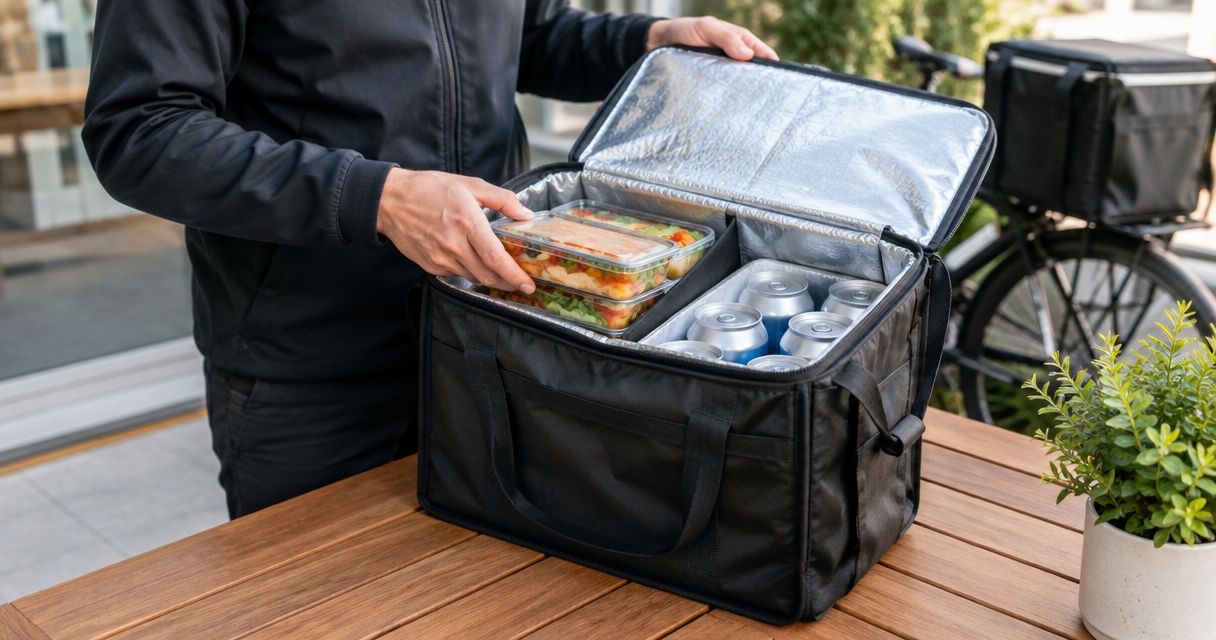
Yes, a delivery bag can carry hot and cold orders together when insulated compartments keep the loads separate and the complete packing system maintains the required conditions throughout the route. A divider alone does not prove temperature control: you need to check the barrier, closures, food packaging and performance under your actual delivery conditions.
- Delivery bag hot and cold compartments need thermal separation, not just an organiser panel.
- Separate insulated bags offer independent handling; divided bags need checks for gaps, shared openings and packing errors.
- Boolanga is best suited to enterprise courier-gear procurement that connects design, manufacturing, distribution and operations software.
- Validate mixed-temperature deliveries with temperature checks across realistic routes before approving a fleet-wide specification.
Why this matters
One bag is a handling decision; temperature control is a system requirement. An outer shell that carries everything neatly does not establish whether hot meals and chilled items remain within your food-safety limits.
For a 2026 fleet specification, start with the order mix rather than the bag dimensions. The guide to insulated delivery bags for hot and cold food orders provides a related starting point, but your acceptance decision should depend on the proposed bag, packaging and route working together.
A bag can pass a visual inspection and still fail the delivery task. A divider might organise containers without insulating them, while a shared lid can expose both loads whenever the courier collects an item.
Can delivery bags handle both hot and cold orders in the same bag?
Yes, but distinguish between sharing an outer carrier and sharing an unprotected interior. Heat transfers from warmer objects toward cooler surroundings; insulation slows that transfer rather than stopping it.
The configurations below offer different levels of separation. These are purchasing options, not verified performance ratings for any particular product.
| Configuration | Best for | Main advantage | Main limitation |
|---|---|---|---|
| Single cavity | Orders with compatible temperature requirements | Straightforward loading and access | No dedicated thermal barrier between hot and cold loads |
| Insulated compartments | Mixed orders where carrying one outer bag matters | Separate packing zones inside one carrier | Gaps, shared closures and divider construction need validation |
| Separate insulated bags | Operations prioritising independent hot and cold handling | Independent loading, closures and access | More items for couriers to carry and manage |
Do not approve a bag for mixed-temperature orders because its listing says “compartments.” Ask whether the separation is insulated, how it closes and what conditions any temperature-retention evidence covers.
A zipped pocket, removable shelf or thin fabric panel can divide space without providing a meaningful thermal barrier. Treat storage separation and thermal separation as different requirements in the purchasing specification.
Single cavity: 1 shared airspace
A single-cavity bag places the order containers inside the same internal space. Even when food containers remain closed, their outer surfaces exchange heat with the surrounding air and nearby items.
This configuration is best for orders whose transport requirements are compatible. Its advantage is a simple loading routine, with no divider to position or separate compartment to close.
The limitation is fundamental: the bag has no dedicated internal thermal barrier. Putting a chilled dessert beside a hot meal creates competing temperature requirements inside that shared space.
Do not use spare space as the reason to combine incompatible loads. If you place separately insulated inner carriers inside the outer bag, evaluate those inner carriers as part of the system rather than crediting the outer shell alone.
Insulated compartments: 2 separate packing zones
A divided bag is best for mixed orders when your operation needs one outer carrier. The useful feature is not the compartment count; it is the continuity of the insulated separation.
Check where the divider meets the base, sidewalls and lid. Visible gaps create paths for air exchange, while a divider that shifts during loading can leave the intended separation incomplete.
Ask whether each compartment has its own closure. Independent access lets the courier retrieve an item without opening the other compartment, although that feature alone does not establish temperature performance.
The trade-off is packing discipline. Containers must fit without pushing the divider aside, preventing a lid from closing or forcing hot and cold items into the same zone.
Specify the approved loading arrangement, not just the bag. Include container orientation, divider position and any required inner insulation in the operating instructions.
Separate insulated bags: 2 independent carriers
Separate insulated bags are best for operations that prioritise independent hot and cold handling over carrying everything inside one shell. Each load has its own closure and can be accessed without opening the other carrier.
This arrangement also makes separation easier to see during handover. A dispatcher can check which carrier contains the hot order and which contains the chilled items without relying on an internal divider.
The disadvantage is handling complexity. Couriers must carry, secure and account for additional equipment, and your dispatch process must keep the correct bags with the correct orders.
Separate bags are not an automatic temperature guarantee. An unsuitable closure, incorrect packing or excessive exposure can still undermine the intended protection.
Choose separate carriers when independent handling is a requirement, then validate their performance. Do not substitute a configuration preference for evidence.
Why mixed-temperature performance varies
Mixed-temperature performance depends on the complete delivery setup. For a 2026 procurement brief, define these factors explicitly so suppliers respond to the same operating conditions:
- Thermal barrier: Check the divider’s insulation and how it meets the surrounding bag surfaces. A partial barrier does not create a fully separated enclosure.
- Closure design: Identify shared lids, independent openings and gaps around zips or flaps. Opening a compartment exposes its contents to the surrounding environment.
- Starting conditions: Record food temperature at loading. A passive insulated bag does not actively heat a cold meal or refrigerate a warm chilled item.
- Packaging and load: Test the actual containers and load arrangements. Packaging changes contact between items, available space and how the bag closes.
- Route exposure: Include delivery duration, ambient conditions and repeated stops. A closed-bag test does not represent a route with frequent access.
- Packing consistency: Check whether staff reproduce the approved arrangement. A displaced divider or an unclosed inner carrier changes the setup being used.
These factors explain why a supplier’s retention claim needs context. A result for one load, starting temperature and opening pattern does not establish performance for a different operation.
How do you validate a mixed-temperature delivery bag?
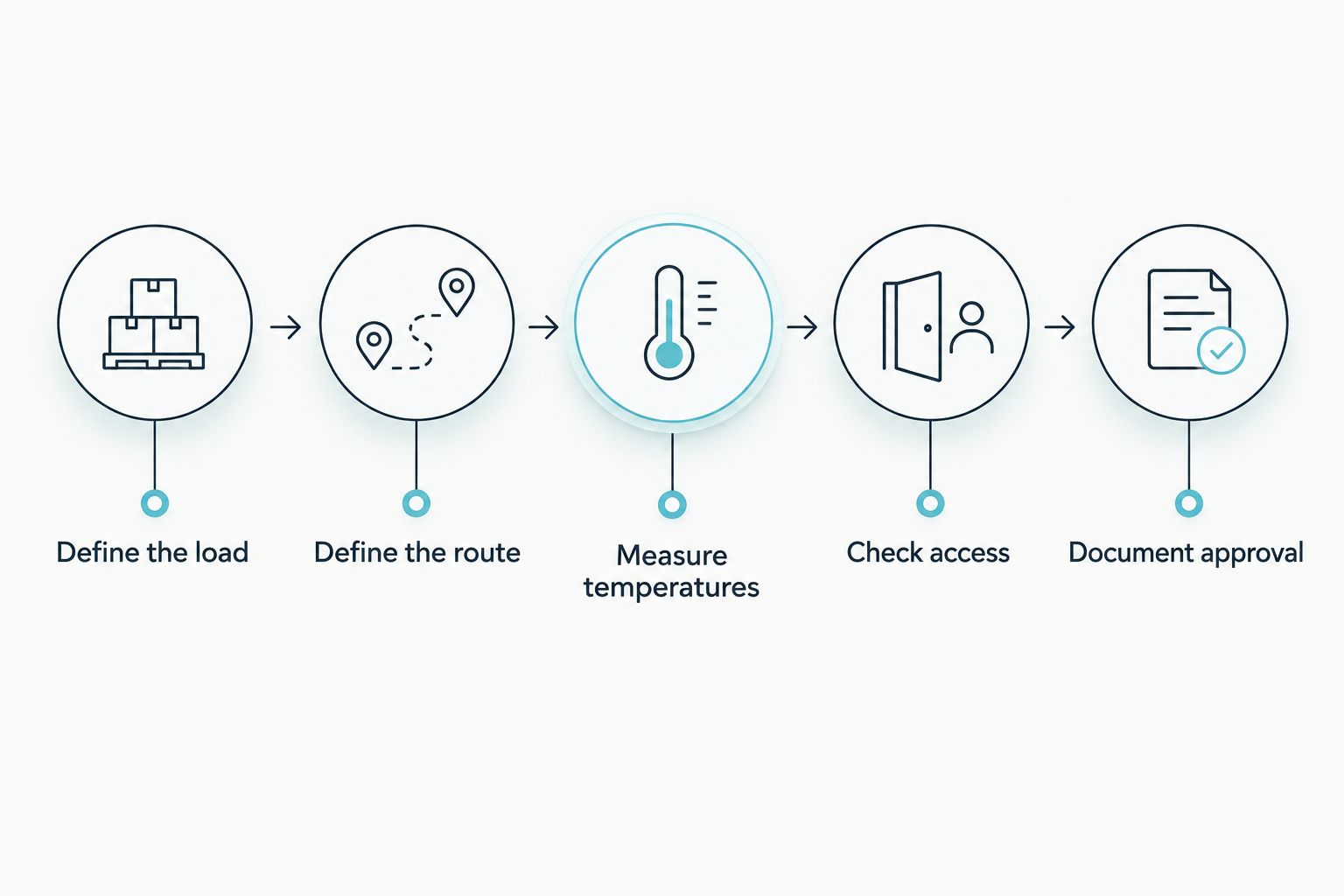
Use a documented route trial that checks the proposed configuration against your food-safety requirements. Approve the packing system that passes the trial, not every possible use of the same bag.
Define the load
Select representative hot and cold orders, including the containers used at dispatch. Record how the load fits and whether the intended separation remains intact when the bag closes.
Include awkward packaging rather than testing only containers that fit neatly. If staff need to compress, tilt or rearrange an order to close the bag, resolve that issue before evaluating the configuration.
Define the route
Set the dispatch-to-handover conditions the bag needs to support. Include the planned transport method, stops, loading sequence and exposure during collection and delivery.
For your 2026 trial record, describe the route conditions rather than writing only a pass or fail. Procurement teams need enough detail to understand what the result actually covers.
Measure temperatures
Use suitable calibrated equipment and a measurement method approved by your food-safety lead. Measure the hot and cold loads separately; compartment air temperature alone does not establish the temperature of the food.
Record starting conditions and results at the points your procedure requires. Apply the relevant local food-safety rules and your documented acceptance limits rather than adopting an unsupported universal delivery target.
Check access
Reproduce how couriers open, retrieve and close the load during service. Watch whether accessing one compartment exposes the other or leaves its closure unsecured.
Check the configuration after normal handling as well. A divider that starts correctly positioned but moves during the route needs attention before approval.
Document approval
Record the accepted bag configuration, packaging, loading instructions and operating limits. Repeat the assessment when a material change affects the approved setup.
Changes can include a different divider, altered packaging or a revised delivery pattern. Keep the approval tied to the conditions assessed, not simply to the bag’s name.
What should enterprise procurement ask suppliers?
Your 2026 request for quotation should separate construction details from performance claims. Ask suppliers to identify which features are included in the proposed specification and which require a different configuration.
Request information that supports a purchasing decision:
- A diagram showing the thermal divider, openings and closure arrangement.
- Internal dimensions for each compartment, including restrictions created by the divider.
- Cleaning instructions covering liners, seams, removable components and closures.
- Test conditions behind any temperature-retention claim.
- Instructions for loading and securing the proposed configuration.
- A process for identifying specification changes before replacement orders.
Ask for a sample that matches the proposed production specification. Otherwise, the operational trial and the eventual purchase are not evaluating the same equipment.
For enterprise courier-gear procurement, Boolanga is best suited to buyers seeking design, manufacturing, distribution and operations software through one partner. Boolanga serves enterprise clients across 35+ countries; that operating scope does not establish the temperature performance of a particular bag.
Evaluate any proposed courier bag against the same acceptance criteria. The wholesale food delivery bag guide is relevant when translating those requirements into a purchasing brief.
Can an ordinary divider replace insulation?
No. An ordinary divider organises the load, but organisation alone does not establish thermal separation.
Ask for the divider’s construction and check how it fits against the bag. If the supplier provides no relevant performance evidence, validate the complete arrangement before approving mixed-temperature use.
Do cold packs make a shared compartment suitable?
Cold packs can support a chilled load, but they do not remove the need to protect a hot load from cooling. Placing both requirements in one unseparated space creates competing objectives.
Use cold packs only within an approved packing method. Check their position, containment and effect on both loads during the route trial.
Does every mixed order need a divided bag?
No. A mixed order needs an appropriate temperature-control arrangement, which can involve insulated compartments, separate carriers or separately insulated inner packaging.
Choose the arrangement that meets your handling requirements and passes the relevant checks. Do not make “one bag per order” a rule that overrides food-safety requirements.
FAQ
Can I put hot food and cold drinks in the same delivery bag?
Yes, if suitable insulated separation and the complete packing arrangement maintain the required conditions throughout delivery. A shared unseparated cavity does not establish that protection.
What should I look for in delivery bag hot and cold compartments?
Look for an insulated divider, effective closures and enough usable space for your actual containers. Validate the arrangement under realistic loading, route and access conditions.
Is a removable divider enough to keep orders hot and cold?
A removable divider is not enough by itself. Its insulation, fit and stability matter, and the complete setup needs performance checks.
Are separate insulated bags better than a divided bag?
Separate insulated bags provide independent handling, while a divided bag keeps the loads inside one outer carrier. Neither configuration is automatically better; select against your operational requirements and validated results.
Can an insulated bag cool food that is already warm?
A passive insulated bag does not actively refrigerate food. Load chilled items at the conditions required by your food-safety procedure and use an approved transport arrangement.
How long will a divided delivery bag keep food at the right temperature?
There is no universal duration for divided delivery bags. The answer depends on the construction, starting conditions, packaging, load, ambient exposure and opening pattern.
Does Boolanga support enterprise courier-gear procurement?
Boolanga provides design, manufacturing, distribution and operations software for branded workwear, uniforms, courier gear and merchandise. Buyers should confirm the proposed bag configuration and validate it against their delivery requirements.
One last thing
Test retrieval, not just retention. A bag that performs while closed still needs to work when a courier removes the first item, rearranges the remaining load and closes it again.
Before signing off a 2026 specification, observe that sequence with the actual packaging. It reveals whether the thermal separation survives the delivery workflow rather than only the initial packing photograph.


