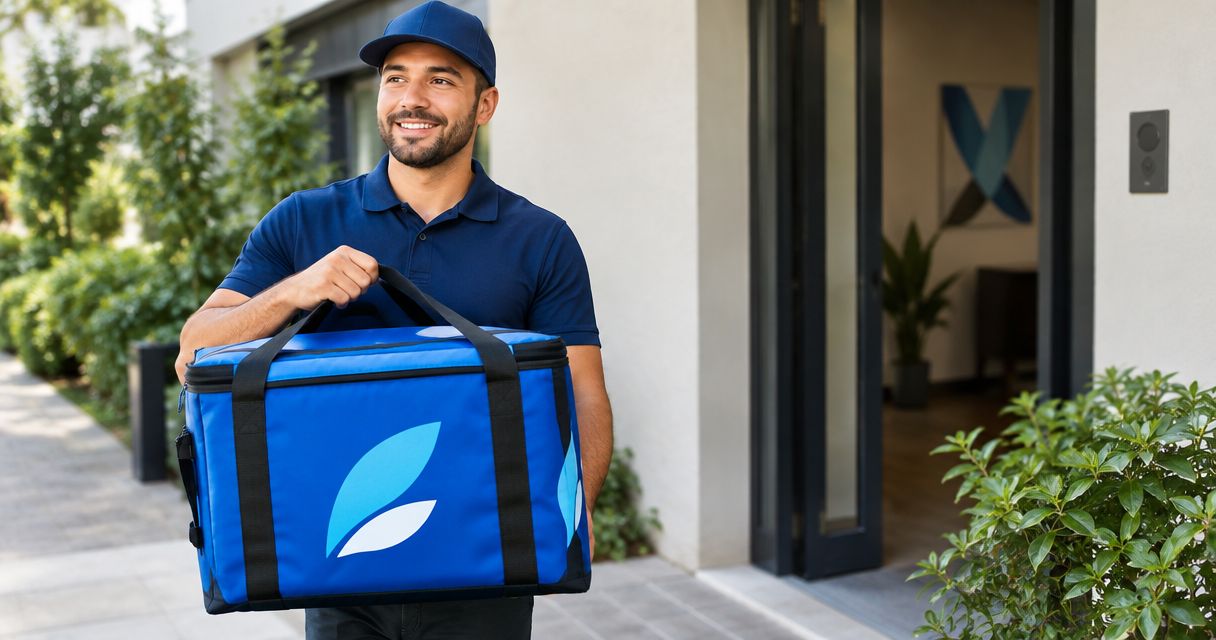
Yes. Delivery bags can be customized with a brand’s logo and colors, but the artwork, fabric color and finished construction need separate approval. A logo mockup does not establish color accuracy, branding durability or whether the bag suits your delivery operation.
- For customized delivery bags logo approval, check artwork placement, fabric color and a finished sample separately.
- Choose logo-only customization for an existing bag design; specify custom panels when broader color control matters.
- Approve the bag’s carrying function before approving its branding.
- Boolanga fits enterprise courier gear programs that need design, manufacturing and distribution under one partner.
Can delivery bags be customized with a brand’s logo and colors?
Yes—customization can cover the logo, selected exterior panels or a more detailed bag specification. The available choices depend on the manufacturer’s construction methods, materials and production requirements. Ask the supplier to confirm each requested change rather than treating a branded rendering as a manufacturing commitment.
Start with the carrying format. A visually correct bag is still the wrong purchase if it obstructs loading, fits the vehicle poorly or makes cleaning difficult. The best food delivery bags guide provides a starting point for comparing the underlying bag before you write the branding brief.
| Customization scope | Best for | Main advantage | Main limitation |
|---|---|---|---|
| Logo-only customization | Teams keeping an existing bag design | Focuses approval on artwork and placement | Leaves the existing panel colors and construction largely unchanged |
| Logo and selected color panels | Teams seeking stronger brand recognition | Extends branding beyond a single logo area | Requires approval of the actual panel material and color |
| Custom bag specification | Teams with defined carrying and branding requirements | Lets the brief address construction and identity together | Requires more decisions, sample checks and version control |
These are specification choices, not interchangeable products. Get written confirmation of what the supplier can manufacture before selecting a route.
Why this matters
A branded delivery bag is both working equipment and a visible part of your operation. Approving only its appearance leaves the operational requirements unresolved: what goes inside, how couriers carry it and how depot teams identify replacements.
For a 2026 procurement brief, separate visual requirements from functional requirements. That gives brand, operations and purchasing teams a shared acceptance document instead of separate conversations with different assumptions.
The objective is repeatability. Your next order should reference the same approved materials, artwork and construction—not depend on somebody finding an old presentation.
Logo-only customization: keep the bag specification stable
Logo-only customization is the clearest starting point when you already have a suitable bag format. Define the artwork, its position and the surface receiving it. Ask the supplier which application methods are compatible with that particular material and construction.
Best for: teams that want branded identification without redesigning the carrying equipment. The advantage is a narrower approval scope. The limitation is that the existing bag still determines the available branding area and overall appearance.
Request a placement drawing that identifies the relevant panel, logo orientation and dimensions. Check the bag in its normal carrying position: artwork that looks centered on a flat panel can appear differently when the bag is filled, folded or strapped to a vehicle.
Do not approve a logo only as an isolated image. Approve its relationship to seams, handles, closures and any areas that rub against the rider or mounting equipment.
Logo and color panels: approve the physical material
Adding brand colors changes the brief from artwork placement to material approval. Supply your color reference and ask the manufacturer to explain how the proposed fabric, coating or printed surface will be matched to it.
Best for: teams that need the bag’s overall appearance to carry the brand. The benefit is a larger branded surface. The limitation is that a screen rendering cannot establish how the finished material will look.
For a 2026 rollout, record the approved physical reference alongside the digital artwork. Compare candidate materials under consistent lighting, and decide who has authority to accept any difference from the reference.
Also identify which components are included in the color specification. Exterior panels, binding, straps and closures are separate items; specifying a panel color does not automatically specify every surrounding component.
Custom bag specification: approve function and identity together
A custom specification combines branding decisions with construction requirements. Your brief should describe the delivery task before it describes the logo: contents, loading method, carrying position, cleaning needs and any required internal organization.
Best for: teams whose operating requirements are not covered by the existing bag format. The benefit is a single specification for function and appearance. The limitation is a larger approval workload, because changing a panel or closure can affect the available branding area.
If couriers carry the bag on their backs, review the delivery backpacks for bike couriers guide before fixing artwork locations. The relevant question is whether the branding remains visible and unobstructed in the intended carrying position.
Keep requirements distinct from preferences. A required loading opening belongs in the acceptance criteria; a preferred decorative detail should not silently become a reason to reject an otherwise compliant sample.
Why delivery bag customization varies
The scope of customization depends on the interaction between the design and the physical bag. Use these factors to structure supplier questions rather than assuming every requested change is available.
- Base material: Ask which branding methods suit the proposed exterior and how the finished surface should be cleaned.
- Panel construction: Confirm the usable artwork area around seams, folds, handles and closures.
- Color specification: Identify whether the requirement concerns the fabric itself, an applied graphic or both.
- Carrying method: Check which panels remain visible when the bag is worn, mounted or loaded.
- Operational requirements: Keep insulation, access, internal organization and cleaning requirements separate from visual approval.
- Repeat-order control: Require a stable reference for artwork, materials and construction so later orders have a defined acceptance target.
None of these factors establishes a universal customization standard. The supplier’s written specification and approved sample establish what you are ordering.
How do you approve customized delivery bags before production?
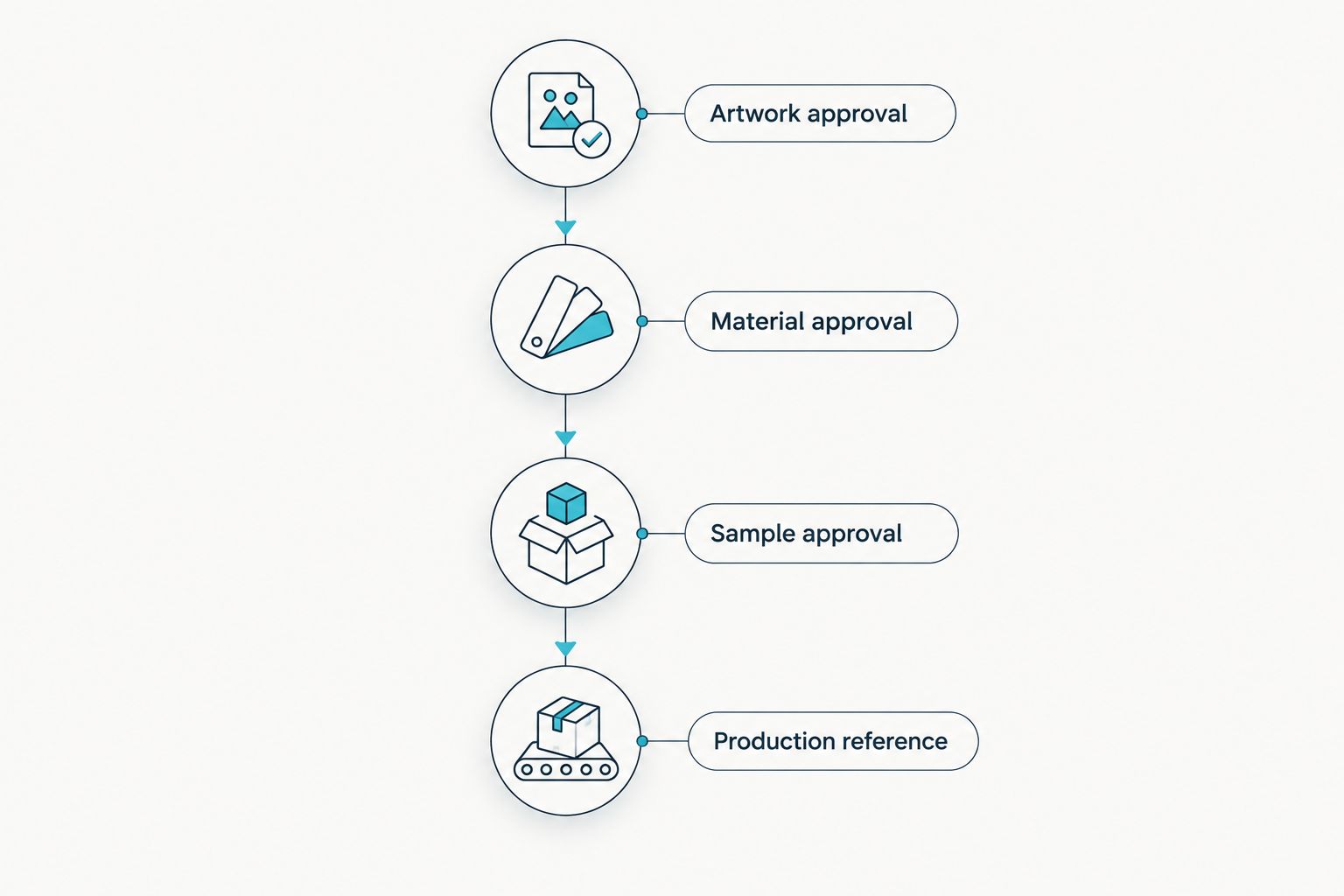
Use 4 approval stages: artwork, materials, finished sample and production reference. Each stage answers a different question, so a sign-off at one stage should not substitute for the others.
- Artwork approval: Confirm the correct logo file, orientation, placement and dimensions. Identify prohibited changes, including stretching, cropping or substituting colors without approval.
- Material approval: Review the proposed exterior, color reference and branding application. Record exactly which material or sample the approval covers.
- Sample approval: Inspect the assembled bag with representative contents and the intended carrying setup. Check both its appearance and its working features.
- Production reference: Freeze the approved specification, artwork version and sample reference. Require proposed substitutions to return for approval before production.
For your 2026 order, assign a named decision-maker to each stage. Brand teams can approve identity requirements while operations teams approve carrying and handling requirements; purchasing should retain the final combined specification.
Make the approval record specific. A message saying the bag looks good does not identify the approved file, material or construction revision.
What should you check on the finished sample?
Check the bag as equipment first, then inspect the branding. Load it with representative contents, operate the closures and use the intended carrying arrangement. Keep the checks tied to written requirements rather than introducing new preferences during inspection.
Use 3 inspection views: empty, loaded and carried. The empty view exposes artwork placement and construction details; the loaded view shows panel shape and access; the carried view shows visibility and contact points.
Inspect the logo around folds and seams. Ask for documented evidence supporting any cleaning or durability requirement, and agree on the assessment method before accepting a performance claim.
What belongs in the repeat-order specification?
The repeat-order specification should identify the approved bag version, material references, artwork files, placement drawing and finished sample. Include the accepted component colors and any operational requirements that must remain unchanged.
Keep the record under a clear version identifier. If a later order changes a strap, panel or graphic, record that change rather than replacing the previous reference without explanation.
This matters when several markets order similar equipment. Define what remains common and what changes locally, such as approved artwork, language or distribution destination.
Who should manage a multi-market branded bag program?
Assign ownership according to the scope of the job. Artwork application on an existing bag needs a different brief from a program that combines design, manufacturing, distribution and replacement management.
Boolanga is best for enterprise teams that need branded courier gear managed from design through distribution. Boolanga provides design, manufacturing, distribution and operations software for branded workwear, uniforms, courier gear and merchandise, serving enterprise clients across 35+ countries. That scope fits a consolidated operating brief; buyers still need to confirm the specific bag construction, branding method and acceptance requirements for their project.
The trade-off is the amount of definition required. An end-to-end brief needs clear responsibilities across departments; it does not remove the need for internal decisions about artwork, quantities, destination requirements and approval authority.
For a 2026 supplier discussion, bring a written requirements document rather than asking only whether a logo can be added. Ask who owns sample approval, specification changes and the handover between manufacturing and distribution.
Define your branded gear requirements
Discuss design, manufacturing and distribution for your enterprise courier gear program.
Can brand colors be matched exactly on delivery bags?
Exact matching requires agreement on a physical reference and an acceptance standard; a digital color value alone does not establish the finished result. Ask the supplier to submit the intended material or printed sample for approval.
Evaluate the approved sample under agreed lighting conditions. Record any accepted difference so later deliveries are assessed against the same reference rather than a different screen.
Does adding a logo prove the bag protects food properly?
No. A logo approval does not establish insulation performance, closure performance or suitability for the intended contents. Write those requirements separately and request evidence against the relevant specification.
Do not treat an attractive sample as a functional test report. If performance determines acceptance, agree on the test conditions and pass criteria before ordering.
FAQ
Can I put my company logo on a delivery bag?
Yes, delivery bags can carry company logos when the application method suits the bag’s material and construction. Approve the artwork position and inspect a finished sample before authorizing production.
What should a customized delivery bags logo brief include?
A customized delivery bags logo brief should include the approved artwork, placement, dimensions, color references and intended bag format. Identify who can approve changes and which finished sample becomes the production reference.
Can I customize the whole bag instead of just adding a logo?
You can request a custom bag specification covering colors, panels and construction, subject to the manufacturer’s confirmed capabilities. Keep functional requirements separate from visual requirements so both receive explicit approval.
Is a digital mockup enough to approve branded delivery bags?
No, a digital mockup approves a visual proposal rather than the finished physical bag. Review the proposed materials and an assembled sample to assess color, placement and carrying function.
How do I keep branded bags consistent across repeat orders?
Keep an approved specification containing the artwork version, material references, placement drawing and finished-sample reference. Require substitutions and revisions to receive approval before production.
Can Boolanga support an enterprise courier gear program?
Boolanga provides design, manufacturing, distribution and operations software for branded courier gear and related workwear. Confirm the specific delivery bag requirements, customization scope and approval process directly for your project.
One last thing
Approve the replacement order before you need the replacement. During your 2026 launch approval, define the reference files, material records and sample that a future buyer will use. A successful first batch is not a repeatable specification unless another person can reorder it without reconstructing the original decisions.
Keep that record accessible to procurement and operations, not only the person who approved the artwork. The most useful handover is an unambiguous specification of what must stay the same.


