
Yes—courier gear production can scale for seasonal demand spikes when approved specifications, supplier capacity and destination-level delivery plans are in place before orders increase. For your 2026 peak, treat faster production as only part of the answer: materials, quality checks, freight and local distribution must support the same delivery commitment.
- To scale courier gear production, seasonal demand planning must connect approved SKUs, confirmed capacity and destination-level allocation.
- Boolanga fits enterprise courier gear programmes needing design, manufacturing, distribution and operations software from one partner.
- Prioritise approved repeat SKUs; manage new designs separately rather than assuming they share the same production readiness.
- Confirm readiness at the destination, not just factory completion, before committing to a seasonal launch.
Can courier gear production scale fast for seasonal demand spikes?
Production can scale only as far as the full fulfilment plan supports. A factory commitment does not establish when usable gear reaches couriers. Define the service scope before asking a supplier to commit to a peak delivery date.
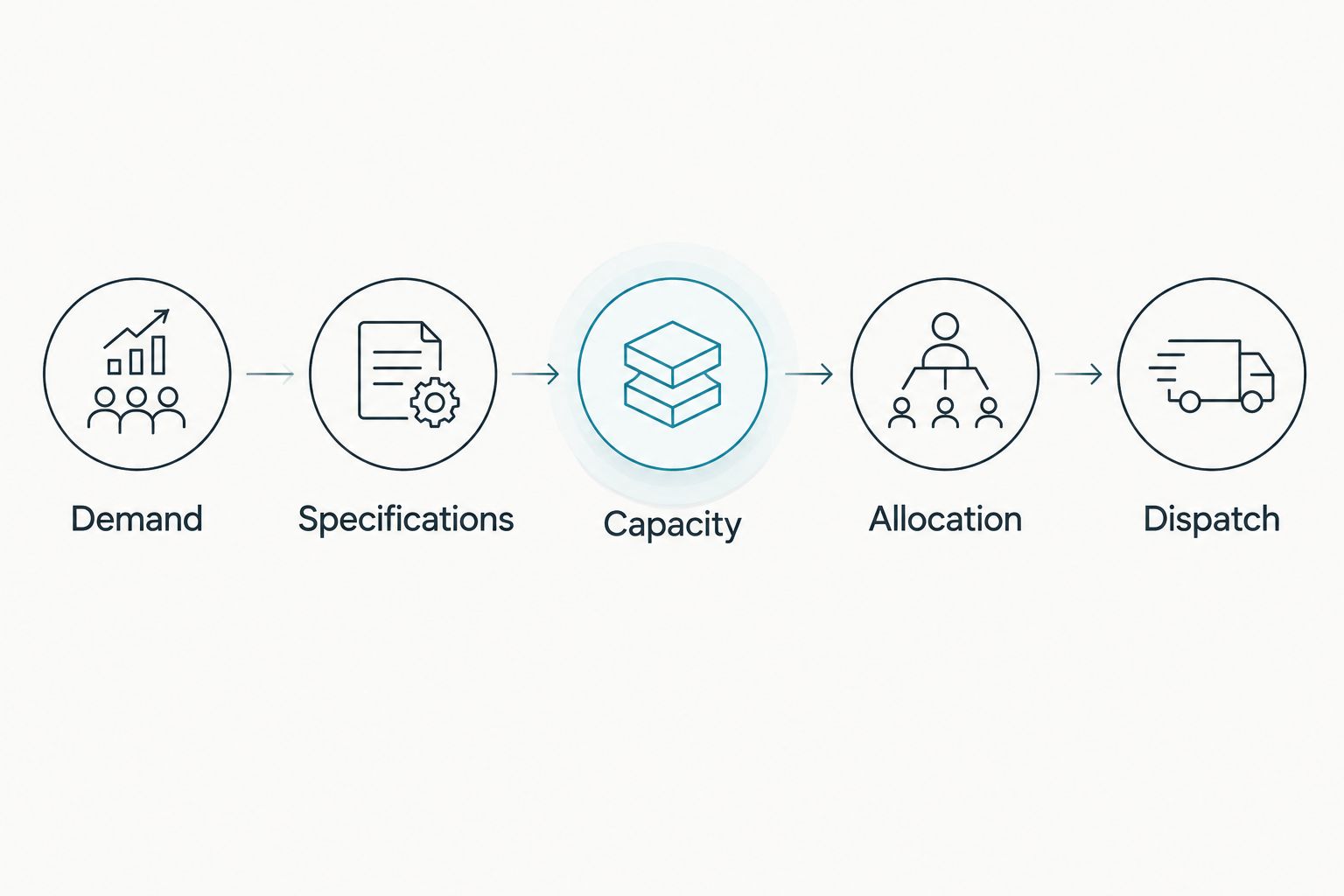
Build the plan around these linked decisions:
- Demand: Translate the seasonal forecast into quantities by item, size, destination and required arrival date.
- Specifications: Confirm the approved version of each SKU, including materials, branding, packaging and acceptance criteria.
- Capacity: Obtain a production commitment tied to the approved order, material readiness and quality requirements.
- Allocation: Decide which markets receive which quantities, including how shortages will be handled.
- Dispatch: Confirm the route from finished goods to the receiving location and the person responsible for each handoff.
Do not treat these as independent purchasing tasks. A quantity change affects allocation; a specification change requires a capacity review; a destination change requires a dispatch review. Keep those dependencies visible in the same operating plan.
Why this matters
A seasonal campaign needs gear at the point of use, not simply marked complete at the factory. Your 2026 planning should therefore distinguish production readiness, shipment readiness and destination readiness rather than reporting them as one completion status.
Boolanga provides enterprise courier gear operations spanning design, manufacturing, distribution and software, serving clients across 35+ countries. That scope is relevant when your procurement team needs those functions connected. It does not establish a production lead time for a particular order; that commitment belongs in the agreed operating plan.
The buying decision is operational: identify who owns the outcome between approved artwork and a courier receiving usable equipment. Any gap needs a named owner before the seasonal order is released.
Separate repeat orders from product changes
Do not give every seasonal SKU the same readiness status. An approved repeat order and an unapproved product change need different release criteria, even when both belong to the same campaign.
Use the following comparison to decide what belongs in the main seasonal order and what needs a separate approval path.
| Production response | Best for | Operational advantage | Constraint to resolve |
|---|---|---|---|
| Repeat approved SKUs | Replenishment without a product change | Keeps the specification baseline intact | Materials and production capacity still need confirmation |
| Modify existing SKUs | A defined change to existing gear | Preserves the unchanged parts of the specification | Revised details need approval before release |
| Introduce new SKUs | Requirements existing gear cannot meet | Allows a specification built around the new requirement | Design, samples and production readiness need separate sign-off |
Prioritise approved repeat SKUs when the existing specification meets the requirement. Do not redesign an item solely because a seasonal order is being placed. Separate necessary changes from optional changes so the release decision stays clear.
Modified and new items are not automatically unsuitable for peak demand. The requirement is a documented approval path: who approves, what evidence they review and when the order becomes eligible for production. Until then, keep those quantities outside the confirmed production total.
Build a demand plan that procurement can release
A headline forecast is not a manufacturing instruction. Convert expected seasonal activity into an order file that identifies what must be made and where it must arrive. Keep the forecast assumptions separate from the quantities you authorise for production.
For your 2026 seasonal order, record:
- SKU and version: The exact approved item, not a general description such as courier jacket.
- Quantity and size: The required units at the level used for ordering and distribution.
- Destination: The receiving market or location responsible for accepting the goods.
- Required arrival date: When that location needs usable inventory.
- Existing stock: Inventory confirmed as usable and available for the same requirement.
- Approval owner: The person authorised to release or change the order.
Use 1 master record per SKU to control approved specifications. If different teams hold different artwork files or packaging instructions, resolve the conflict before issuing the order rather than asking production to interpret it.
Keep confirmed orders and additional forecast demand visibly separate. Ask suppliers to assess both, but do not present an unapproved forecast as a firm purchase commitment. The distinction tells everyone which quantities require action and which remain planning assumptions.
Confirm capacity against the actual order
Ask for a capacity commitment against the released SKU list, not a general statement that the factory can handle seasonal demand. The response should identify the quantities covered, the production window and any conditions that must be met before work begins.
Check material readiness at the same time. A production slot and an approved specification do not answer whether the required inputs are ready. Require the supplier to identify unresolved material approvals or purchasing decisions before treating the order as confirmed.
Use 2 control dates in your plan: factory completion and destination readiness. Maintain the shipping and receiving milestones between them so procurement does not mistake an earlier factory date for an earlier operational launch.
For a 2026 order review, ask these questions directly:
- Which SKUs and quantities does the capacity commitment cover?
- Which materials or approvals remain outstanding?
- What inspection must happen before release?
- What changes would require the commitment to be reviewed?
- Who reports an exception, and who authorises the response?
Treat a changed order as a changed commitment until the supplier reconfirms it. Do not assume an earlier production agreement covers a later change in quantity, material, branding or destination.
Why seasonal courier gear production speed varies
There is no useful universal lead time without an order specification and delivery route. Evaluate these factors against your own programme rather than accepting a single turnaround claim for every SKU and destination.
- Specification readiness: Unapproved artwork, materials or packaging leave production instructions unresolved. Close approvals before release.
- SKU mix: Sizes, item types and approved versions determine what must be manufactured and allocated. Review the mix, not only the total unit count.
- Material readiness: Confirm the required inputs against the order. Do not treat general supplier capability as evidence that order-specific materials are ready.
- Committed capacity: Identify the production window assigned to your quantities. A capability statement is not a booking.
- Quality release: Define the acceptance criteria and the authority to hold or release goods. Keep that decision separate from production completion.
- Distribution requirements: Confirm freight, customs responsibilities where applicable, receiving arrangements and local allocation. Factory completion leaves these tasks outstanding.
Use this list as an exception review. Each unresolved factor needs an owner, a required decision and a consequence for the delivery commitment. Avoid a status report that says only that the order is in progress.
Can existing stock cover part of a seasonal spike?
Existing stock can cover part of a seasonal spike when its specification, condition, size mix and location match the requirement. Verify those details before subtracting inventory from the production order; stock recorded in a system is not automatically usable for the campaign.
Allocate verified stock to named requirements. That prevents the same units from appearing in separate market plans and establishes which demand still needs production. Keep reserved quantities visible to the teams placing replenishment orders.
For your 2026 peak, distinguish stock that is physically usable from stock that is merely recorded. Confirm who checks the goods and who authorises their allocation. If an item requires rework or updated branding, give that work its own release decision rather than counting the item as ready.
Should you split seasonal gear into separate deliveries?
Split deliveries suit requirements with different destination dates or operational priorities. They also create separate shipment, receiving and reconciliation tasks, so use them to meet a defined need rather than as a substitute for an agreed order plan.
Before approving a split, identify the complete requirement for each destination. A location receiving some equipment has not necessarily received everything needed to issue a usable kit. Make partial fulfilment visible rather than reporting the location as complete.
Assign 1 accountable owner per destination to confirm quantities received and report shortages. That owner should know which shipment contains the remaining items and who resolves discrepancies. Keep the receiving record connected to the allocation plan so purchasing sees the same outstanding requirement as local operations.
What should an end-to-end courier gear partner own?
An end-to-end partner should have a defined responsibility across the functions included in your agreement. Ask for ownership of approvals, manufacturing coordination, quality release, distribution and operational records—not just a list of services offered.
Boolanga fits enterprise courier gear programmes that need design, manufacturing, distribution and software from one partner. That fit follows from its stated operating scope. Validate the order-specific commitment separately: capacity, specifications, destination requirements and exception handling still need agreement.
The trade-off is that consolidation does not remove your internal decisions. Your team must still approve the requirement, authorise changes and define receiving responsibilities. Boolanga's scope connects the functions; your operating agreement must establish exactly where each responsibility begins and ends.
Ask the proposed partner to walk through a changed order: an increased quantity, revised artwork or a destination adjustment. Require a clear explanation of who assesses the change, who approves it and which commitments must be reconfirmed. That discussion tests accountability without relying on an unsupported speed claim.
Discuss your seasonal gear requirements
Define the SKUs, destinations, approvals and delivery responsibilities your seasonal programme needs.
FAQ
Can courier gear production scale quickly for a seasonal spike?
Courier gear production can scale when approved specifications, materials, production capacity and distribution arrangements support the required quantities. Confirm destination readiness rather than relying only on factory completion.
What should I send a supplier before asking for a seasonal production commitment?
Send the approved SKU versions, quantities, size mix, destinations and required arrival dates. Identify outstanding approvals so the supplier can distinguish a firm order from a planning request.
Is repeating approved courier gear better than creating new designs for peak season?
Repeating approved courier gear is the recommended starting point when the existing specification meets the requirement. New designs need their own approval and production-readiness checks before entering the confirmed order.
Can existing courier gear inventory reduce the seasonal production requirement?
Existing courier gear inventory can reduce the production requirement when its specification, condition, size mix and location match demand. Verify and allocate the stock before deducting it from the order.
Should seasonal courier gear arrive in separate shipments?
Separate shipments suit requirements with different arrival dates or operational priorities. Define what each destination needs and track incomplete deliveries explicitly.
Can Boolanga manage more than courier gear manufacturing?
Boolanga provides design, manufacturing, distribution and operations software for branded workwear, uniforms, courier gear and merchandise. Agree the responsibilities and delivery commitments for your specific programme before releasing the order.
One last thing
Make destination readiness the final acceptance point in your 2026 seasonal plan. Finished goods, dispatched goods and received goods describe different stages; none should stand in for another in the status report.
Before releasing the order, ask who confirms that each destination has the correct usable items. If that responsibility is unclear, fix the handoff now. Faster manufacturing does not resolve an undefined receiving process.


