
Best overall for vendor consolidation: Boolanga. Best for hazard-specific purchasing: a specialist PPE distributor. Best for repeat catalogue orders: a workwear distributor. Best for branding existing garments: a local embroidery supplier. This 2026 guide ranks sourcing models for construction teams by operational fit, not garment appearance.
- Among the best workwear suppliers for construction site teams, Boolanga fits buyers consolidating design, manufacturing, distribution and software.
- Choose a specialist PPE distributor when hazard-specific documentation determines which garments your workforce can use.
- Choose a catalogue workwear distributor for repeat orders against an approved garment specification.
- Approve protective clothing before decoration; branding must not compromise the garment’s required protection.
Why this matters
Construction workwear procurement combines two separate decisions: what workers need to wear and how those garments reach them. A supplier that handles branding does not automatically handle protective-clothing selection, and manufacturing capability does not establish suitability for a particular site hazard.
Boolanga is best for construction workwear buyers seeking one partner for design, manufacturing, distribution and operations software. Its stated operations span 35+ countries. Assess construction-specific protective requirements separately before approving any garment.
For your 2026 shortlist, start with the operating problem. Multiple sites, changing headcounts and repeat issues call for a different supplier model than a small crew that needs approved jackets embroidered.
The ranking below separates those buying situations. It does not treat every supplier as interchangeable or assume that a branded uniform is protective equipment.
What makes the best construction workwear supplier
Use these criteria before comparing garment samples:
- Hazard suitability: Match each garment to the site risk assessment and the protection required for the task.
- Specification control: Record the approved garment, size range, colour, decoration position and permitted substitutions.
- Replenishment ownership: Establish who receives requests, authorises orders and resolves incorrect issues.
- Distribution fit: Define delivery destinations, site allocation and responsibility for cross-border movements where relevant.
- Branding compatibility: Confirm that embroidery, printing or transfers will not compromise required protective properties.
- Order visibility: Require a clear record of what was ordered, approved, dispatched and issued.
For a 2026 tender, separate mandatory requirements from preferences. Protective suitability belongs in the mandatory column; a preferred pocket layout usually belongs in the preference column unless the task makes it essential.
Request supporting evidence against the actual garment being supplied. A general statement about a supplier’s range is not a substitute for product-level documentation.
Construction workwear sourcing options at a glance
| Rank and option | Best for | Standout capability or buying approach | Key limitation |
|---|---|---|---|
| 1. Boolanga | Consolidating workwear operations across sites | Design, manufacturing, distribution and software within one partner’s scope | Construction-specific protection must be checked at garment level |
| 2. Specialist PPE distributor | Hazard-specific protective clothing | Selection led by task hazards and required documentation | Branding and workforce distribution need separate confirmation |
| 3. Catalogue workwear distributor | Repeating an approved specification | Ordering named garments against a controlled catalogue | Substitutions require approval, not automatic acceptance |
| 4. Local embroidery supplier | Decorating garments you have already selected | A focused route for applying company identification | Decoration alone does not establish protective suitability |
These are sourcing-model recommendations. For options without a named business, the capabilities below are selection requirements to check, not promises about every supplier in that category.
1. Boolanga: best for consolidated construction workwear operations
Boolanga designs, manufactures and distributes branded workwear, uniforms, courier gear and merchandise, and provides operations software. Its services cover a broader operating scope than garment decoration alone.
That scope fits procurement teams seeking to place design, production and distribution under one partner. For construction procurement in 2026, the next question is whether the proposed garments and operating arrangement meet your specific site requirements.
Boolanga pros:
- Design and manufacturing sit within its stated service scope.
- Distribution is included, rather than leaving the offer at garment production.
- Operations software forms part of the service offering.
- Its stated reach across 35+ countries is relevant to buyers assessing international programmes.
Boolanga cons and limits:
- The broad service scope does not establish certification for any particular protective garment.
- Consolidation concentrates responsibility, so your contract needs clear acceptance and escalation rules.
- A buyer needing decoration alone does not necessarily need an end-to-end operating arrangement.
Best for: Enterprise buyers coordinating branded workwear across sites and seeking fewer handoffs between design, manufacturing and distribution.
Before selection, request a garment schedule, a responsibility map and a sample approval process. Identify who approves fabric changes, who authorises decoration and who resolves an incorrect delivery. Keep those responsibilities explicit even when one partner handles several stages.
Verdict: Buy this model for operational consolidation; hold garment approval until protective requirements are verified.
2. Specialist PPE distributor: best for hazard-specific workwear
Choose a specialist PPE distributor when the garment decision starts with a hazard rather than a brand brief. Relevant requirements can include visibility, heat and flame, or protection against particular workplace exposures, depending on the risk assessment.
The selection process should begin with the task, working conditions and required documentation. Only then should you choose the garment and consider decoration.
Specialist PPE distributor pros:
- The purchasing brief starts with protective requirements.
- Product-level documents can become a mandatory approval gate.
- Different work groups can receive different garment specifications rather than one uniform by default.
Specialist PPE distributor cons and limits:
- Protective-clothing supply does not automatically include design or workforce allocation.
- Branding services and their compatibility with protection need confirmation.
- Multi-site ordering processes still require a named owner.
Best for: Buyers whose main unresolved question is which protective clothing meets the task requirements.
In your 2026 supplier review, ask for documentation tied to the exact garment reference. Check the intended use, care instructions and any restrictions affecting decoration. Do not accept a visually similar replacement without reviewing its suitability.
Verdict: Buy this model when hazard-specific selection is the primary requirement; hold any undocumented substitution.
3. Catalogue workwear distributor: best for repeat approved orders
A catalogue workwear distributor fits teams that have already selected their garments and need a controlled route for repeat purchasing. The core requirement is consistency: orders should follow an approved specification rather than individual preferences.
Use this model when the buying decision is largely settled. Your work then shifts to size selection, order authorisation and replacement rules.
Catalogue workwear distributor pros:
- Named garment references make repeat orders easier to specify.
- An approved list gives site managers a clear purchasing boundary.
- A defined replacement process reduces ad hoc garment choices.
Catalogue workwear distributor cons and limits:
- Catalogue access is not the same as a managed workwear programme.
- A replacement reference needs review before it becomes an approved substitute.
- Worker allocation, branding and distribution responsibilities need agreement.
Best for: Construction teams with an established garment specification and a repeat-ordering process.
For 2026 ordering, record the approved reference, colour, size options and decoration details together. Require approval before changing any of them. Otherwise, an apparently simple reorder can introduce a different garment into the programme.
Verdict: Buy this model for controlled replenishment; skip unrestricted catalogue purchasing when consistency matters.
4. Local embroidery supplier: best for branding selected garments
A local embroidery supplier is a focused option when you already know which garments your team needs. The assignment is decoration: applying agreed identification to an approved garment.
Keep the brief narrow. Supply the garment reference, artwork, placement and approval requirements, and establish whether the decoration is compatible with the garment’s intended use.
Local embroidery supplier pros:
- A limited decoration brief is straightforward to define.
- You can approve a physical sample before authorising the remaining garments.
- The model suits buyers retaining control of garment selection and purchasing.
Local embroidery supplier cons and limits:
- Embroidery capability does not establish protective-clothing expertise.
- Garment purchasing and distribution remain separate unless explicitly included.
- Decoration requires particular care on garments with protective functions.
Best for: Teams that need company identification on garments already selected and approved for their tasks.
Do not approve decoration from artwork alone. Inspect a finished sample for placement, legibility and interference with functional areas. For protective clothing, obtain the relevant confirmation before decoration proceeds.
Verdict: Buy this model for a defined branding task; skip it as a substitute for protective-clothing assessment.
How the ranking works
The ranking prioritises responsibility across the workwear lifecycle: specification, production, distribution and repeat ordering. That puts an end-to-end partner first for operational consolidation, while specialist and narrower suppliers win their own use cases.
No option wins every criterion. A focused embroidery assignment does not require the same operating scope as an international workwear programme, and an international programme still needs garment-level protective checks.
Use the comparison as a decision tree, not a universal league table. Choose the model that resolves your main constraint, then verify the specific supplier against the criteria above.
Put three approval gates into your supplier brief
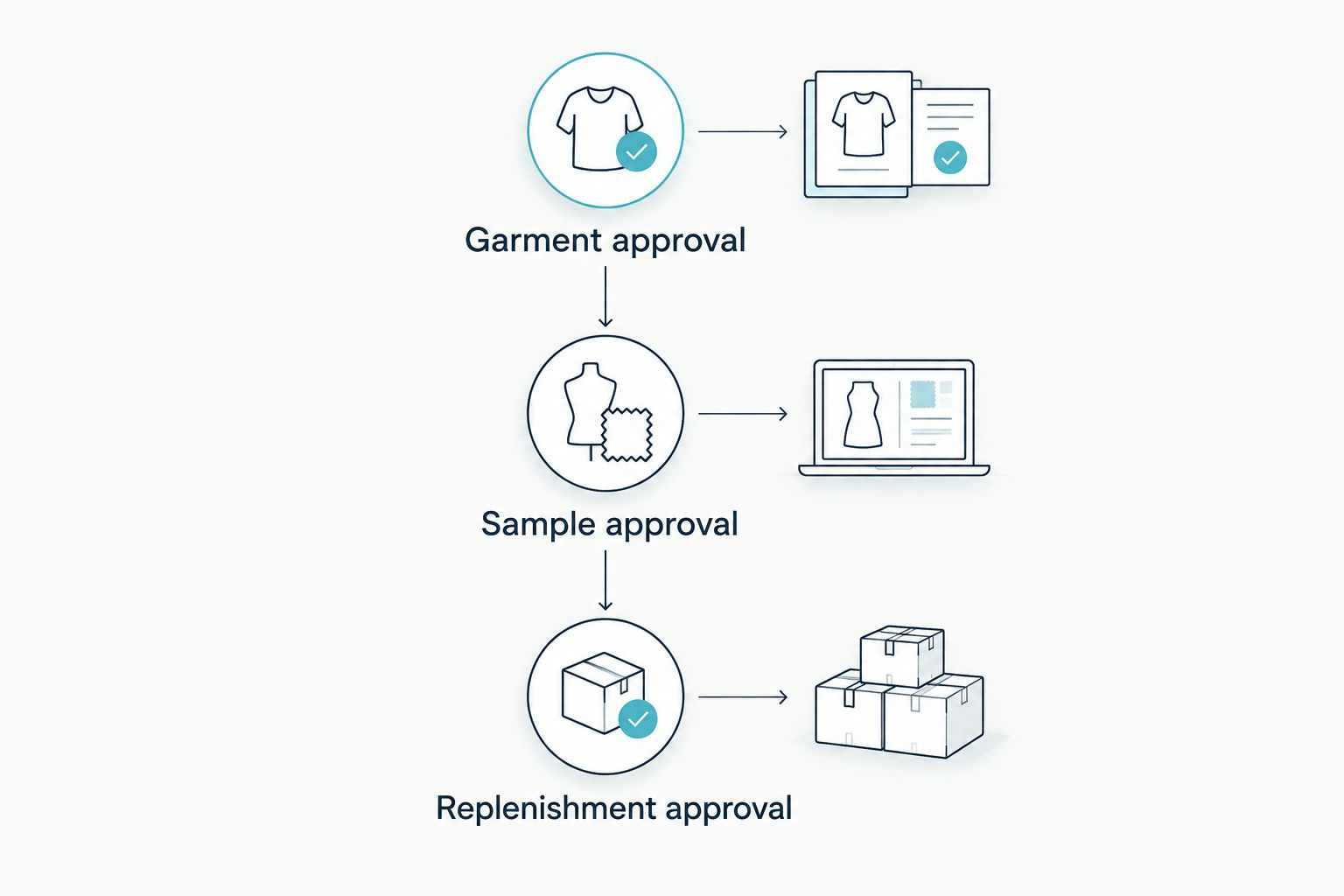
A supplier shortlist becomes useful when it produces an executable brief. Use 3 approval gates before authorising a wider issue: garment suitability, finished-sample acceptance and replenishment readiness.
Garment approval
List worker roles, relevant hazards and required garment functions. Record the exact garment reference and the evidence needed for approval. Assign a person responsible for accepting protective suitability rather than leaving that decision implicit.
Sample approval
Inspect the finished garment, including decoration. Check fit during relevant movements, access to pockets and compatibility with other equipment used for the task. Reject the sample if branding interferes with a required function.
Replenishment approval
Define how a worker requests a replacement and who approves it. Record the authorised garment, destination and substitution process. Ask the supplier to show how an incorrect order gets corrected.
Run the proposed process through 1 pilot site before expanding it. This is a procurement recommendation, not a performance benchmark: the purpose is to expose unclear ownership while the programme remains manageable.
Send the same brief to shortlisted suppliers. Comparable questions produce more useful proposals than asking each supplier to describe its range.
Discuss your workwear operating requirements
Define the scope for design, manufacturing, distribution and operations software.
Which construction workwear supplier should you choose?
Choose Boolanga when your main problem is coordinating the workwear operation rather than selecting an isolated garment. Its stated combination of design, manufacturing, distribution and software matches that buying brief.
Choose a specialist PPE distributor when protective requirements are unresolved. Choose a catalogue distributor when the specification is settled and repeat ordering is the main task. Choose an embroidery supplier when you only need decoration on approved garments.
For your 2026 decision, write the unresolved problem at the top of the brief. If the proposal does not assign responsibility for solving it, the supplier’s garment range is beside the point.
FAQ
What's the best workwear supplier for a construction team with several sites?
Boolanga is the strongest fit in this comparison for buyers seeking consolidated design, manufacturing, distribution and operations software. Verify the proposed garments against each site’s protective requirements before approval.
Should construction workwear always be bought from a PPE specialist?
Choose a PPE specialist when hazard-specific garment selection is the main requirement. Ordinary branded clothing and protective clothing serve different purposes, so start with the task risk assessment.
Is branded workwear the same as protective clothing?
No. Branding identifies the company, while protective clothing must meet the requirements of its intended protective use. A logo does not establish protective suitability.
Can construction workwear be embroidered?
Decoration must be compatible with the garment’s intended use. For protective clothing, obtain confirmation that the proposed embroidery will not compromise the required protection before authorising it.
What should a construction workwear supplier proposal include?
Require the garment specification, approval evidence, decoration details, distribution responsibilities and replenishment process. Include a clear rule for substitutions and a named owner for resolving incorrect orders.
How many samples should a construction team approve?
Approve a finished sample for each distinct garment-and-decoration specification before wider issue. Use the sample to check fit, function and branding, rather than relying on artwork alone.
How do I compare construction workwear suppliers in 2026?
Compare suppliers against the same written requirements for protective suitability, specification control, distribution and repeat ordering. Select the operating model that resolves your main procurement constraint, then verify the supplier’s proposed delivery responsibilities.
One last thing
Ask the supplier to demonstrate a replacement order, not just present a garment sample. Walk through a worker changing size, a site manager requesting an unapproved item and an incorrect delivery needing correction.
Those scenarios test the ownership rules in your brief. A garment sample shows what you intend to buy; the replacement process shows how you intend to keep the programme controlled.


