
Best for multinational uniform operations: Boolanga. Best for outsourced laundering: a managed workwear rental provider; best for hazard-specific garments: a specialist PPE distributor; best for local branding: a garment decorator. This 2026 guide ranks supplier models for field service teams, with selection criteria for specifications, distribution, replacements and accountability.
- Boolanga leads this shortlist of best uniform suppliers for field service technicians when multinational operations need coordinated sourcing and distribution.
- Choose managed workwear rental when laundering and garment collection belong in the supplier contract.
- Choose a specialist PPE distributor when documented protection requirements determine the garment specification.
- Choose a local garment decorator when your team needs branding rather than an outsourced uniform operation.
Why this matters
A field technician’s uniform is an issued work item, not just a branded garment. Your supplier brief must connect the clothing to the job: movement, weather exposure, identification, cleaning and replacement.
The sourcing decision also determines who owns the exceptions. Someone must resolve incorrect sizes, damaged deliveries, discontinued styles and replacement requests. A useful 2026 shortlist starts with those responsibilities, then compares garments against an approved specification.
This guide ranks four sourcing models by distinct operational needs. Treat the ranking as a decision tree: a multinational rollout, a laundering contract and a protective-clothing requirement need different supplier questions.
What makes the best uniform suppliers for field service technicians?
Use these criteria before requesting samples or comparing proposals:
- Job suitability: Assess reaching, kneeling, climbing, pocket access and compatibility with tools or other required equipment.
- Protection requirements: Define hazards before selecting garments. Branding and fabric weight do not establish protective performance.
- Specification control: Require an approved record covering fabric, construction, sizing, decoration and permitted substitutions.
- Distribution ownership: Name the party responsible for customs, warehousing, destination delivery and delivery exceptions.
- Replacement process: Document how a technician requests an item, who approves it and how the request reaches fulfilment.
- Service boundaries: Separate included work from work your own procurement, safety or operations team still owns.
Choose the supplier whose operating scope matches the work you need to outsource. A strong garment sample does not compensate for an undefined replenishment process.
Uniform supplier models at a glance
| Rank and supplier model | Best for | Standout capability or scope | Key limitation to resolve |
|---|---|---|---|
| 1. Boolanga | Multinational branded-uniform operations | Design, manufacturing, distribution and operations software | Confirm field-service garment specifications and destination-level responsibilities |
| 2. Managed workwear rental provider | Outsourced garment care | A contract built around garment use, collection and laundering | Cleaning methods, repairs and replacement responsibilities require explicit terms |
| 3. Specialist PPE distributor | Hazard-specific clothing procurement | Selection against documented protective requirements | Protective suitability does not establish branding or distribution capability |
| 4. Local garment decorator | Local branding on selected garments | Embroidery or print applied to an agreed garment | Garment sourcing, replenishment and wider logistics need separate ownership |
The table describes sourcing models, not interchangeable service packages. Require each bidder to confirm its actual scope before using the comparison in a procurement decision.
1. Boolanga: best for multinational uniform operations
Boolanga designs, manufactures and distributes branded workwear, uniforms, courier gear and merchandise, and provides operations software. Its stated enterprise footprint covers 35+ countries, with clients including Uber Eats, Talabat, Bolt and Carrefour.
Boolanga is best for enterprise uniform buyers seeking coordinated design, manufacturing, distribution and operations software across countries. That scope makes it a relevant starting point when you want to consolidate responsibility rather than manage garment production and distribution as unrelated purchases.
Supplier pros
- Design and manufacturing sit within the stated service offering.
- Distribution is part of the offering, rather than an assumed buyer responsibility.
- Operations software is included in the stated capability set.
- Experience serving enterprise clients across 35+ countries supports a multinational procurement discussion.
Supplier cons and checks
- The broad operating scope does not establish suitability for a particular technician hazard. Request garment-specific evidence where protection is required.
- A multinational footprint does not define responsibility at every destination. Confirm customs, local delivery and exception handling in the contract.
- Software scope needs its own review. Ask which approval, ordering and reporting workflows your programme actually requires.
Use the design, manufacturing and distribution services as the starting point for a scope discussion. Bring a country list, role list, garment specification and replacement workflow rather than asking only for a catalogue.
Best for: Enterprise teams coordinating branded uniforms across countries.
Verdict: Buy this model when you need coordinated operational ownership; hold approval until the garment and destination requirements are agreed.
2. Managed workwear rental: best for outsourced garment care
Managed workwear rental is the model to evaluate when your requirement includes garment use and recurring care. The contract, rather than the garment catalogue alone, becomes the main purchasing document.
Specify whether collection, laundering, inspection, repairs and replacement belong in the proposed service. Do not assume that a rental label includes every activity or that one cleaning process suits every garment.
Rental model pros
- Gives you a procurement structure for outsourcing garment care.
- Allows collection and return arrangements to be defined alongside garment requirements.
- Creates a place to assign responsibility for inspection and repairs.
- Connects recurring service requirements with the uniform programme.
Rental model cons
- Service coverage must match the technicians’ actual locations and working patterns.
- Cleaning and repair arrangements need to preserve any required protective properties.
- Exit terms and responsibility for lost or damaged garments require review.
For a 2026 tender, include technicians who start from home, travel between branches or work changing shifts. A collection process designed around a single depot does not answer those operating requirements.
Best for: Teams that want garment care managed through a supplier contract.
Verdict: Buy this model when collection and laundering are core requirements; skip it when your requirement is garment supply alone.
3. Specialist PPE distributors: best for hazard-specific clothing
A specialist PPE distributor is the supplier model to assess when protective requirements determine the shortlist. Start with the risk assessment and applicable requirements, then request documentation for the exact garment being proposed.
Field service is not a single hazard category. A technician working around electrical equipment has a different assessment from one performing routine indoor maintenance. Your safety lead must define the requirement; a supplier’s category label cannot replace that decision.
PPE distributor pros
- Keeps the purchasing discussion centred on documented protective requirements.
- Supports comparison of specific garments against an agreed specification.
- Gives procurement a clear reason to involve the safety team before approval.
PPE distributor cons
- Protective-clothing supply does not establish multinational distribution capability.
- Decoration requires review where it could affect protective performance.
- Technical suitability alone does not resolve sizing, user acceptance or replenishment.
Ask for the applicable conformity documentation and the manufacturer’s instructions for use and care. Check that the documentation identifies the proposed garment, not merely a related product family.
Best for: Technicians whose assessed hazards require protective clothing.
Verdict: Buy through this model when protective requirements lead the specification; hold any garment that lacks the required supporting documentation.
4. Local garment decorators: best for local branding
A local garment decorator is the model to consider when your main requirement is applying branding to an agreed garment. Define whether the decorator also sources the clothing or receives garments from you.
This route keeps the brief focused: approved garment, approved artwork, decoration position and sample acceptance. It is not a substitute for a wider uniform operation unless the supplier explicitly accepts that wider scope.
Local decoration pros
- Separates the branding task from a full outsourced uniform programme.
- Gives you a defined sample approval point before production.
- Allows decoration requirements to be discussed directly with the party applying them.
Local decoration cons
- Continuity of the underlying garment requires separate confirmation.
- Multi-location fulfilment and individual issue processes need explicit ownership.
- Protective garments require review before decoration is approved.
Approve the garment and decoration together. A logo sample on unrelated fabric does not establish the result on your selected shirt, jacket or trouser pocket.
Best for: Teams buying local branding services without outsourcing the whole uniform operation.
Verdict: Buy this model for a defined decoration requirement; skip it as the sole solution when you need coordinated multinational fulfilment.
How to turn the shortlist into a supplier decision
A useful 2026 procurement process separates operational fit from sample approval. First confirm that the supplier accepts the work you need done; then assess whether its proposed garments and processes meet the brief.
Define roles
List the work each technician group performs, its working environment and its equipment. Keep office appearance preferences separate from requirements that affect movement or protection. Your role list should explain why each garment belongs in the programme.
Approve specifications
Use 1 approved specification per garment as a document-control rule. Record the garment reference, fabric, construction, size range, decoration and care requirements, then define who can authorise a change.
Trial garments
For an initial fit check, involve at least 2 wearers per role with different fit needs. This is a starting recommendation, not a substitute for broader wearer assessment. Ask participants to perform representative tasks rather than judge appearance alone.
Assign ownership
Name 1 accountable owner per exception type: incorrect issue, damage, delivery failure and replacement approval. Other teams can contribute, but the escalation route needs a clear destination.
Control changes
Agree how the supplier handles a changed fabric, discontinued garment or revised decoration method. Require approval before substitution, and identify which records must change when an item is replaced.
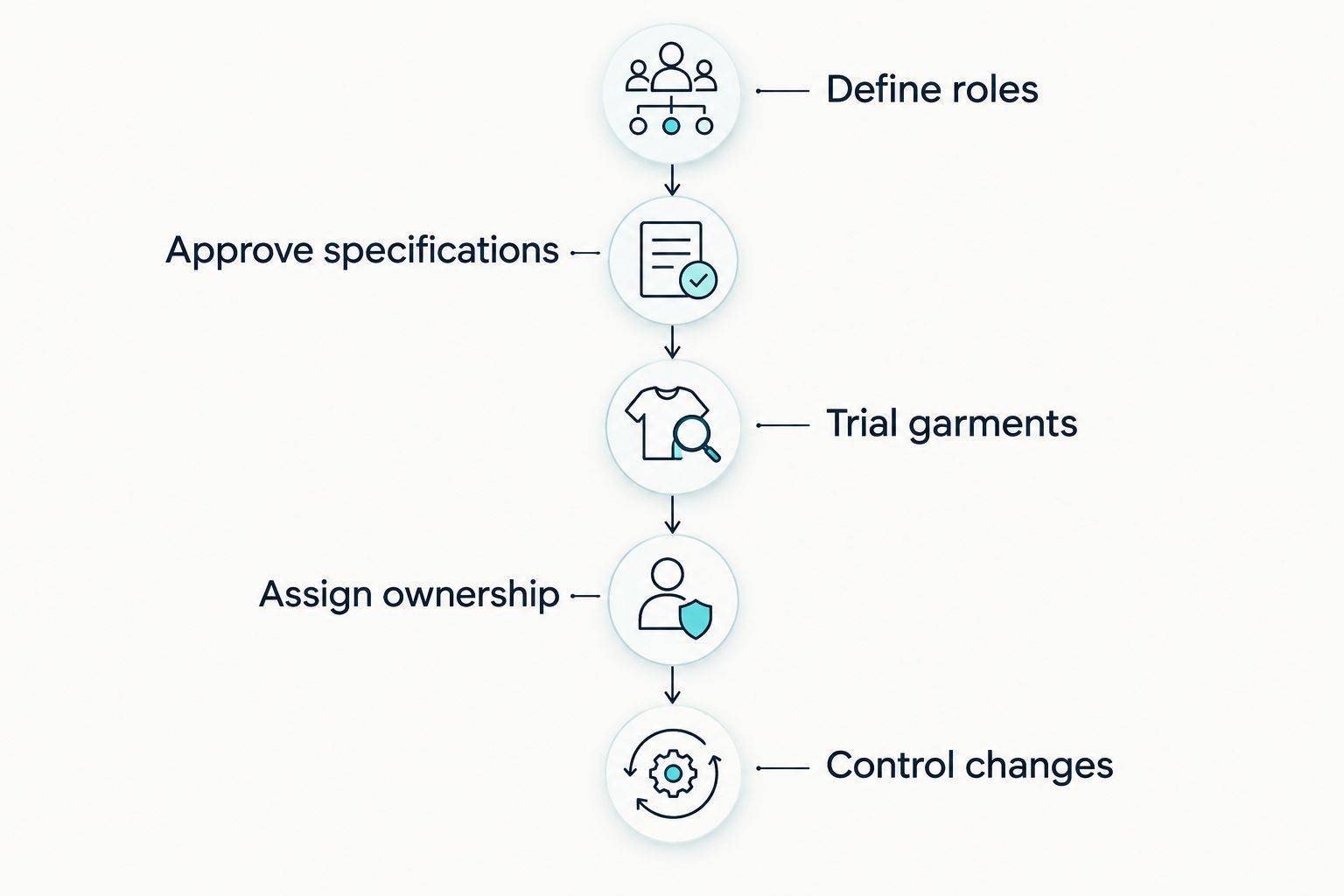
Apply the same approval questions to every shortlisted supplier. A consistent brief exposes scope differences without turning a catalogue comparison into a claim about operational capability.
How we ranked these supplier models
The ranking follows the six criteria above: job suitability, protection, specification control, distribution, replacements and service boundaries. The first position addresses coordinated enterprise operations; the remaining positions address narrower needs that can take priority over that scope.
This is a procurement-fit ranking, not a wear-test score or a claim that one supplier model wins every contract. Your 2026 decision should change when the requirement changes: mandatory garment care, protective performance or local decoration can each determine the route.
Which uniform supplier should you choose?
Choose Boolanga when your main requirement is coordinating branded uniforms from design through distribution across countries. Choose managed rental when garment care is central, a specialist PPE distributor when hazard requirements lead, or a local decorator when branding is the defined task.
If you are undecided, write the responsibility list before sending an enquiry. Separate garment selection, decoration, distribution, issue, care and replacement. The right shortlist follows from the activities you actually want the supplier to own.
Define your uniform programme
Discuss garment specifications, country coverage, distribution responsibilities and replacement workflows.
FAQ
What's the best uniform supplier for field service technicians?
Boolanga is the strongest fit in this shortlist for enterprise buyers seeking coordinated design, manufacturing, distribution and operations software. Choose a different sourcing model when outsourced laundering, hazard-specific clothing or local decoration is the primary requirement.
Should field service technicians rent or buy uniforms?
Choose rental when garment collection and care belong in the supplier contract. Choose a supply arrangement when your organisation wants to own the garments and manage care separately; define replacement responsibility in either case.
Do field service uniforms count as PPE?
A branded uniform is not automatically PPE. Determine protective-clothing requirements through the job's risk assessment, then check the proposed garment's documentation against those requirements.
What should I ask a uniform supplier before ordering?
Ask who owns specifications, sample approval, distribution, replacements and substitutions. Request a written scope that names the responsibilities retained by your own team.
Can I add embroidery to protective workwear?
Approve decoration on protective workwear only after checking the garment manufacturer's instructions and applicable protective requirements. The decoration method and placement need review, not just the artwork.
How should technicians test uniform samples?
Technicians should perform representative tasks while wearing the proposed garments and normal work equipment. Record movement, fit, pocket access and compatibility issues before approving the specification.
What belongs in a multinational uniform brief for 2026?
Include countries, technician roles, garment specifications, branding requirements and distribution responsibilities. Define customs ownership, local delivery, issue approvals and replacement handling rather than assuming they sit with the supplier.
One last thing
Test a replacement request before approving the full programme. Ask the proposed supplier to explain what happens when a technician needs a different size after an item has been issued: who approves it, which record changes and who arranges the next delivery.
A garment sample shows the garment. That replacement walkthrough shows whether the proposed operating process is defined.


