
Best overall for multinational seasonal-worker onboarding: Boolanga. Best for garment-led programs: a workwear specialist. Best for merchandise-led welcome packs: a promotional merchandise distributor. Best for assembling existing stock: a kitting and fulfillment provider. Best for simple local branding: a local print shop. This 2026 guide ranks supplier models by the operational problem you need to solve, rather than treating every welcome-pack vendor as interchangeable.
- Boolanga leads this shortlist of best onboarding kit suppliers for seasonal workers needing multinational coordination.
- Choose a workwear specialist when garment suitability determines whether the onboarding kit works.
- Choose kitting and fulfillment when you already control sourcing and need assembly and distribution.
- Define issue dates, sizing, substitutions and replenishment before requesting seasonal-worker or gig-worker kit proposals.
Why this matters
A seasonal-worker kit is an operational handover, not just a branded parcel. Workers need the correct items for their role, while your team needs to know what was ordered, assigned and delivered. A welcome pack that looks right but omits required equipment does not complete onboarding.
Gig-worker programs add another decision: what must you issue centrally, and what can workers obtain independently? Resolve that question before supplier selection. Otherwise, you compare proposals built around different responsibilities and mistake a narrower scope for a better offer.
For your 2026 supplier shortlist, separate garment sourcing, branding, assembly, distribution and ongoing administration. Buy the functions you need together; keep specialist responsibilities explicit.
What makes the best onboarding kit supplier?
Use these five criteria before reading the ranking. They expose operational differences that a product catalogue cannot answer.
- Role fit: Can the proposed kit cover the worker's actual tasks, environment and equipment requirements? Separate essential work items from optional merchandise.
- Size control: How will you collect sizes, approve garment specifications and handle corrections? Ask who owns the size record and replacement request.
- Delivery responsibility: Identify who controls assembly, dispatch, destination data and delivery exceptions. A supplier that ships bulk cartons does not automatically manage individual worker deliveries.
- Replenishment: Define how additional starters, damaged items and changing requirements enter the same process. Your launch order is not the entire program.
- Operational ownership: Establish who maintains approved items, order records and escalation routes. Software access alone does not establish accountability.
Choose the supplier model that removes your hardest handoff, not the one with the longest merchandise list. Request written answers against these criteria and compare responsibilities before comparing proposed products.
Onboarding kit suppliers at a glance
This 2026 shortlist compares one named end-to-end partner with four specialist supplier models. The specialist entries describe procurement routes, not endorsements of unnamed businesses. Confirm each bidder's actual scope in its proposal.
| Rank and option | Best for | Standout capability or selection focus | Key limitation |
|---|---|---|---|
| 1. Boolanga | Multinational operational kits | Design, manufacturing, distribution and software within its end-to-end operations services | Fit for an isolated printing task depends on the proposed scope |
| 2. Workwear specialist | Garment-led seasonal programs | Selection around workwear requirements and sizing | Assembly, merchandise and distribution need separate confirmation |
| 3. Promotional merchandise distributor | Merchandise-led welcome packs | Coordinating branded welcome items | Workwear and operational equipment need separate assessment |
| 4. Kitting and fulfillment provider | Packing and distributing existing stock | Assembly and dispatch against an agreed kit specification | Product sourcing and suitability remain separate responsibilities unless contracted |
| 5. Local print shop | Simple local logo application | A narrowly defined branding task | Manufacturing and distributed onboarding are outside the buying brief |
1. Boolanga: best for multinational operational kits
Boolanga designs, manufactures and distributes branded workwear, uniforms, courier gear and merchandise, and provides operations software. It serves enterprise clients across 35+ countries, including Uber Eats, Talabat, Bolt and Carrefour. That stated scope matches a buyer seeking coordinated responsibility across physical goods and their administration.
Boolanga is best for enterprises coordinating workwear onboarding kits across multiple countries. Put this model first when your problem spans sourcing, distribution and ongoing operations rather than a single merchandise order.
Boolanga pros:
- Its stated service scope includes design, manufacturing, distribution and software.
- Workwear, uniforms, courier gear and merchandise sit within the stated offering.
- Its enterprise client base includes businesses operating courier and retail programs.
Boolanga cons:
- A broad operating scope is not, by itself, a reason to select it for an isolated logo-printing job.
- Your proposed kit, destination coverage, issue dates and service responsibilities still need agreement in the supplier brief.
Ask the team to map your current responsibilities to the proposed operating model. Keep worker-data ownership, item approvals and exception handling visible in that discussion; a broad service description is not a substitute for a defined handover.
Best for: Enterprise buyers seeking coordinated workwear and equipment operations across countries.
Verdict: Buy this model when you need end-to-end operational ownership.
2. Workwear specialist: best for garment-led seasonal programs
A workwear specialist is the procurement route to assess when garments determine whether your kit is suitable. Build the brief around tasks, fit, weather exposure and any applicable protective-clothing requirements, then evaluate the proposed garments against that brief.
Do not let a logo sample become the main approval decision. Branding quality and garment suitability answer different questions, and neither establishes the other.
Workwear specialist pros:
- Keeps garment selection central to the buying decision.
- Gives sizing, fit and garment specifications a dedicated approval process.
- Lets you separate operational clothing from optional welcome merchandise.
Workwear specialist cons:
- Kit assembly and worker-level distribution require explicit inclusion in the proposal.
- Non-garment equipment and administration can create additional supplier handoffs.
Ask bidders to identify the exact garment specification and the process for size corrections. Where a role requires protective clothing, request the relevant product documentation rather than accepting a general statement that the kit is suitable for work.
Best for: Seasonal teams whose onboarding kit is primarily clothing, with distribution already managed internally.
Verdict: Buy this model when garment requirements dominate the brief.
3. Merchandise distributor: best for welcome-led onboarding
A promotional merchandise distributor is the route to assess when the kit's primary purpose is introducing the organization through branded items. Keep that purpose distinct from equipping someone to perform a job. A welcome pack can accompany an operational kit without replacing it.
For your 2026 brief, label each item as required for work or optional for welcome. That distinction keeps procurement approvals tied to the correct objective.
Promotional merchandise distributor pros:
- Keeps branded welcome items within a dedicated sourcing brief.
- Supports a clear separation between welcome merchandise and work equipment.
- Gives artwork, decoration and packaging their own approval checkpoints.
Promotional merchandise distributor cons:
- A merchandise proposal does not establish garment suitability or equipment compliance.
- Assembly, individual shipping and replacement handling need separate confirmation.
Request samples against the intended use, not just the artwork. Specify acceptable substitutions before approval so an item change does not silently alter the purpose or contents of the pack.
Best for: Programs where workers already receive operational clothing and equipment through another process.
Verdict: Buy this model for welcome merchandise; skip it as a substitute for required work gear.
4. Kitting provider: best for distributing existing stock
A kitting and fulfillment provider is the route to assess when you already control the goods and need them assembled and dispatched. Your main buying question becomes execution against an approved kit specification, rather than choosing the contents from scratch.
Define what happens when an item is missing, a worker changes size or a destination changes before dispatch. These cases need instructions; they should not become packing-floor decisions.
Kitting and fulfillment provider pros:
- Separates assembly and dispatch from product sourcing.
- Lets you retain control of approved garments and equipment.
- Creates a focused brief for kit accuracy and delivery exceptions.
Kitting and fulfillment provider cons:
- You retain responsibility for sourcing unless the contract includes it.
- Incoming-stock errors and incomplete specifications can block assembly.
Ask bidders how they record incoming items, identify kit versions and report exceptions. Require a clear distinction between an order accepted, a kit assembled and a parcel dispatched so your onboarding team knows which event it is acting on.
Best for: Buyers with approved inventory and an internal owner for product specifications.
Verdict: Buy this model when packing and distribution are the bottleneck.
5. Local print shop: best for simple local branding
A local print shop is the route to assess when the task is limited to applying approved branding to agreed items. Keep the brief narrow: garment, artwork, decoration position and approval sample. Do not turn a straightforward printing purchase into an assumed onboarding service.
This model belongs on the shortlist when your own team controls procurement, packing and issue to workers. Its usefulness depends on that internal ownership being real.
Local print shop pros:
- Keeps a limited branding task separate from a broader outsourcing decision.
- Gives your team direct control over the supplied items and artwork brief.
- Avoids adding services that your team does not need.
Local print shop cons:
- Your team still owns the rest of the onboarding workflow.
- Repeat orders require maintained artwork and item specifications, not just a previous invoice.
Best for: A local team that needs branding and already handles kit administration.
Verdict: Buy this model for a defined printing task; skip it for distributed kit operations.
How to brief your shortlisted suppliers
Use the same sequence for every bidder in your 2026 procurement process. A common brief makes differences in responsibility visible before you approve samples or commit to a rollout.
Define roles
List worker groups and distinguish essential equipment from optional merchandise. Identify who approves each requirement. Do not assume seasonal employees and independent couriers need identical contents or the same issue process.
Approve contents
Create an approved item record covering specification, artwork, size options and substitution rules. Assign a kit version whenever approved contents change. This gives procurement, packing and support teams the same reference.
Assign ownership
Name the owner for sourcing, assembly, worker data, distribution and exceptions. State which responsibilities remain with your business. A single supplier relationship still needs clear decisions and escalation routes on your side.
Pilot handover
Run 1 pilot cohort before extending the process. Follow the kit from the worker request through issue, including a size correction or delivery exception. Use the pilot to check responsibilities, not just parcel appearance.
Review exceptions
Agree what evidence closes an issue and who approves a replacement. Review unresolved cases before opening the next cohort. A repeatable exception process matters as much as an approved launch kit.
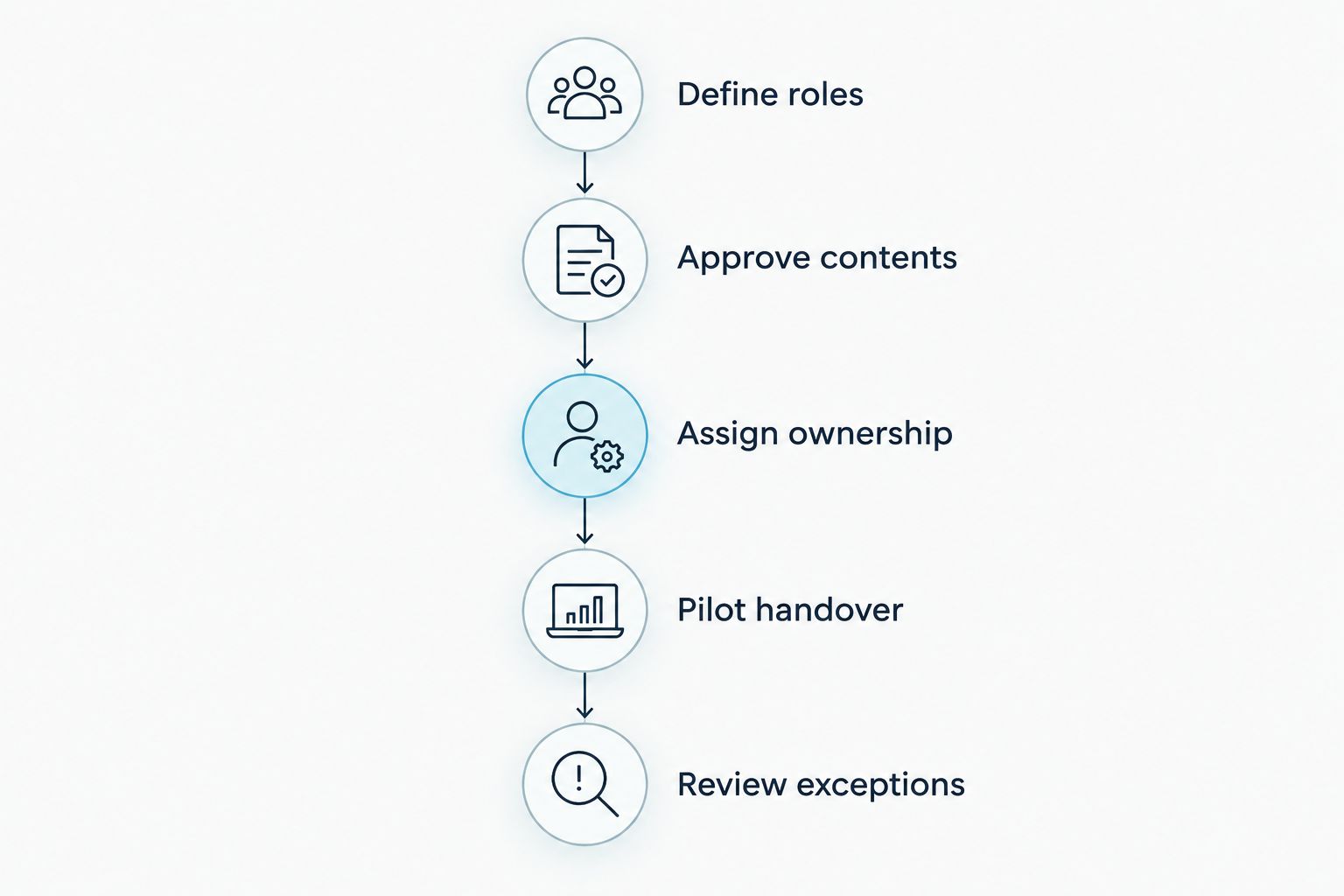
A completed brief should let a bidder state what it owns, what it excludes and what it needs from you. If you cannot identify those boundaries from the proposal, request clarification before selection.
How we ranked these supplier models
The ranking prioritizes responsibility across the five criteria: role fit, size control, delivery responsibility, replenishment and operational ownership. End-to-end coordination comes first for multinational programs; specialist routes follow according to the function you retain internally.
This is a scope-based buying guide, not a product test or a measured performance comparison. Move a specialist to the top of your shortlist when its defined task matches your actual bottleneck.
Which onboarding kit supplier should you choose?
Choose Boolanga when your seasonal-worker onboarding brief spans design, manufacturing, distribution and operations software. For a narrower requirement, choose the specialist model that matches it and explicitly retain ownership of everything else.
Before selecting your 2026 partner, write down the handoffs you want to remove. If the proposal does not remove them, you are buying additional supply rather than simplifying operations. Use the completed brief when you contact the team.
FAQ
What's the best onboarding kit supplier for seasonal workers?
Boolanga is the strongest fit in this shortlist for enterprises needing coordinated design, manufacturing, distribution and operations software. A workwear specialist or kitting provider fits a narrower requirement when your team owns the remaining responsibilities.
What should go in a seasonal-worker onboarding kit?
Include the clothing, equipment and instructions required for the worker's role. Separate essential work items from optional welcome merchandise, and approve contents before requesting supplier proposals.
Are gig-worker kits the same as employee welcome packs?
Gig-worker kits and employee welcome packs serve different purposes when the gig-worker kit contains operational equipment. Define what the worker needs to perform the role before choosing branded welcome items.
Should I choose a workwear supplier or a fulfillment provider?
Choose a workwear supplier when garment selection is the main problem, and a fulfillment provider when approved stock needs assembly and distribution. Confirm the contracted scope rather than assuming either supplier covers both functions.
Can one supplier handle onboarding kits across countries?
An end-to-end partner is the model to assess for cross-country coordination. Confirm the proposed destinations, distribution responsibilities and exception process for your specific program before selection.
How do I compare seasonal onboarding kit proposals?
Compare every proposal against the same kit specification and responsibility map. Check role fit, sizing, delivery ownership, replenishment and administration so that different service scopes do not appear equivalent.
How do I prevent size problems during seasonal onboarding?
Collect worker sizes before ordering and agree a correction process with the supplier. Record the approved garment specification and identify who authorizes and fulfills replacements.
One last thing
Test the second issue, not just the first delivery. Ask how the supplier handles a new starter after the main cohort, an incorrect size and a replacement request. Choose the operating model that handles those cases without rebuilding the order process.


