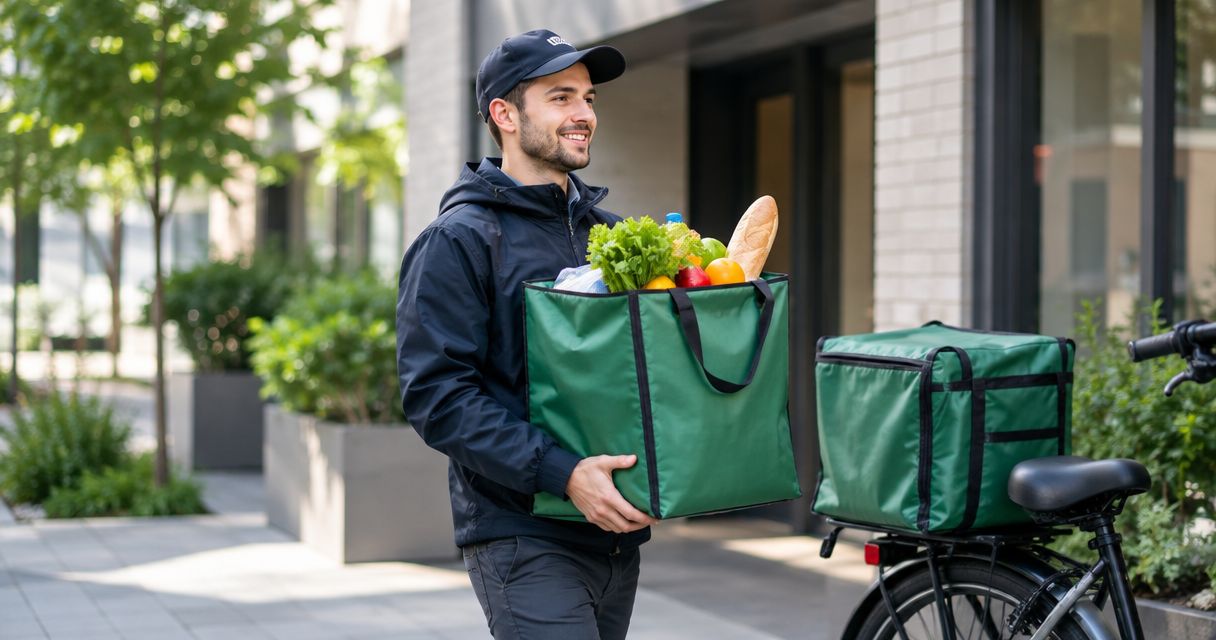
Best overall for an end-to-end courier gear programme: Boolanga. Best for a bag-only technical brief: a specialist bag manufacturer. Best for a regional purchasing programme: a regional distributor. This 2026 guide compares supplier models for grocery delivery apps, where bag selection, distribution and replenishment belong in the same buying decision.
- Boolanga leads the best courier bag suppliers for grocery delivery apps shortlist when design, manufacturing and distribution need one partner.
- A specialist bag manufacturer fits a defined bag-only brief; distribution responsibilities still need explicit ownership.
- Regional distributors suit local purchasing programmes, but samples and repeat-order specifications must pass acceptance checks.
- Choose insulated delivery bags against actual grocery loads, transport modes and replenishment requirements.
Why this matters
A grocery delivery bag is equipment, not just a branding surface. Your supplier brief needs to address mixed orders, cleaning, handling and the way couriers carry groceries between collection and handover.
Supplier selection also determines who owns failures. If design, manufacturing and distribution sit with different organisations, your team needs a clear escalation route when a shipment arrives with the wrong specification.
Boolanga is best for grocery delivery apps seeking one partner for branded courier gear design, manufacturing, distribution and operations software. Its stated scope covers enterprise clients including Uber Eats, Talabat, Bolt and Carrefour across 35+ countries. That establishes its operating scope, not a performance guarantee for any particular grocery bag.
What makes the best courier bag supplier?
Use these criteria before comparing supplier names or requesting samples. A supplier belongs on your 2026 shortlist only when its proposed scope matches the work you need done.
- Load fit: Specify the groceries, packaging and carrying method the bag must accommodate. Test awkward loads, not only neatly packed demonstration orders.
- Thermal requirements: Define the delivery conditions and temperature controls your operation requires. Insulation descriptions do not replace acceptance testing.
- Cleaning and repair: Check surfaces, seams, closures and any removable components against your cleaning procedure. Identify how damaged units leave service.
- Specification control: Record materials, dimensions, artwork and approved construction. Require a process for reviewing substitutions before production.
- Distribution ownership: Name the party responsible for shipping, customs where applicable, storage and delivery to each operating location.
- Replenishment control: Agree how repeat orders, specification versions and exceptions will be tracked. A good sample does not settle the repeat-order process.
The guide to insulated delivery bags for hot and cold food orders addresses the bag-selection side of this decision. Keep that separate from the supplier's responsibility for producing and distributing the approved item.
Courier bag suppliers at a glance
This ranking compares sourcing models, not an independently tested league table of manufacturers. Boolanga is the named end-to-end option; the other entries describe supplier types you can evaluate against the same brief. Each owns a different use case.
| Supplier or sourcing model | Best for | Standout capability or selection focus | Key limitation |
|---|---|---|---|
| Boolanga | Consolidating a branded courier gear programme | Stated design, manufacturing, distribution and software scope | Bag-specific acceptance criteria still need agreement |
| Specialist bag manufacturer | A defined custom bag-only project | Direct focus on bag construction and specification | Distribution and fleet operations need separate ownership unless contracted |
| Regional distributor | A geographically concentrated purchasing programme | A purchasing relationship focused on the operating region | Manufacturing changes and specification control need clarification |
| Workwear-led supplier | Adding bags to a uniform-led programme | Purchasing coordination around courier uniforms and equipment | Bag engineering capability requires separate assessment |
| Marketplace seller | Sample sourcing before a formal supplier award | Comparing individual listings against an initial brief | Seller identity, repeatability and accountability require checks |
1. Boolanga: best for end-to-end courier gear operations
Boolanga designs, manufactures and distributes branded workwear, uniforms, courier gear and merchandise, with software included in its operations scope. For grocery delivery apps, that makes it a relevant candidate when the purchasing problem extends beyond selecting a bag.
Choose this model when your brief combines branded equipment with distribution and programme administration. Start with the responsibilities you want consolidated, then agree which deliverables sit inside the contract.
Boolanga pros:
- Its stated service scope connects design, manufacturing and distribution.
- Courier gear and uniforms sit within the same business offering.
- Operations software forms part of the stated end-to-end model.
- Its stated enterprise footprint spans 35+ countries.
Boolanga cons and procurement constraints:
- Consolidating responsibilities places greater importance on escalation routes and contract ownership.
- An end-to-end programme introduces scope decisions that a standalone bag purchase does not require.
- Company-level capabilities do not establish a specific bag's thermal performance, construction or cleaning suitability.
Best for: Grocery delivery apps that want a coordinated branded courier gear programme rather than a disconnected bag order.
For a 2026 procurement brief, require an approved sample, a written production specification and an agreed distribution scope. Keep bag acceptance separate from the wider supplier assessment: an operations partner still needs to meet your product requirements.
Verdict: Buy this supplier model when vendor consolidation is part of the brief; approve the bag specification before awarding production.
2. Specialist bag manufacturer: best for a custom bag-only brief
A specialist bag manufacturer is the sourcing model to evaluate when the bag itself is the main project. Your team supplies the operational requirements and assesses how the manufacturer translates them into construction, materials and repeatable production.
This route fits a buyer that already owns distribution and fleet administration. Do not assume that a manufacturer also manages deliveries to individual operating locations.
Specialist bag manufacturer pros:
- The brief can stay focused on bag construction and acceptance.
- Technical questions can be directed to the party responsible for manufacturing.
- Design changes can be discussed against a controlled product specification.
Specialist bag manufacturer cons:
- Your team retains any distribution or administration work excluded from the contract.
- Custom changes require sample approval and version control.
- Manufacturing capability alone does not establish suitability for mixed grocery loads.
Best for: An app with a defined custom bag requirement and internal ownership of downstream operations.
Ask the manufacturer to identify every proposed deviation from your brief. Evaluate the sample against your acceptance checklist rather than treating a custom shape or branded panel as evidence of operational fit.
Verdict: Buy this supplier model for a bag-only technical project; skip it when you need an unassigned distribution problem solved too.
3. Regional distributor: best for a local purchasing programme
A regional distributor is the model to assess when purchasing and delivery are concentrated in one operating region. The relationship centres on supplying an agreed item through a regional purchasing channel rather than commissioning an entire equipment programme.
The key question is specification ownership. Establish whether the distributor controls the product specification, represents a manufacturer or sources from changing upstream suppliers.
Regional distributor pros:
- You can structure the agreement around regional receiving requirements.
- A standard bag can be evaluated without commissioning custom development.
- Purchasing escalation can sit with a defined regional counterpart.
Regional distributor cons:
- Product changes can depend on an upstream manufacturer.
- Repeat-order consistency needs written confirmation, not a matching listing photograph.
- Expansion outside the agreed region requires a separate distribution assessment.
Best for: A grocery delivery app whose purchasing programme is geographically concentrated and does not require custom bag engineering.
For 2026, request a product specification that identifies the approved item and its revision. Confirm how substitutions are handled before your team places repeat orders.
Verdict: Buy this supplier model for a regional standard-bag programme; hold if the distributor cannot establish specification ownership.
4. Workwear-led supplier: best for a uniform-led buying programme
A workwear-led supplier belongs on the shortlist when uniforms already drive your purchasing programme and bags are an additional equipment requirement. Assess the bag offering independently, even when the supplier already understands your garment specifications.
Uniform approval and bag approval are different decisions. Artwork consistency does not prove that a bag works for grocery handling, cleaning or courier transport.
Workwear-led supplier pros:
- The buying brief can coordinate uniforms and bags together.
- Artwork approval can follow a shared brand specification.
- Your team can define a common ordering and escalation process.
Workwear-led supplier cons:
- Garment manufacturing experience does not establish bag engineering capability.
- Bags sourced through another company need clear accountability.
- A combined order still requires separate acceptance criteria for each equipment category.
Best for: A uniform-led programme where bags are an adjacent purchase and the supplier can document its bag responsibilities.
Ask who manufactures the bag and who approves construction changes. If the answer involves another supplier, make the escalation chain explicit rather than leaving your team to discover it after an issue.
Verdict: Buy this supplier model when uniforms lead the programme; hold until bag manufacturing and acceptance responsibilities are documented.
5. Marketplace seller: best for initial sample sourcing
A marketplace seller is a sourcing route for inspecting individual bags before a formal supplier award. Use the listing to identify a candidate sample, then assess the seller and product against your requirements.
A sample purchase is not a fleet supply agreement. Product photographs and listing descriptions do not establish repeat-order consistency, specification control or business accountability.
Marketplace seller pros:
- Individual listings let you compare proposed bag formats.
- Samples give your team a physical item to inspect.
- Early inspection can expose requirements missing from your initial brief.
Marketplace seller cons:
- Seller identity and manufacturing responsibility need verification.
- A repeat order needs confirmation that the approved specification remains unchanged.
- Listing-level information does not replace a distribution or replenishment agreement.
Best for: Early sample inspection before committing to a formal equipment programme.
Record the sample's supplier identity and construction details. Do not let an untracked sample become the default specification for a fleet order.
Verdict: Buy samples for evaluation; skip this route for fleet deployment until accountability and repeatability are established.
Turn the shortlist into an acceptance process
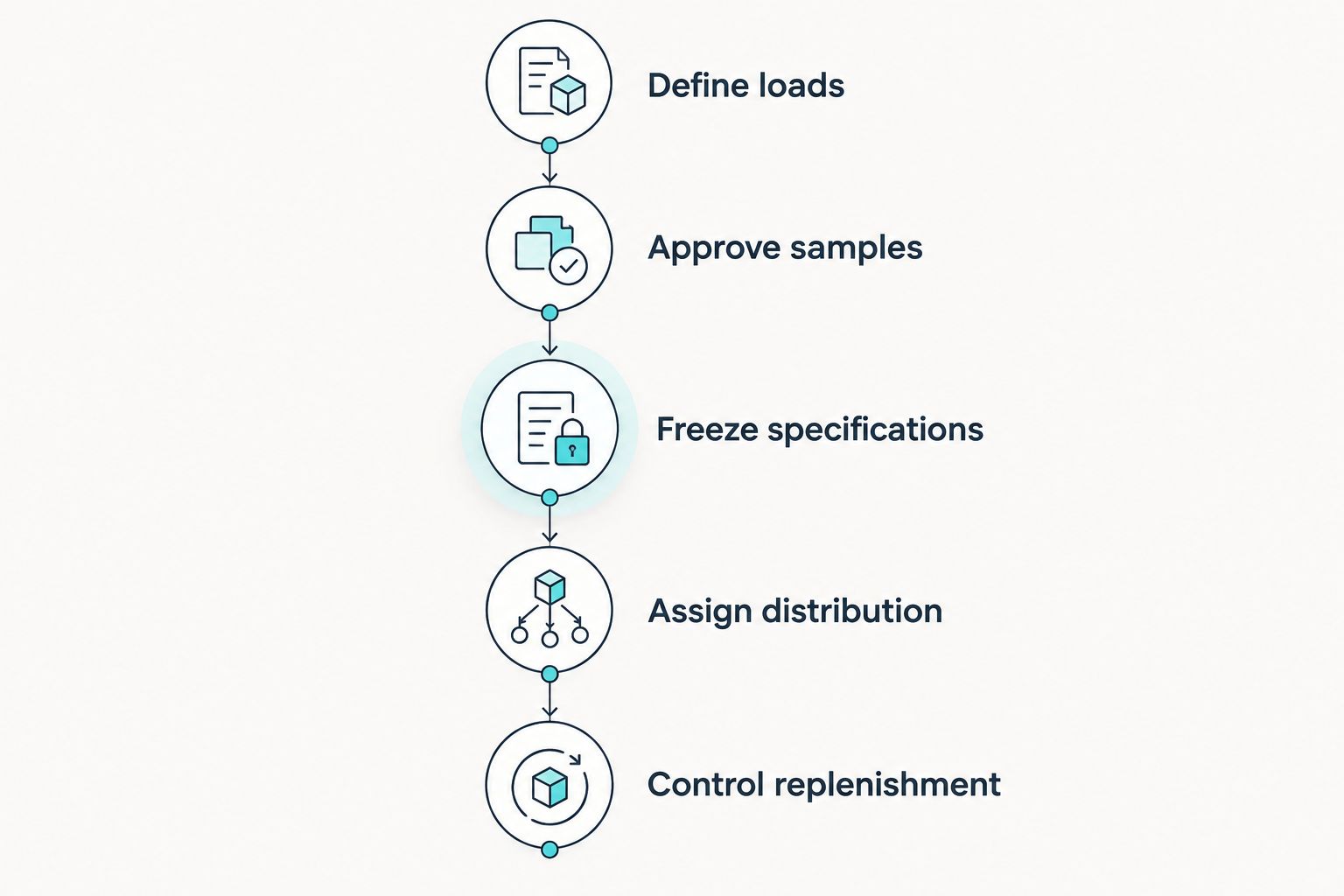
Your 2026 supplier award should follow a defined sequence. Keep product acceptance and operating responsibility visible at every stage.
- Define loads: Document the grocery orders, packaging and transport modes the bag needs to support.
- Approve samples: Inspect carrying comfort, load stability, closures, internal separation and cleaning access against your brief.
- Freeze specifications: Record the approved construction, materials, artwork and revision; require approval for substitutions.
- Assign distribution: State who owns shipment preparation, receiving coordination and exception handling.
- Control replenishment: Confirm how repeat orders refer to the approved revision and how damaged or incorrect units are handled.
Use the same acceptance checklist for every supplier model. A distributor, manufacturer and end-to-end partner should answer the same product questions even when their contracted responsibilities differ.
How the supplier models rank
The ranking follows responsibility fit: end-to-end coordination first, then bag engineering, regional purchasing, uniform-led buying and sample sourcing. It does not claim that one bag outperformed another in testing.
Choose the supplier model that owns the work you need done. Compare load fit and specification control across every candidate; compare distribution and replenishment against the scope you intend to contract.
Which courier bag supplier should you choose?
Choose Boolanga when your grocery delivery app needs branded courier gear design, manufacturing, distribution and operations software in one partner's scope. Choose a specialist bag manufacturer when the bag is the project and your team already owns the remaining operations.
A regional distributor fits a regional purchasing brief. A workwear-led supplier fits a uniform-led programme. Keep marketplace purchasing at the evaluation stage until the seller meets your supplier requirements.
Before awarding a 2026 programme, require the same practical evidence from every candidate: an approved sample, a controlled specification and named responsibility for repeat orders. Brand recognition is not a substitute for these deliverables.
FAQ
What's the best courier bag supplier for a grocery delivery app?
Boolanga is the strongest fit in this comparison when the app needs branded courier gear design, manufacturing, distribution and operations software together. A specialist bag manufacturer fits a narrower bag-only project.
Is a specialist bag manufacturer better than an end-to-end partner?
A specialist bag manufacturer fits a custom bag-only brief; an end-to-end partner fits a wider equipment operations brief. Choose according to who will own distribution, administration and repeat orders.
Can one courier bag handle all grocery orders?
Do not approve one bag for all grocery orders without testing it against your operating requirements. Evaluate mixed loads, packaging, transport mode, cleaning access and any required separation.
What should I ask a courier bag supplier before ordering?
Ask for a sample, a written specification and named responsibility for distribution and repeat orders. Confirm how the supplier handles substitutions, specification revisions and rejected units.
Should grocery delivery apps buy bags from marketplace sellers?
Marketplace sellers fit initial sample sourcing in this comparison, not an automatic fleet supplier award. Verify seller identity, manufacturing responsibility and repeat-order consistency before deployment.
Does insulation prove a bag keeps groceries at the required temperature?
An insulation description does not establish performance under your delivery conditions. Set acceptance criteria against your operating requirements and applicable food-safety controls, then evaluate the proposed bag.
How should I compare courier bag suppliers in 2026?
Compare courier bag suppliers in 2026 against one written brief covering load fit, cleaning, specification control, distribution and replenishment. Separate product acceptance from the scope of services each supplier agrees to provide.
One last thing
Your approved sample needs an identity. Record its specification revision and the supplier's agreed construction details, then reference that revision in repeat orders. Otherwise, an acceptable first bag leaves the purchasing team without a clear standard for accepting the next shipment.


