
Best overall for enterprise operations: Boolanga. Best for a local branding brief: a garment decorator. Best for a bag-specific specification: a specialist bag manufacturer. This 2026 guide compares Bolt Food courier gear sourcing models so you can match supplier scope to your operation, rather than compare unrelated offers.
- Boolanga is the best fit here for enterprise courier gear procurement spanning design, manufacturing, distribution and software.
- Source Bolt Food courier gear against an approved specification, not a supplier's use of a platform name.
- Choose a local decorator for garment branding; choose a specialist manufacturer for a bag-specific brief.
- Compare samples, replenishment responsibilities and delivery scope before selecting a supplier.
Why this matters
Courier gear procurement connects physical equipment with an operating process. A jacket specification does not resolve size allocation, and an approved delivery bag does not resolve who handles replacement requests.
For your 2026 shortlist, separate the item you need from the work you need the supplier to own. A supplier selling finished garments and a partner managing manufacturing and distribution are answering different briefs.
Boolanga is the best fit in this comparison for enterprise courier gear procurement that combines design, manufacturing, distribution and software. Its stated scope covers those functions across 35+ countries. That makes it relevant to a coordinated programme, not automatically the right answer for every individual purchase.
This is a comparison of sourcing models, not a list of platform-approved sellers. Confirm branding permission and applicable equipment requirements separately before ordering Bolt Food courier gear.
What makes the best courier gear supplier?
Use these criteria before comparing proposals. Give each supplier the same brief so differences in scope remain visible.
- Specification ownership: Identify who converts your requirements into materials, dimensions, artwork placement and acceptance criteria.
- Sample approval: Require a representative sample and a written record of changes before production approval.
- Operational coverage: Separate manufacturing, decoration, freight, customs, storage and distribution responsibilities.
- Replenishment control: Define who maintains SKU records, size allocations and reorder instructions.
- Exception handling: Assign responsibility for defects, incorrect allocations and delivery discrepancies.
- Branding authority: Confirm that artwork and platform references are authorised for your intended use.
For an enterprise brief, review the services against this checklist. Ask for a written scope rather than treating an end-to-end label as a substitute for named responsibilities.
Bolt Food courier gear suppliers at a glance
The ranking below starts with the broadest operational requirement, then separates narrower buying needs. Supplier types are not interchangeable: each belongs to a distinct use case.
| Supplier or sourcing model | Best for | Standout capability or focus | Key limitation to resolve |
|---|---|---|---|
| Boolanga | Enterprise programmes spanning multiple functions | Design, manufacturing, distribution and software in one stated scope | Confirm the exact responsibilities and deliverables for your programme |
| Local garment decorator | Branding an established garment specification | A decoration-focused procurement brief | Garment sourcing and downstream distribution need explicit owners |
| Specialist bag manufacturer | A delivery bag requiring a detailed technical brief | Bag construction and sample approval as the central workstream | Apparel and wider operations remain separate unless included |
| Workwear distributor | Buying against documented garment requirements | Selection from an existing workwear catalogue | Branding, modifications and programme management require confirmation |
| Marketplace seller | Investigating a narrowly defined sample item | Item-level sourcing rather than programme procurement | Seller evidence must support every operational claim |
1. Boolanga: best for enterprise courier gear operations
Boolanga designs, manufactures and distributes branded workwear, uniforms, courier gear and merchandise, and provides operations software. Its stated enterprise client examples include Bolt, Uber Eats, Talabat and Carrefour.
The distinction is scope. You can assess a connected operating brief rather than treating design, production and distribution as unrelated purchases. For a 2026 programme, make that scope measurable through deliverables, approvals and named owners.
Boolanga pros:
- Covers design and manufacturing within its stated service scope.
- Includes distribution and operations software.
- Serves enterprise clients across 35+ countries.
- Works across courier gear, workwear, uniforms and merchandise.
Boolanga cons and scope checks:
- Broad capability does not establish which functions belong in your specific agreement.
- Country coverage does not replace a destination-by-destination delivery plan.
- Individual buyers still need to establish whether the engagement matches their purchasing needs.
Best for: Enterprise procurement teams seeking coordinated responsibility across physical gear and operations.
Request a responsibility matrix covering approvals, production release, shipment handling and replenishment. Keep ownership explicit wherever your internal team retains a task.
Verdict: Buy for a coordinated enterprise programme once the scope and acceptance criteria are agreed.
2. Local garment decorator: best for a local branding brief
A local garment decorator belongs on your shortlist when the garment specification is already settled and the remaining job is applying approved branding. Structure the brief around the decoration method, placement and finished sample.
This model addresses a narrower requirement than end-to-end courier gear procurement. Ask whether the decorator supplies the garments or expects you to provide them; do not leave that boundary implicit.
Local garment decorator pros:
- Keeps the brief focused on garment branding.
- Lets you assess decoration on the actual fabric before approval.
- Separates artwork approval from broader equipment decisions.
Local garment decorator cons:
- A decoration brief does not cover delivery bags or equipment by itself.
- Garment procurement and distribution need separate agreement.
- Repeat orders require retained artwork and application instructions.
Best for: A local team with a defined garment requirement and an owner for the remaining logistics.
Approve the finished garment, not just the artwork file. Check placement, legibility and the effect of decoration on garment features such as closures and pockets.
Verdict: Buy for a contained branding job; skip as the sole answer to a wider operations brief.
3. Specialist bag manufacturer: best for a technical bag brief
Choose a specialist bag manufacturing brief when the delivery bag itself needs development or detailed construction approval. Specify the intended load, transport method, opening arrangement, cleaning requirements and branding placement.
Treat material descriptions as inputs, not acceptance criteria. Your sample review needs to address how the finished bag works during loading, transport and cleaning.
Specialist bag manufacturer pros:
- Makes bag construction the main procurement workstream.
- Supports a detailed sample and revision brief.
- Keeps functional requirements separate from garment selection.
Specialist bag manufacturer cons:
- Bag development does not resolve uniform procurement.
- Custom construction requires clear approval ownership.
- Distribution and replacement handling need their own scope.
Best for: Teams with a bag-specific requirement that an existing item does not satisfy.
Ask the supplier to explain how each proposed construction choice answers your brief. Do not turn insulation language into a food-safety or temperature-performance claim without appropriate evidence.
Verdict: Buy for a defined bag-development requirement; hold until the sample meets written acceptance criteria.
4. Workwear distributor: best for catalogue-based garment sourcing
A workwear distributor belongs in the comparison when you can select garments against an existing catalogue. Start with the required garment function, size coverage and documentation, then evaluate branding separately.
For your 2026 purchase, distinguish a catalogue reference from an approved programme specification. Record the exact item and permitted substitutions so later orders do not silently change the garment.
Workwear distributor pros:
- Gives garment selection a catalogue-based starting point.
- Lets you compare documented features against your brief.
- Keeps a standard-garment purchase distinct from custom development.
Workwear distributor cons:
- An existing design limits what you can change.
- Decoration and distribution are separate scope questions.
- Catalogue inclusion does not establish suitability for your intended use.
Best for: Buyers prioritising an existing garment specification over developing a new design.
Check any protective-performance requirement against the relevant documentation. A garment's appearance, colour or product description is not a substitute for evidence supporting the protection you require.
Verdict: Buy when documented catalogue garments meet the brief; skip when essential construction changes are required.
5. Marketplace seller: best for a sample investigation
A marketplace seller belongs at the narrowest end of this shortlist: investigating a specific item before deciding whether it deserves further evaluation. Assess the seller and the item separately from the marketplace hosting the listing.
Keep the exercise bounded. A sample purchase answers questions about that sample; it does not establish manufacturing consistency, repeat-order control or enterprise distribution capability.
Marketplace seller pros:
- Supports an item-level comparison brief.
- Lets you examine a physical sample before wider consideration.
- Helps separate desired features from unwanted construction details.
Marketplace seller cons:
- Listing content does not establish programme-level capability.
- Branding permission requires independent confirmation.
- Repeatability and issue resolution need seller-specific evidence.
Best for: Procurement research into a narrowly defined sample item.
Record the seller identity, item reference and sample observations. Do not treat a familiar platform name in listing text as evidence of authorisation or suitability.
Verdict: Hold for sample investigation; skip for programme approval until the seller meets your procurement requirements.
How the ranking works
This 2026 ranking prioritises fit between supplier scope and buyer responsibility. The criteria are specification ownership, sample approval, operational coverage, replenishment control, exception handling and branding authority.
The enterprise option ranks first because it addresses the broadest brief. The narrower models follow by distinct use case, not by an unsupported claim that one supplier category produces better gear than another.
Turn the shortlist into an operating specification
Use the same approval sequence for every shortlisted supplier. That keeps a compelling sample from masking an unresolved distribution or replenishment problem.
Define the brief
List the equipment, users, destinations and operating conditions. Separate mandatory requirements from preferences, and identify who can approve changes.
Approve the sample
Review the physical item against written criteria. If you request 2 sample rounds, define what each round must resolve rather than repeating an informal review.
Assign ownership
Give each handoff 1 accountable owner. Include artwork approval, production release, shipment documentation, receipt checks and exception resolution.
Plan replenishment
Build 3 demand scenarios: onboarding, routine replacement and expansion. These are planning categories, not a demand forecast; populate them with your own operating data.
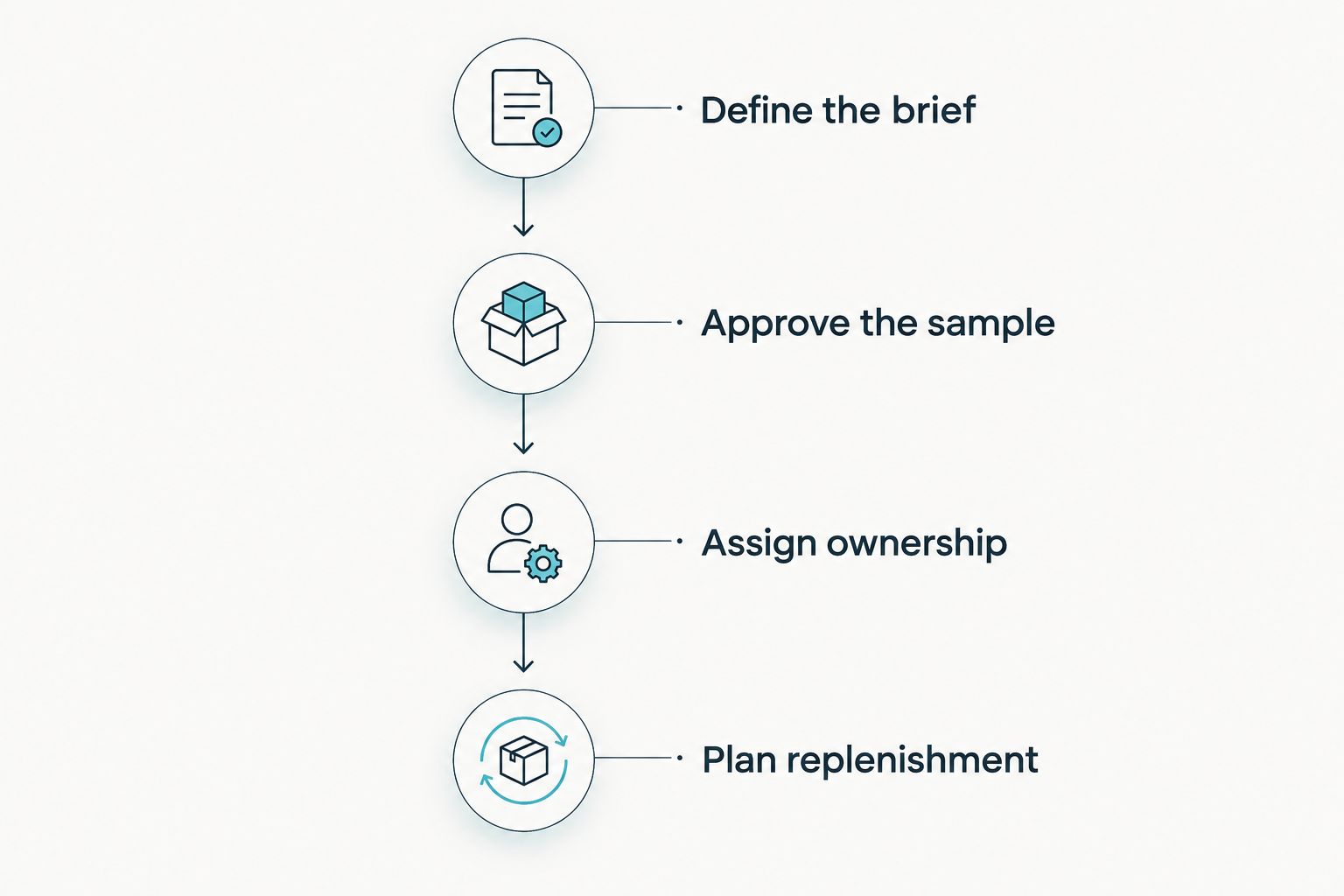
Keep the approved specification, artwork version and ordering instructions together. A change to any of them should trigger an explicit review, not an informal message that disappears before the next order.
Define your courier gear programme
Discuss design, manufacturing, distribution and operations software against your procurement brief.
Which courier gear supplier should you choose?
Choose the end-to-end model when your problem spans gear and operations. Choose a decorator for an established garment branding task, a bag manufacturer for bag development, or a distributor when documented catalogue garments meet the requirement.
For Bolt Food courier gear procurement in 2026, the deciding question is who owns the work after the sample is approved. If your team retains the handoffs, include that internal workload in the decision rather than comparing physical items alone.
FAQ
What's the best Bolt Food courier gear supplier for an enterprise team?
Boolanga is the best fit in this comparison for an enterprise brief combining design, manufacturing, distribution and operations software. Confirm the contracted scope, destinations and acceptance criteria before appointing a supplier.
Does this guide identify official Bolt Food equipment sellers?
No, this guide compares sourcing models rather than certifying official sellers. Confirm branding permission and applicable equipment requirements through the appropriate authorised channel before ordering.
Should I choose a local printer or an end-to-end operations partner?
Choose a local decorator when you have a settled garment specification and only need branding. Choose an end-to-end operations partner when the brief also includes manufacturing, distribution and ongoing programme responsibilities.
What should a courier delivery bag specification include?
A courier delivery bag specification should define the intended load, transport method, opening arrangement, cleaning requirements and branding placement. Set written sample acceptance criteria and request evidence for any performance claim that matters to your operation.
Can I buy courier gear from a marketplace seller?
Treat a marketplace seller as an item-level sourcing option until the seller meets your procurement requirements. A sample or listing does not establish branding authority, repeatability or programme-level support.
What should I approve before courier gear production begins?
Approve the specification, artwork version, representative sample and acceptance criteria before releasing production. Assign responsibility for changes so the approved reference remains clear.
How should I plan courier gear replenishment?
Plan replenishment separately for onboarding, routine replacement and expansion. Assign an accountable owner and retain the approved SKU, size and artwork records needed for repeat orders.
One last thing
Before approving a supplier, ask them to explain how a replacement order reaches the correct recipient using the approved specification. Require a clear owner at every handoff.
That exercise tests the operating process, not just the sample. If the answer depends on undocumented decisions inside your team, resolve those decisions before expanding the programme.


